
Finding Success Through an Intensive Outpatient Recovery Program in Fair Lawn, NJ
You’ve decided you need more than willpower, but the question holding you back is whether intensive outpatient treatment is real enough to work or just therapy-lite that lets you keep your job while you stay stuck. That doubt deserves a straight answer. An intensive outpatient recovery program in Fair Lawn, NJ is 15 hours of clinical programming every week, medication coordinated with therapy, and wrap-around case management that handles the housing gaps, job risks, and court dates that can pull people out of recovery. You keep your paycheck. You keep your family routine. You get structured addiction care built for a real working life, not a pause on it.
What Makes an Intensive Outpatient Recovery Program Real Clinical Treatment
An intensive outpatient recovery program is a distinct clinical level of care, not weekly counseling with a longer name. At Resilience Recovery Center in Fair Lawn, IOP delivers 15 hours of clinical programming per week: three hours a day, five days a week, in either a morning track (9:00 AM to 12:00 PM) or an evening track (6:00 PM to 9:00 PM). That intensity is what separates it from standard outpatient therapy, and it is why structured multi-hour programming functions as its own distinct treatment tier.
The structure matters because substance use disorder responds differently for different patients. Inside those 15 hours you get group therapy, psychoeducation, and relapse prevention, and around them the program coordinates individual therapy, psychiatric appointments, medication management, and case management on a schedule built to fit your work. Nothing is left floating. The therapist, the prescriber, and the case manager talk to each other, so the medical side and the practical side of your recovery move in the same direction.
This is a formally licensed level of care. Resilience Recovery Center operates under full state licensure and departmental approval for outpatient and intensive outpatient substance abuse treatment at ASAM level 2.1. Placement into that level is not a guess. It comes from a clinical assessment measured against the ASAM Criteria, using validated screening tools like the PHQ-9 and GAD-7, so the intensity you receive matches what your situation may call for. That is what makes this evidence-based care rather than a program that only sounds structured on a website.
Can You Keep Your Job While Attending IOP in Fair Lawn?
For many people, yes. Two full tracks exist for exactly that reason. The morning track runs 9:00 AM to 12:00 PM, Monday through Friday, which can fit second-shift workers, flexible schedules, and people who start their workday in the afternoon. The evening track runs 6:00 PM to 9:00 PM for the traditional nine-to-five, so you finish your workday, come to group, and still get home. When it is clinically appropriate, telehealth options may be available, which can help on days a job or a family obligation would otherwise make attendance difficult.
This approach may help working adults in Fair Lawn stay in treatment. Recovery that demands you quit your job, lose your income, and explain a month-long absence to your employer can be difficult to sustain for someone holding a household together. The design here respects your real-world responsibilities, so individual therapy sessions and psychiatric appointments are scheduled outside the group hours, around your shift rather than on top of it, and a medication check-in does not need to cost you a workday.
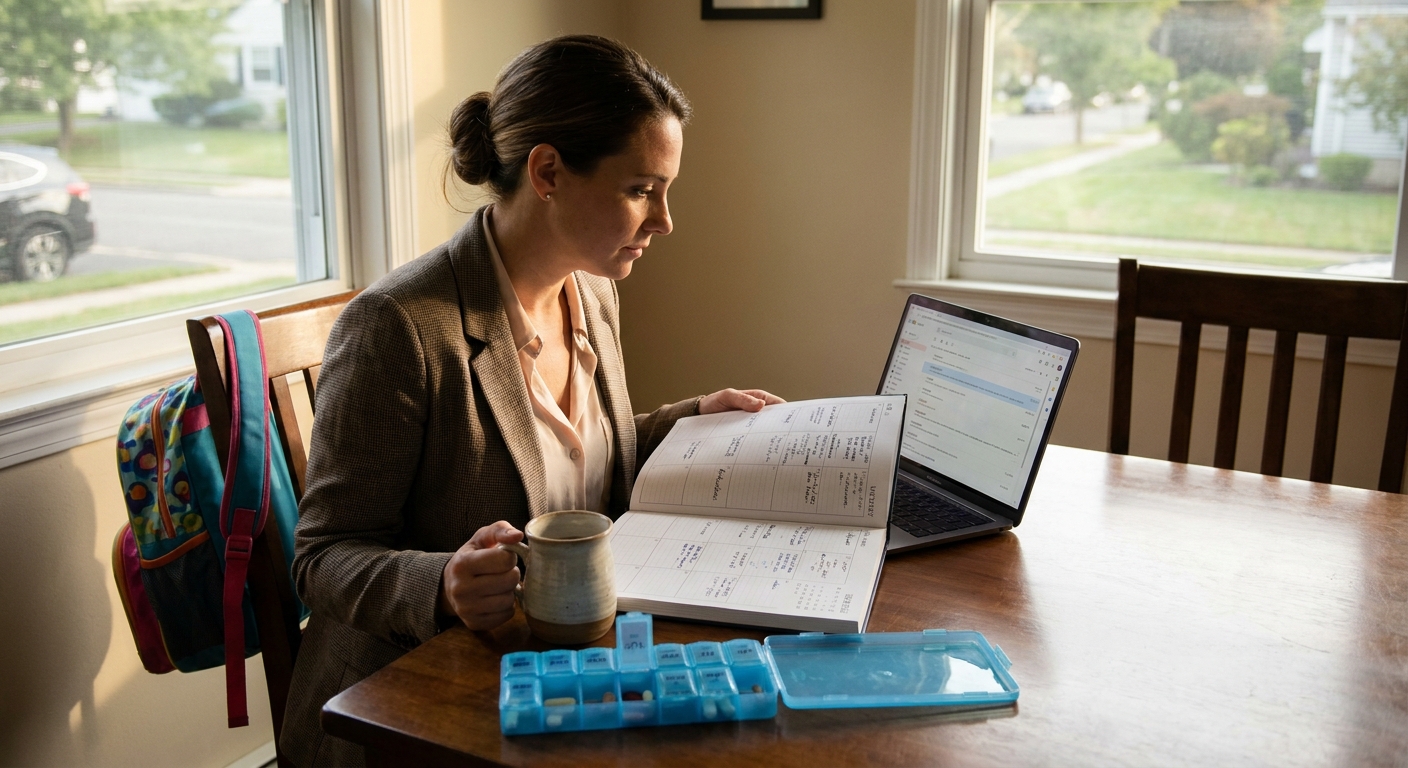
Consider what that might look like in practice. You work a standard nine-to-five in Fair Lawn, attend evening IOP three hours a night, get your individual therapy on a lunch break or an early morning slot, and keep your position without your supervisor ever needing to know your clinical schedule. The point is not to make treatment convenient at the expense of depth, because the 15 hours stay intact. The point is to try to make clinical care possible without stepping away from the life you are trying to protect.
Medication-Assisted Treatment Coordination That Goes Beyond Prescribing
MAT coordination means your medication is managed alongside your therapy, not handed to you as a standalone service. There is a real difference between coordination and prescribing. Prescribing is someone writing a script and sending you off. Coordination is what happens at Resilience Recovery Center, where an in-house psychiatric provider manages medications like buprenorphine, Sublocade, naltrexone, and Vivitrol while staying in direct communication with your therapist and case manager.
We have seen how this makes a difference. One person came to us on buprenorphine from another program where no one had reviewed side effects in months and cravings were never discussed in therapy. Within the first two weeks here, the psychiatric provider adjusted the dosing after consulting with the therapist about breakthrough cravings that were coming up in group, and that change became part of the relapse prevention plan the whole team could track. Medication adherence, side effects, cravings, recovery progress, and any barriers get reviewed regularly, and that review feeds back into your individual counseling, your group sessions, and your relapse prevention planning. The philosophy here is direct: medication may support recovery, it does not replace it.
As Ivan Kavunik puts it: “Medication adherence, side effects, cravings, recovery progress, and barriers are reviewed regularly, and MAT is combined with individual counseling, group therapy, relapse prevention, and psychoeducation, reinforcing the philosophy that medication supports recovery but does not replace therapy. Medication management appointments are coordinated around clients’ work schedules to avoid interruption of care.”¹
The scheduling is coordinated the same way everything else is. Medication management appointments are set around your work hours when possible so a Sublocade injection or a buprenorphine check does not necessarily cost you a shift or force a hard conversation with your employer. If you have tried MAT before and it fell apart because the prescriber never spoke to a therapist and no one tracked whether it was helping, this is the gap that coordination may close. You get one connected plan instead of scattered services.
Case Management That Handles Housing Gaps, Job Risks, and Legal Deadlines
Case management addresses the practical crises that can end recoveries. A housing gap, a job at risk, or a missed court date can undo months of clinical progress, and a therapy-only program is not built to touch any of it. At Resilience Recovery Center, a certified case manager works the real-world side of your recovery in parallel with your clinical care.
One client we worked with came out of inpatient treatment with no place to live and no job. The case manager secured a two-week sober living scholarship of $500, coordinated six job interviews within walking distance, and helped prepare the client’s resume and interview appearance. That client gained employment, reached 90 days of sobriety, and stayed in sober living. Another client we treated while working full time in IOP was walked through FMLA and temporary disability paperwork and placed in sober living so he could focus on his recovery without losing income. A third individual we saw had been through inpatient treatment five times and was connected to employment and now works full time. These are the kinds of problems that can pull people out of treatment before the clinical work has a chance to hold.
The case manager also coordinates with the parts of your life you cannot afford to drop, including communication around probation officers and court dates, transportation to sessions, and the vocational and housing resources across Fair Lawn and northern New Jersey that a person in crisis may not have the bandwidth to chase alone. This is what whole-person care may require. Support services that stop at the therapy room door can leave destabilizing threats untouched, while wrap-around case management brings them inside the treatment plan where they can be addressed.
Who Leads the Clinical Team Behind Fair Lawn IOP?
The clinical team is led by Tammy Nussbaum, LCADC, CCS, a Licensed Clinical Alcohol and Drug Counselor with a Certified Clinical Supervisor credential and 20 years of experience. That level of oversight is what a family should look for when weighing an intensive outpatient recovery program, because the credentials of the person directing care shape the quality of everything underneath it.
The team around her is built for depth, not just coverage. It includes dual-licensed therapists holding LCADC, LAC, and LSW credentials, a Medical Director who is an MD and psychiatrist, CADC and CCADC counselors, certified peer recovery specialists, a certified case manager, and a pastoral counselor. One staff member who runs the nutrition and wellness groups is a CDADC who is also a certified nutritionist, neuroscience coach, and life coach. That range means the same program can address a person’s clinical, medical, mental health, vocational, and practical needs without sending them to five different places.
Quality is checked against outside standards, not internal opinion. Level-of-care decisions are guided by the ASAM Criteria, progress is measured with validated screening tools like the PHQ-9 and GAD-7, and clinical protocols follow structured, coordinated models for intensive outpatient care recognized across the substance abuse treatment field, including guidance published by SAMHSA. In the interest of full transparency, the center is not yet CARF or Joint Commission accredited, though it is actively pursuing national accreditation. Naming that openly is part of treating you with the respect for human dignity a real clinical relationship requires.
What Happens When You Are Ready to Step Down?
You may step down in intensity without starting over. As you stabilize, the intensive outpatient recovery program may move to step-down IOP at 9 hours over three days, then to outpatient care at 3 hours one day per week. You do not restart intake, re-tell your story to strangers, or lose the momentum you built. The same clinical team and the same case manager carry through every transition.
Those transitions are guided by clinical benchmarks, not the calendar. The team generally expects at least 85% attendance over the previous 30 days and consecutive negative drug screens before decreasing intensity, so a step-down reflects observed stability rather than a wish to be done. This graduated, phased approach is a core feature of effective outpatient treatment models and a key part of their long-term effectiveness.
The result is a continuous path from the most structured level to ongoing accountability, all under one roof in Fair Lawn. You keep the relationships you built, the medication plan stays coordinated, and the case manager stays available as work, housing, and legal matters keep evolving. Sustainable recovery is not a single graduation date. It is a set of tools you keep sharpening while the intensity around you adjusts to match where you are.
Frequently Asked Questions
Can I work full time while attending intensive outpatient recovery in Fair Lawn?
Many people do. Morning (9:00 AM to 12:00 PM) and evening (6:00 PM to 9:00 PM) tracks are built around Fair Lawn work schedules, and individual therapy and psychiatric appointments are coordinated outside group hours when possible so treatment may fit your shift.
Does intensive outpatient treatment include medication for opioid or alcohol use disorder?
Yes. An in-house psychiatric provider coordinates buprenorphine, Sublocade, naltrexone, and Vivitrol alongside therapy, with adherence and cravings reviewed regularly. Medication is managed with your clinical care, not offered as a standalone service.
What insurance plans cover intensive outpatient recovery at Resilience Recovery Center?
Resilience accepts Blue Cross Blue Shield, Aetna, Cigna, and UnitedHealthcare. Benefits verification and insurance assistance are provided before admission so you have clear information about your coverage before you begin.
How does case management help with housing, employment, or legal issues during IOP?
A certified case manager coordinates sober living placements, job searches, FMLA paperwork, temporary disability, and communication around court dates and probation, addressing the practical issues that can threaten recovery.
What happens after I complete the full intensive outpatient schedule?
You may step down to 9-hour IOP over three days or to 3-hour weekly outpatient care with the same clinical team and case manager, guided by attendance and drug screen results.
Who leads the clinical team at Resilience Recovery Center in Fair Lawn?
Clinical Director Tammy Nussbaum, LCADC, CCS, with 20 years of experience, leads a team of dual-licensed therapists, an MD psychiatrist as Medical Director, CADC and CCADC counselors, and certified peer recovery specialists.
Call Resilience Recovery Center in Fair Lawn, NJ to verify your insurance coverage and schedule an ASAM assessment that determines whether an intensive outpatient recovery program may fit your clinical needs and your work schedule. Ask specifically for a morning or evening track placement, so the very first conversation is already built around the job you are protecting.
Expertise and insights from
- Ivan Kavunik
Take the Next Step Toward Recovery Today
If you’ve been weighing whether an intensive outpatient program offers the right balance of structure and flexibility for your situation, the team at Resilience Recovery Center in Fair Lawn, NJ is here to answer your questions and discuss how this approach might fit your needs. Recovery from addiction looks different for everyone, and a brief conversation can help you understand what to expect and whether this level of care aligns with where you are right now.
Call Resilience Recovery Center
The client experiences described here are individual stories and are not typical or predictive of any specific outcome. Recovery experiences vary widely from person to person.