Expertise provided by Ivan Kavunik, Owner
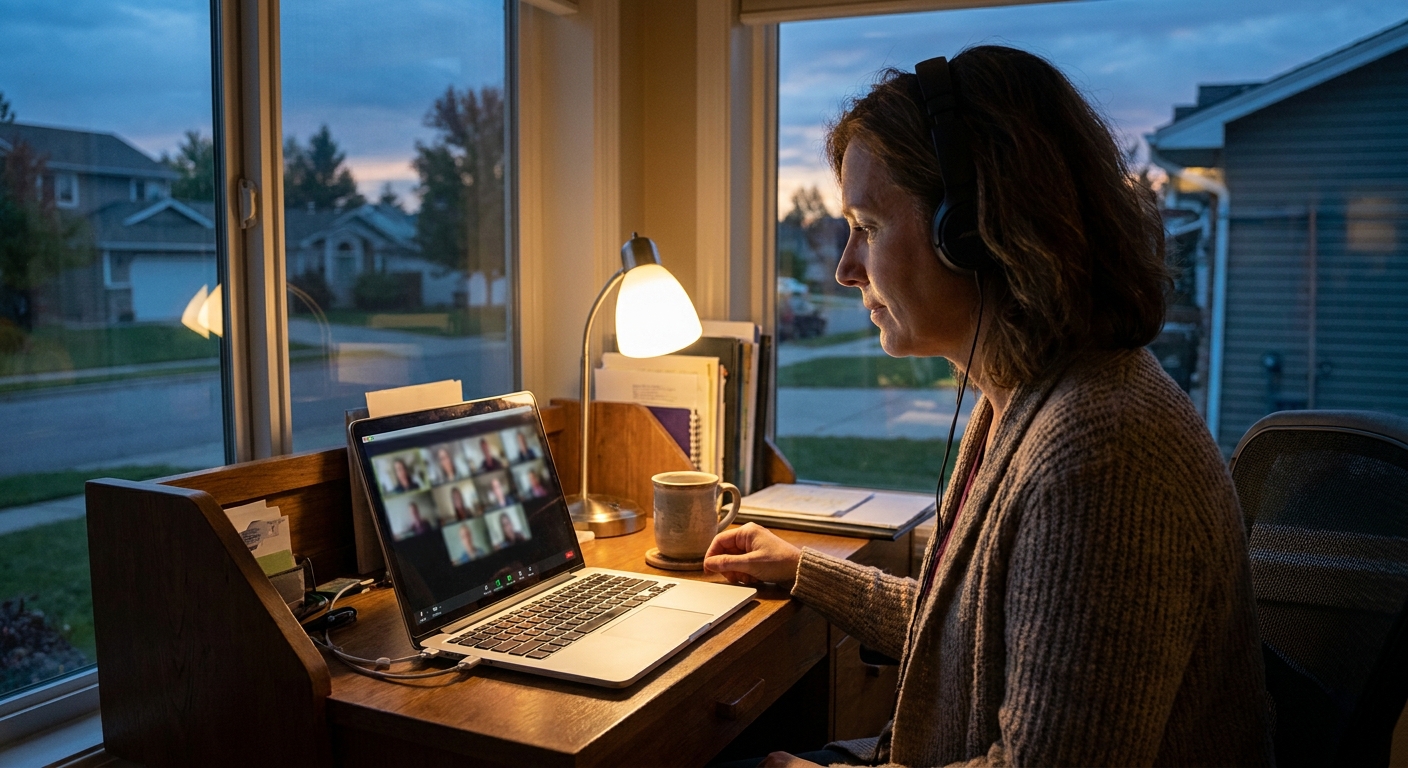
For a working adult in Fair Lawn, NJ, a telehealth-supported IOP can look like this: one group a week on Friday, the same day testing happens, with individual therapy and medical visits done by video once a week, so a shift that runs from morning into the night does not have to end. Resilience Recovery Center built that schedule for one client, and it is shared here without his name or identifying details. If you searched “virtual IOP near me” because someone you love is holding a job together by a thread, that schedule is one place to start. Some of the care happens on a screen, some of it happens in a room in Fair Lawn, and the plan can be adjusted around the work.
You may be the one doing the math late at night. If he goes to treatment, does he lose the job? If he loses the job, what happens to the house? You may also know he may not go if going feels like admitting he failed. And if you have been through a program before, you may not have it in you to hope again. Those fears make sense, and this guide takes them one at a time.
Start with the money question, because most families do. Resilience Recovery Center accepts Aetna, Blue Cross Blue Shield, Cigna and UnitedHealthcare, on an out-of-network basis. Benefits and insurance assistance is part of what the team does, so you can raise coverage on the very first call instead of guessing. From there, the sections below show what telehealth covers, what stays in person, who may qualify, and how the first call works.
What does “virtual IOP near me” mean at Resilience Recovery Center in Fair Lawn, NJ?
At Resilience Recovery Center in Fair Lawn, NJ, “virtual IOP” means an in-person intensive outpatient program with telehealth added where it fits. Groups meet on site in a morning or evening track. Individual counseling, psychiatric follow-up and select outpatient services can move to video when the clinical team agrees it is appropriate and the insurance plan allows it.
Intensive outpatient care, or IOP, is structured treatment several days a week, a few hours at a time. The person sleeps at home. They keep their bed, their kids’ bedtime, and often their job. IOP sits between weekly counseling and a full residential stay. Think of the groups in Fair Lawn as a home base, the place where group work and drug testing happen. Some appointments around that base, like a check-in with the therapist or a medication follow-up, can be handled by video so the week has fewer drives.
It helps to be clear on what this is not. Resilience is not a fully remote program. The groups are the in-person core of the week, because that is where people meet others who have been where they are. Peer recovery specialists at Resilience share their own real-life experience. For some people, seeing someone who struggled with the same thing and is now doing the next right thing every day can help the shame start to loosen. A video tile may not offer that in the same way.
The program was built on something the founder noticed. People could do well while they were inside treatment. Then they went home to real-world stressors: a job, rent, a family that needed repair, a court date. Without additional support, some got overwhelmed. Resilience was designed as a softer landing, with structured support that lets someone handle real-world responsibilities while they are still in care. If your loved one lives outside Fair Lawn, call and confirm eligibility before you plan around it.
How does the IOP week work, and where does telehealth fit?
Resilience Recovery Center runs morning programming from 9:00 AM to 12:00 PM and evening programming from 6:00 PM to 9:00 PM, Monday through Friday, and day and night tracks are available at every level of care. Telehealth usually covers individual therapy and psychiatric follow-ups, so the drive to Fair Lawn is saved for group sessions and testing.
The levels work as step-downs, and a person may move down as they become steadier:
- IOP5: five days a week, 15 hours.
- IOP3: three days a week, 9 hours, in three-hour sessions.
- Aftercare: one day a week, three hours.
- Outpatient (OP): usually one to two group sessions a week, plus individual counseling.
Because day and night tracks exist at every level, a person who works 7 to 3 can come in the evening, and a person who works nights can come in the morning. If the shift changes, the track can change too. The step-down is planned, so there is no gap where a person goes from five days a week to nothing.
Inside the room, the work draws on evidence-based approaches. Resilience uses cognitive behavioral therapy (CBT), dialectical behavior therapy (DBT) skills, motivational interviewing, trauma-informed care and mindfulness. Groups follow a rotating curriculum, which means a person who starts on a Wednesday still gets the full set of topics over time. Those topics include relapse prevention, emotional regulation, co-occurring mental health education, communication, boundaries, money management and vocational readiness. There is also brain-based education on cravings and stress, which can help people understand that a craving is something the brain does, not proof of weak character. These are intended as tools for the hard Tuesday after work, not just ideas on a worksheet.
In addition to groups, medication support is part of the week. Resilience coordinates medication-assisted treatment (MAT) in house, with an in-house physician and psychiatric provider. Medications coordinated include Vivitrol, Suboxone, Sublocade and buprenorphine. MAT is not treated as a stand-alone approach; it is woven into individual therapy, group work and case management. This is where telehealth may help most, because a medication follow-up by video can fit into a lunch break instead of costing a half-day off work.
Who qualifies for IOP, and when does detox come first?
At Resilience Recovery Center, level of care is determined from three things: an admissions assessment, a drug screen, and a comprehensive biopsychosocial assessment using the ASAM Criteria. No single score decides. To start IOP, a person must be medically stable, must not need 24-hour medical supervision or medically managed withdrawal, and must be able to take part safely in outpatient treatment.
This matters before you plan around a job. It is natural to want the answer first: “Can he do evenings and keep working?” But the assessment is what indicates whether outpatient care is safe right now. It looks at the whole person, including substance use, physical health, mental health, home, work and legal pressures, and then places them at five days, three days, or a lighter schedule, in a day or night track. The aim is to match the level of care to the person’s clinical need, not to fit them into a standard slot.
Sometimes the answer is that detox has to come first. Resilience does not provide detox, inpatient or residential care. When someone needs medically managed withdrawal, the team refers them out to a medical detox program before outpatient care begins. Stopping heavy alcohol use suddenly can be medically risky, so talk to a doctor or a medical detox program before anyone tries to quit cold at home. One client in the stories below came to Resilience straight from detox and started IOP from there. Detox was the first step, and outpatient care was the next one.
If the assessment shows a need for more structure than IOP gives, but not detox or 24-hour care, the higher-intensity step within Resilience is partial hospitalization (PHP). If anyone is at risk of hurting themselves, call or text 988 right away. If there is immediate danger, call 911.
What happens when your work schedule changes mid-treatment?
When a client’s work schedule changes partway through treatment, Resilience Recovery Center works to rebuild the plan around the job instead of letting care lapse. That can mean switching between day and night tracks, moving individual and medical visits to telehealth, or coordinating rides. When work itself is driving the risk, it can mean help with FMLA and temporary disability paperwork.
The schedule at the top of this article came from this kind of rebuild. The client, unnamed here with details changed, worked from morning into the night with only Fridays off. A standard schedule would have forced him to choose between his paycheck and his treatment. So the team moved him to one group a week on Fridays, the same day he is tested, and moved his individual therapy and medical appointments to telehealth once a week. He stayed at work, and he stayed in care. That plan was set by his assessment and his stability, and other people may need more hours, especially at the start.
As Ivan Kavunik, Owner, puts it: “One client who worked mornings into the night was moved to one group per week on Fridays, when he is also tested. His individual therapy and medical appointments moved to telehealth once a week.”
A second client, also unnamed with identifying details removed, had a different experience. He came to Resilience after detox and tried to manage IOP on top of work, school and the bills for his apartment. It was too much, and his cravings were still strong. The team completed his FMLA and temporary disability paperwork, placed him in sober living through Resilience’s housing network, and brought in the medical director, who started him on Suboxone. After a week, he reported that his cravings had eased. That gave him room to focus on sobriety first, and the plan is for him to return to his regular life once he is stable. The team often reminds people that treatment is temporary. Stepping back for a season is not the same as losing everything.
Practical barriers get addressed too. Case management coordinates transportation case by case. In one example shared without identifying details, a client who lost his driver’s license after a DUI kept working full time, attended evening IOP, received medication management and met his probation requirements, with rides and scheduling planned in one care plan. Legal obligations such as probation, Drug Court and court dates are identified at the first assessment and built into the schedule. That is what whole-person care can look like on a calendar: treatment without stepping away from the life your family depends on.
If you are worried because you have tried this before, that worry deserves to be said out loud. Hope followed by disappointment is exhausting. One Resilience client who had struggled with work and housing told the team he is now paying rent and has a job lined up. He had been to many other treatment facilities and said he had not received treatment like this before. That is one person’s experience, and no program can promise an outcome. But a plan built around the job, the rent and the rides is a different kind of plan from one that did not account for them.
How does telehealth-supported IOP compare with standard in-person IOP and PHP?
Telehealth-supported IOP at Resilience Recovery Center keeps groups in person and moves some individual and medical visits to video, which can mean fewer drives in a work week. Standard in-person IOP puts every appointment on site. PHP asks for more hours each week and may fit someone who needs more structure than IOP but not 24-hour care.
Here is what each option asks of your family’s week:
| What it asks of your week | Telehealth-supported IOP at Resilience | Standard in-person IOP | PHP at Resilience |
|---|---|---|---|
| Time | IOP5 at 15 hours or IOP3 at 9 hours of group, in a 9:00 AM to 12:00 PM or 6:00 PM to 9:00 PM track | Similar group hours, plus separate trips for individual and medical visits | More structured hours than IOP5; ask admissions for the current schedule |
| Driving | Trips for groups and testing; individual therapy and psychiatric follow-ups can be by video when appropriate and allowed by insurance | Every session on site | On-site programming; ask admissions what the week looks like |
| Rides | Coordinated by case management when transportation is a barrier | Varies by program | Ask admissions about transportation support |
| Who it may suit | A medically stable working adult who needs structure and cannot step away from the shift | Someone with a flexible schedule and easy travel | Someone who needs more support than IOP but does not need detox or 24-hour care |
The table gives you a starting point, not a decision, because the assessment determines where a person begins. What families usually want to know next is how a person moves from one level to the next, and how anyone knows it is time. At Resilience, that is reviewed every 30 days using the ASAM Criteria. The team looks at attendance, generally 85 percent of sessions or more, and for three consecutive negative drug screens. They also look at how engaged the person is in groups and how depression and anxiety scores (the PHQ-9 and GAD-7) are trending. Psychiatric stability, whether medications are being taken as planned, and current relapse risk count as well. No single number is pass or fail; the full picture guides the step-down.
Families often ask how many weeks this takes. There is no fixed answer, because step-downs follow progress, not a calendar. Ask the admissions team what a typical timeline looks like for your loved one’s situation, and ask how aftercare and recovery coaching continue once the formal hours drop. Many people also pair their care with outside supports like the 12 steps, a sponsor and fellowship, and recovery coaches at Resilience encourage that kind of community connection.
What can a family verify before the first visit?
A family can check three things before the first visit: the program’s licensing, the insurance picture, and the intake steps. Resilience Recovery Center accepts Aetna, Blue Cross Blue Shield, Cigna and UnitedHealthcare, out of network. It does not accept Medicaid, and it does not currently hold a national accreditation. Intake starts with one phone call.
On licensing, do not take anyone’s word for it, including ours. On the first call, ask the admissions team which New Jersey license and approvals the program holds, then verify them yourself with the issuing state agency. Ask who leads the clinical work, too. At Resilience, the clinical director brings over 20 years of experience in behavioral health and addiction treatment, and the executive team includes leaders with lived experience of recovery.
On insurance, the team offers benefits and insurance assistance as part of case management, so ask them to walk through your plan with you. Whether telehealth visits are covered depends on your plan’s rules, so raise that during the conversation. It also helps to know your rights. Federal parity law generally requires health plans that cover substance use treatment to do so on terms no stricter than medical care, and the U.S. Department of Labor explains how that applies to employer plans. Marketplace plans must cover substance use treatment, as HealthCare.gov lays out. If your loved one has Medicaid or no insurance, FindTreatment.gov and the free, 24/7 SAMHSA National Helpline at 1-800-662-4357 can point you to options.
From first call to first session, the path at Resilience looks like this:
- Call admissions. Share the basics, the insurance card and the work schedule.
- Admissions assessment. The team learns what is happening now and what is at stake.
- Drug screen. This helps show whether outpatient care is safe to start or whether detox comes first.
- Biopsychosocial assessment using the ASAM Criteria. This sets the level of care and the day or night track.
- Schedule matched to the week. Telehealth, rides and legal dates are built in where they fit.
What families ask before they pick up the phone
Is there a fully virtual IOP at Resilience Recovery Center in Fair Lawn, NJ?
No. If you are searching “virtual IOP near me,” know that the IOP at Resilience Recovery Center is in person, with a morning track from 9:00 AM to 12:00 PM and an evening track from 6:00 PM to 9:00 PM. Telehealth is added for individual therapy, psychiatric follow-up and select services when it is clinically appropriate and insurance allows it.
Can my loved one keep their job while in IOP?
Some working adults do. Day and night tracks, step-down levels, schedule rebuilds and help with FMLA paperwork are designed to support that. The right schedule depends on the assessment. Sometimes the safest plan is a short leave so the person can get stable first.
What technology is needed for telehealth visits, and is it private?
Ask the admissions team what device and connection telehealth visits require. Plan for a private space, like a parked car or a closed room, where no coworker or child can overhear. Treatment records fall under health privacy rules, and you can ask admissions how video visits are protected.
Which insurance plans are accepted, and what will it cost?
Resilience accepts Aetna, Blue Cross Blue Shield, Cigna and UnitedHealthcare, out of network. Medicaid is not accepted. Costs depend on each plan, so ask the team to go over your benefits with you before treatment begins.
How fast can treatment start?
Ask on the first call. The admissions assessment, drug screen and ASAM-based assessment come first, because they show whether outpatient care is safe to start. If detox is needed, the team refers the person to an outside medical detox program first, and outpatient care at Resilience follows.
What if they need more support than IOP can give?
The ASAM-based assessment may point to PHP at Resilience, or to an outside detox first. If anyone is thinking about self-harm, call or text 988. If there is immediate danger, call 911.
Make the call with the schedule in hand
Call Resilience Recovery Center in Fair Lawn, NJ to start an admissions assessment. Have the insurance card and the work schedule ready, so the team can go over benefits and discuss matching a morning or evening track to the week. Before you call, write down the next two weeks of shifts, including every day off. The Friday-only plan at the top of this page started with one detail just like that: a single day off the team could build around. Bring that page, and you are not asking the team to fit your family into a program. You are giving them what they need to build a plan around your loved one, one that aims to support them in staying connected to the life you have both held together, so you do not have to carry this alone.
Expertise and insights from
Ivan Kavunik, Owner
Find Out What Virtual IOP Could Look Like for Your Schedule
If you have been wondering whether telehealth treatment can really fit around a full work week, it is fair to want a straight answer before you commit to anything. The team at Resilience Recovery Center in Fair Lawn, NJ can talk through how virtual care works and what options may suit your situation. Reaching out is just a conversation, and you can start it with a single call to the office.
Call Resilience Recovery Center
Individual experiences vary, and no treatment outcome can be guaranteed.