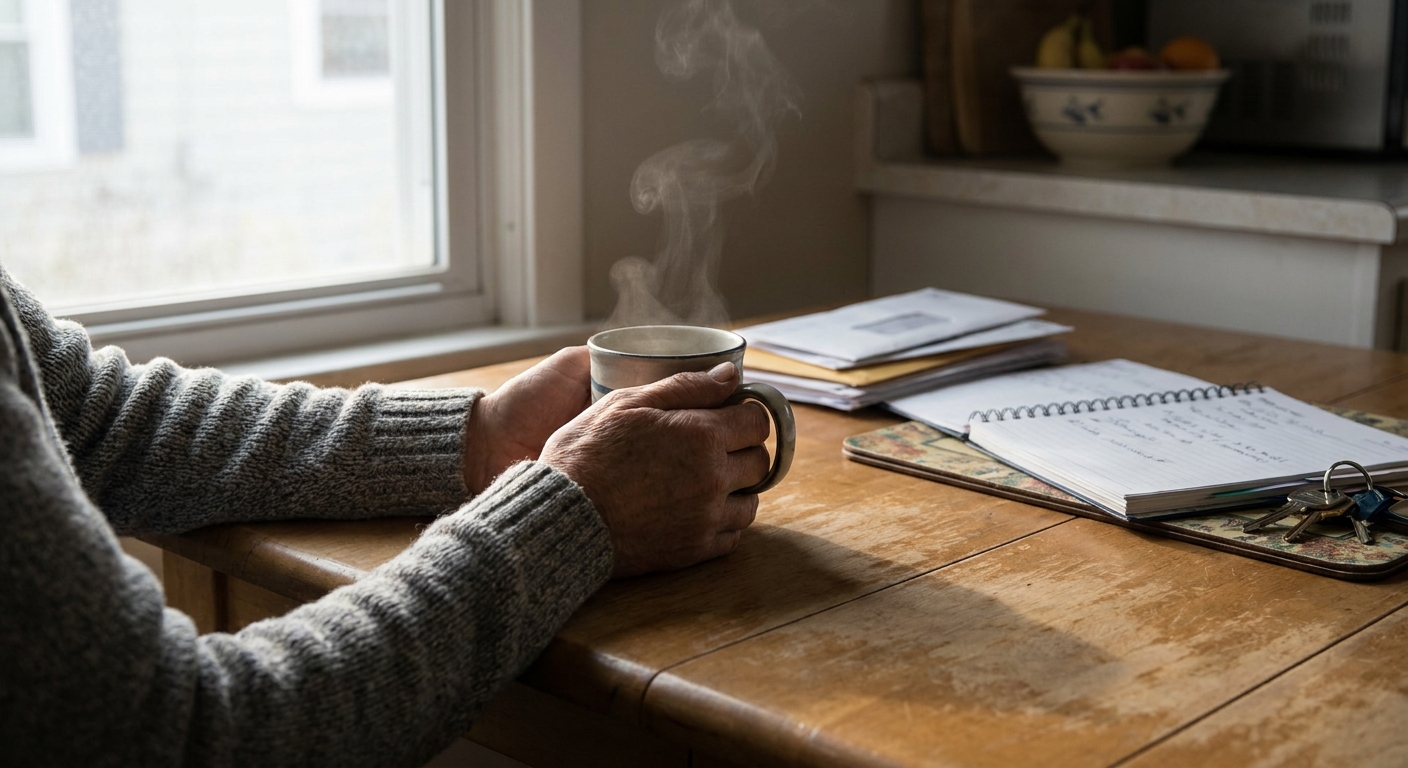
Your husband finished inpatient treatment eight months ago, white-knuckled his way through two months of meetings, and relapsed the week he lost his job. Now he says he is done trying, because treatment does not work for him. But the problem was not that treatment does not work. The treatment he received never addressed the job loss, the shame spiral that followed, or the financial pressure that made sobriety feel impossible to sustain. If you have been typing “tried rehab before and relapsed, what now” into your phone after the house goes quiet, here is our honest answer at Resilience Recovery Center: the next plan has to be built around the exact thing that broke the last one.
You are tired. You have covered for him at work. You have kept the kids’ routine steady. You have paid the bills he could not pay and answered the questions he could not answer. Now someone is asking you to hope again, and that is a lot to ask of a person who is already carrying the whole household alone.
At Resilience Recovery Center in Fair Lawn, NJ, we work with working adults who have been through treatment before. Many of them come to us after one attempt, and some come after several. At Resilience Recovery Center, we accept BCBS, Aetna, Cigna, and UHC, and our benefits team can check his coverage with you before anything else happens, so money is not one more unknown keeping you up at night. What we have learned from returning clients is simple: a past relapse is not a reason to give up on treatment. It can be a reason to stop repeating the same treatment.
Tried Rehab Before and Relapsed, So What Now? Start by Treating the Relapse as Feedback
A return to use after treatment does not prove your loved one is weak, and it does not prove treatment cannot help him. It is information. It points to the specific stressors, settings, and transition points the next plan may need to target.
Think about when the last relapse happened. Was it the first week home? The week a paycheck did not come? The night after a court date, a fight, or a long stretch of commuting alone? Each of those moments is a data point. A clinical team can study that information rather than starting from scratch. For someone returning after prior treatment, Resilience Recovery Center builds an individualized relapse prevention plan that maps past relapse patterns, high-risk situations, and early warning signs. It also looks at which coping strategies were used in earlier attempts and which ones fell apart under pressure.
That kind of analysis is supported in the intensive outpatient approach described in SAMHSA’s Matrix Model Counselor’s Treatment Manual, which treats understanding a person’s triggers and patterns as central clinical work rather than an afterthought. We at Resilience Recovery Center take that principle one step further for returning clients: we look backward at the last attempt, then build forward from what we find.
You may be hearing something from him right now: “If I go back, it means I failed again.” That shame is real, and it keeps a lot of people from picking up the phone. Reframing the relapse as feedback can help. When he walks in to Resilience Recovery Center, he hears that this is a judgement free zone and that his last attempt gave the team something useful to work with. That is a very different conversation than “let’s try the same thing harder.”
Why Did the Last Program Miss the Real World Stressors That Brought Him Back to Using?
Most prior treatment focuses on getting a person stable and teaching coping skills. Very little of it touches the job, the rent, the court date, or the ride to work that are waiting the day he walks out the door.
Stabilization matters, because nobody can work on their life while they are in crisis. The gap shows up at discharge. He leaves with a folder of handouts and a meeting schedule, and he returns to the same unpaid bills, the same missing paycheck, and the same shame of explaining a gap in his resume. In our experience at Resilience Recovery Center, employment, housing, and transportation are three of the most common pressure points behind relapse for the adults we serve. When none of them are addressed, the coping skills are fighting uphill from day one.
That is why every returning client at Resilience Recovery Center goes through a full wraparound case management assessment alongside clinical intake. A case manager maps where the real world stressors are. Is there steady income? Is the housing stable and safe for recovery? Can he physically get to work and to treatment? Are there legal obligations hanging over him? Those barriers are then worked on at Resilience Recovery Center at the same time as therapy, so nobody gets sent back into daily life without support.
Here is one example, shared without identifying details. One client came to us at Resilience Recovery Center after going through inpatient treatment several times over two years. Each time he left, he struggled to find work and could not meet his financial responsibilities, and each time that pressure contributed to his return to drinking. Instead of repeating clinical treatment alone, his Resilience Recovery Center case manager connected him with employment opportunities and helped him prepare his resume, his appearance, and his interview approach. He landed interviews, then full-time employment, while he continued in treatment. The therapy itself did not change all that much. What changed was that, for the first time, someone addressed the stressor that had preceded his prior relapses.
Will the Clinical Team Just Repeat the Same Program That Did Not Work Last Time?
No. When someone returns after a relapse, the clinical team at Resilience Recovery Center adjusts treatment intensity, therapeutic focus, and wraparound services based on the gaps from earlier attempts, rather than running the same modules a second or third time.
That work is led by a multidisciplinary team that can include dual-licensed therapists and counselors with various credentials. For a family, that means the plan is being built by trained clinicians working inside a state-licensed program at Resilience Recovery Center.
Personalizing a plan also means measuring rather than guessing. The Resilience Recovery Center team uses validated screening tools, the PHQ-9 for depression and the GAD-7 for anxiety, because untreated depression or anxiety often sits quietly underneath a relapse. If the last program treated the substance use and never looked at the co-occurring disorder, that alone may help explain why progress did not hold. Those scores, together with ASAM-guided level-of-care reviews, drive decisions at Resilience Recovery Center about how much structure he may need. Insurance timelines do not make that call.
In practice, a returning client’s plan at Resilience Recovery Center can look noticeably different from someone entering treatment for the first time. One person may benefit from more individual therapy focused on the shame that followed the last relapse. Another may benefit from neuroscience-informed recovery strategies that explain what cravings are doing in the brain, so the urge feels less like a personal failing. Someone else may benefit from life coaching and nutrition guidance to rebuild daily routines that collapsed. The point is not to add everything. It is to add what was missing.
Better Coping Skills Will Not Fix a Lost Paycheck, So the Plan Has to Change His Environment Too
Sending someone back into the same pressures with slightly sharper coping skills is not a new plan. A new plan changes the conditions themselves: income, housing, legal obligations, transportation, and medication accountability.
This is where Resilience Recovery Center’s integrated approach does its real work. Clinical care and practical support run side by side, coordinated by the same team, so there are no gaps between what happens in a therapy session and what happens at home. The wraparound services we coordinate at Resilience Recovery Center include:
- Job placement and vocational support, from resume work to interview preparation, so income stops being the thing that pulls him under.
- A housing network with recovery-oriented living options, including sober living options for anyone whose home environment is working against them.
- Legal coordination support, so court dates and legal requirements are planned around rather than discovered at the last minute.
- Benefits and insurance assistance, including help sorting through paperwork such as FMLA and temporary disability questions when they apply to his situation.
- Transportation solutions, because a missed ride can turn into a missed session, and missed sessions add up.
- MAT coordination with an accountability and education focus. We at Resilience Recovery Center do not prescribe medication. We coordinate with his prescriber so that if he takes Suboxone or receives a monthly buprenorphine injection, his medication plan and his treatment plan stay aligned.
None of these are extras. For many people coming back after a relapse, they can be the missing piece. Picture what the next discharge looks like if he already has a job lined up, a stable place to live, a plan for his court obligations, and a ride to his sessions. That is a softer landing. It gives the tools on his tool belt a real chance to work, because he is not trying to use them in the middle of a financial freefall.
Can Outpatient Care in Fair Lawn Give Him Enough Structure Without Costing Him His Job?
For many working adults, yes. Resilience Recovery Center offers a five-day-per-week IOP that can step down to three days when ASAM-guided reviews and screening scores show it may be clinically appropriate, so the level of structure follows his needs rather than a fixed calendar.
You may be thinking it right now: if he goes to treatment, he loses his job, and then we lose the house. That fear makes sense, and it is one of the main reasons families wait. Our Resilience Recovery Center program in Fair Lawn, NJ, is designed for working adults who need to keep showing up for real-world responsibilities like employment, parenting, and court obligations. He can receive structured support without stepping away from the life he is trying to protect.
Flexibility can be important for someone who has tried before. A rigid program that forced him to choose between treatment and work may have been unsustainable from the start. Here at Resilience Recovery Center, if he needs more structure after a rough week, the team can increase it. If his scores and progress show he may be ready for less, the schedule can ease so he has more room for work and family. Those changes at Resilience Recovery Center come from clinical judgment, not program convenience.
Because the Resilience Recovery Center housing network, job placement support, and legal coordination are built around people living and working in Fair Lawn, the practical help is local too. On the financial side, Resilience Recovery Center accepts BCBS, Aetna, Cigna, and UHC, and our benefits team reviews his specific plan with you before anything starts, so you know where you stand.
Will the Next Program Treat Your Loved One Like a Diagnosis or Like a Person?
That is the question to answer before you invest your hope again. When a family has tried rehab before and relapsed, what now really depends on whether the next program sees the whole person. A program that treats him as a person plans for his job, his court date, his mortgage, and his kids alongside his clinical care.
We at Resilience Recovery Center hear a version of this from family members often: “We tried before, and I do not know if I can go through the hope and the disappointment again.” That is not you being cynical. It is you protecting yourself after a lot of hurt. So be skeptical, and ask hard questions of any program you are considering. What will you do differently because of his last relapse? Who handles his job situation? Who helps with his court obligations? What happens with his medication? How do you decide when to change his schedule? If the answers sound like a brochure, keep looking. You can also look up licensed treatment programs near you through SAMHSA’s FindTreatment.gov locator.
At Resilience Recovery Center, whole-person care is not a slogan. It is the reason the case manager sits in the same planning conversation as the therapist. It is why we at Resilience Recovery Center focus on evidence-based clinical excellence and on helping people get back on their feet in the places they actually live. Respect for human dignity means we at Resilience Recovery Center do not see your husband or your son as a collection of symptoms to stabilize and discharge. We see a man with a job to keep, a family to come home to, and a reason to stay functional while he heals.
You have been holding this together alone for a long time. Some families describe the next step as letting go and letting God. In practical terms, it also means letting a team carry part of the load you have been carrying by yourself. We at Resilience Recovery Center are here to support you every step of the way, including the conversation with him if he is not ready to make the call himself.
Call Resilience Recovery Center in Fair Lawn, NJ at the number on this page to speak with an admissions counselor. They will review your loved one’s prior treatment history, help identify the gaps that led to relapse, and explain how a personalized outpatient plan addresses the real world stressors that clinical care alone cannot resolve. Before you dial, take five minutes and write down three things: when each past relapse happened, what was going on in his life that same week, and what support he had after his last discharge. That short list is often the most useful information an admissions counselor receives, and it is where a different plan starts.
You’ve Shown Up Again,That Takes Real Strength
Relapse doesn’t mean the work you did before was wasted or that recovery isn’t possible for you. It often means the approach wasn’t matched closely enough to what you actually need. The outpatient team at Resilience Recovery Center in Fair Lawn, NJ builds plans around your life, your schedule, and the specific patterns that pulled you off course last time, so this attempt can be built on firmer ground.
Call Resilience Recovery Center
Individual experiences with treatment vary, and outcomes depend on many personal, clinical, and environmental factors.