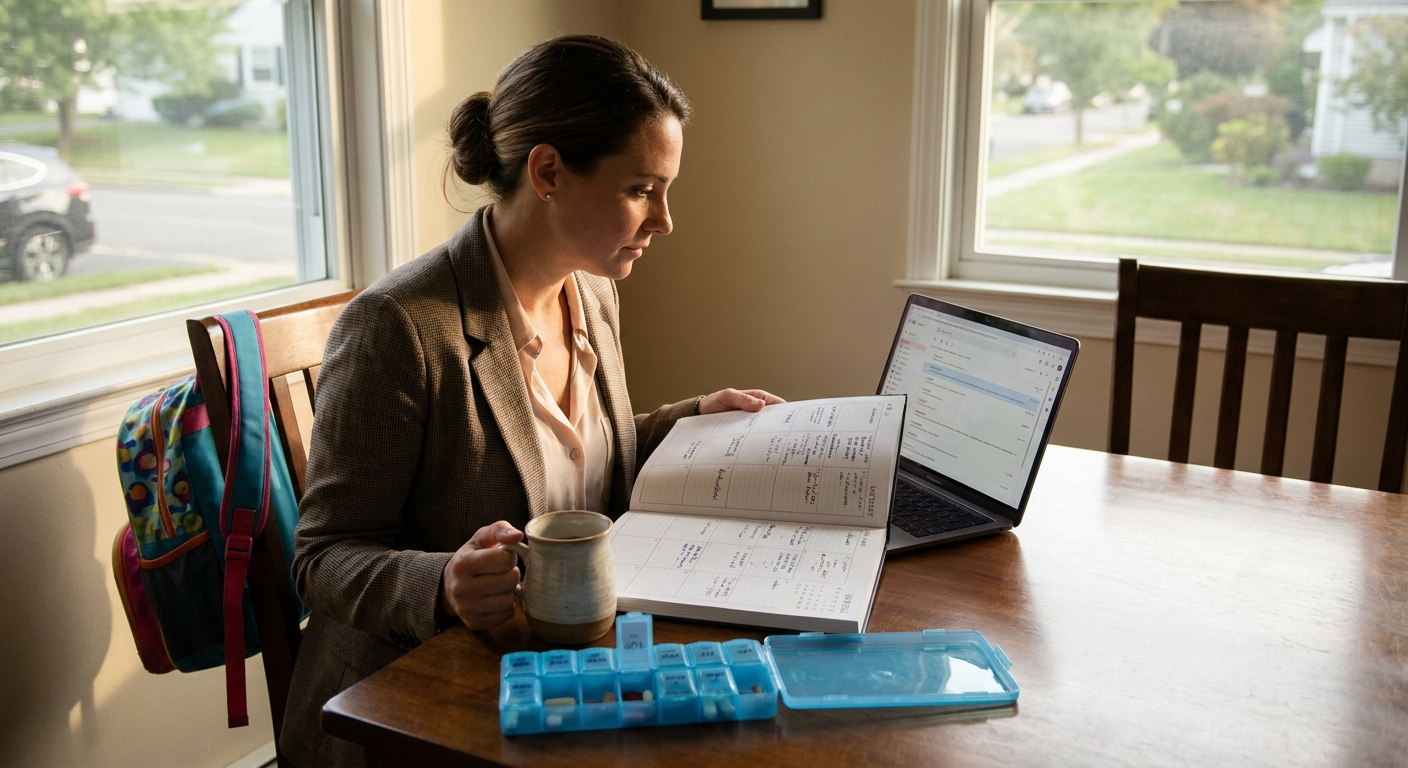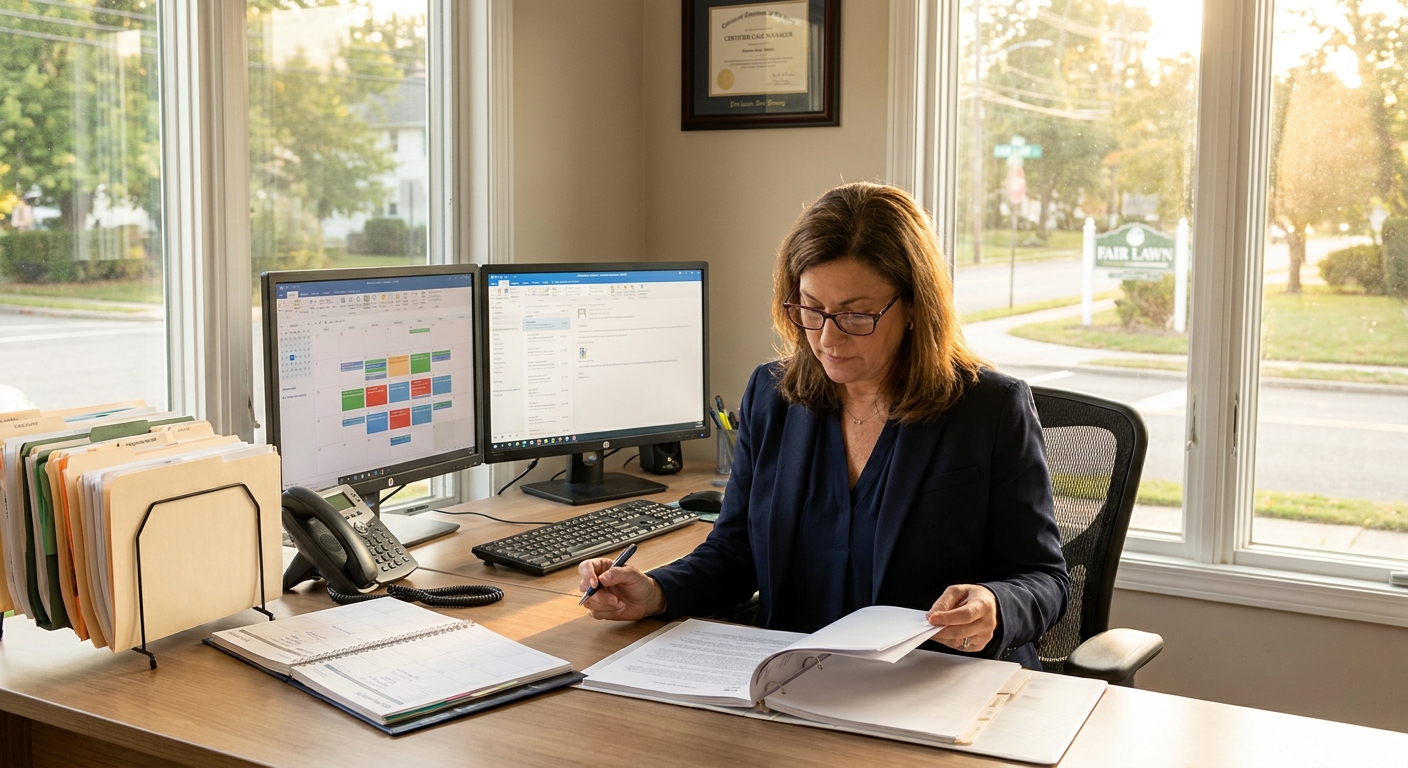

Most people in early recovery already know what they should do when a craving hits; the harder question is whether they can find that answer when they are tired, stressed, and halfway through a bad week. The relapse prevention tools for sobriety below are the ones Resilience Recovery Center in Fair Lawn, NJ builds with working adults in outpatient care, so the answer is already written down before the pressure shows up. They are practical tools on your tool belt, not slogans on a poster.
You may also be carrying fears you have not said out loud. If they get help, they could lose the job, and then the house. They might refuse because asking for help feels like admitting they failed. Maybe you have been through treatment with them before, and you are not sure you can ride that wave of hope and disappointment again. Those fears make sense. Resilience Recovery Center builds personalized outpatient treatment around the life a person already has, including work, family, and real-world responsibilities. Programming runs in the morning and in the evening. The center accepts Aetna, Blue Cross Blue Shield, Cigna, and UnitedHealthcare. This is a judgement free zone, for the person you love and for you.
Tool 1 is the master tool, and the other ten are its parts. Read them as a checklist: what your loved one may be learning, and what you may not have to hold up alone.
1. Why Is a Written Plan the First of the Relapse Prevention Tools for Sobriety?
A written relapse prevention plan comes first because it sets out what to do on a hard day ahead of time, so a person has less to improvise under pressure. At Resilience Recovery Center, every client in OP and IOP leaves with an individualized written plan. Staff build it collaboratively with the client rather than handing it over finished.
Picture two people leaving the same office at 4:30. Same deadline, same boss, same store on the way home. The first one has a plan: call the sponsor before pulling out of the parking lot, drive straight to evening IOP or a meeting, eat, and text a check-in. The second one is making it up as the pressure builds. A plan can give the first person something to lean on when a craving shows up.
A completed plan at Resilience Recovery Center covers:
- Personal triggers and early warning signs
- Past relapse patterns and high-risk situations
- Which coping strategies have worked before, and which have not
- Named supportive people and community recovery resources
- Daily routines that promote stability
- Realistic plans for workplace triggers, family stress, and social situations, including boundaries, stress management, and how to communicate needs
- An emergency response strategy: who to call, how to reconnect with treatment, and how to seek stability if cravings rise or a relapse happens
The plan is reviewed and updated throughout treatment, because the triggers in week two are often different from the triggers in week ten. For you, the family member, the most useful part is often the emergency section. With your loved one’s permission, ask to see it. Know whether your name is on it, and if it is not, know why. Either way, you are no longer guessing what happens next.
2. How Can Knowing Your Triggers and Warning Signs Help?
Mapping triggers and warning signs can help by turning vague dread into specific signals everyone can watch for. At Resilience Recovery Center, this work is grounded in Cognitive Behavioral Therapy (CBT), which teaches clients to spot the thoughts that can quietly talk them into using.
A trigger is the situation, while a warning sign is the change in the person. On a Fair Lawn workday, triggers look ordinary: a tense meeting, a missed deadline, the commute home after a long shift, or an argument at the dinner table about money or the kids. CBT trigger work asks clients to pin down exactly where and when the pull shows up, and what they tell themselves in that moment. Common examples include “After the day I had, I earned one” or “Everyone already thinks I’m a failure, so what’s the difference.” Clinicians call these cognitive distortions. Once a person can name the distortion, they may be better able to argue with it.
Warning signs often show up before cravings do. Sleep gets worse. Meetings get skipped. Phone calls go unanswered. The person pulls back from family, gets short-tempered, or starts saying they are “fine” a little too often. None of these is a relapse, but each one is a signal to use the plan.
As a spouse or parent, you often see these signs first. That can feel like a burden, and it can also be useful if it is handled the right way. When warning signs are written into the plan ahead of time, with the person’s agreement, pointing one out can become a check-in instead of an accusation. “You asked me to tell you when you stop sleeping. It’s been four nights” lands very differently than “What’s going on with you?”
3. What Is the STOP Skill and How Might It Work at 4 PM?
The STOP skill is a four-step pause from Dialectical Behavior Therapy (DBT) that puts space between a stressful moment and a reaction. DBT skills are part of Resilience Recovery Center’s group curriculum, and groups combine education with discussion, worksheets, and hands-on practice so a skill can become a habit and not just an idea.
STOP stands for:
- Stop. Freeze. Do not reply, do not drive, do not decide.
- Take a step back. Breathe, put the phone down, and get physical distance if possible.
- Observe. Notice the thoughts, emotions, and body sensations: a tight chest, a racing mind, anger, shame.
- Proceed mindfully. Choose the next action on purpose, based on the plan.
The hardest step is Observe. Many people, especially capable working adults who solve problems all day, want to skip straight to fixing things. The skill is learning to name the feeling first and then decide.
Here is how practicing it might look. It is late afternoon after a brutal workday, and a text comes in from someone the person used to use with: “Hey. Haven’t seen you. You around tonight?” Walking through STOP out loud means asking: What do I notice in my body? What story am I telling myself? What does my plan say to do? Rehearsing that moment in a safe room is one way people prepare for the parking lot.
4. Can Urge Surfing and Grounding Help a Craving Pass?
For some people, yes. A craving often rises, peaks, and falls, and it does not require action. Urge surfing and grounding are skills that can help a person ride it out instead of giving in. These skills are part of the neuroscience-informed strategies Resilience Recovery Center teaches, alongside mindfulness, breathing skills, and emotional regulation that support the body’s stress response.
Urge surfing treats a craving like a wave. You do not fight it; you watch it. The steps are simple enough to use at a desk:
- Notice the urge and name it: “This is a craving.”
- Find where it lives in the body, such as the throat, stomach, hands, or jaw.
- Breathe slowly and rate it from 1 to 10.
- Keep watching, and re-rate it every minute or two.
- Let it crest and drop without doing anything about it.
Grounding pulls attention out of the craving and back into the room. In a parked car, it can sound like this: name five things you can see (the steering wheel, a stop sign, a tree), four things you can feel (the seat, your keys, your feet on the floor), three things you can hear, two things you can smell, and take one slow breath. It sounds basic, and that is the point. A brain flooded with stress may need something basic.
These tools do not work the same way for everyone, and they are not a test of character. If a person is surfing urge after urge and still struggling, that does not mean they are weak. It may mean the cravings themselves need medical attention, which is where Tool 7 comes in. For you, it helps to know what these skills look like so you can recognize them. If your loved one goes quiet in the car and starts naming things out the window, they may not be ignoring you. They may be working.
5. Why Do Healthy Distractions and Daily Routines Matter?
Routines and healthy distractions matter because unstructured hours are often high-risk hours, and a planned evening may leave less room for a craving to take over. Resilience Recovery Center treats daily structure as part of treatment, not an afterthought.
For many working adults, the difficult stretch is predictable: roughly 4 PM to bedtime. Work is done, the adrenaline drops, and the old habit used to fill that space. Evening IOP from 6 PM to 9 PM fills some of those hours by design, and the plan fills the rest with a walk, the gym, cooking dinner, a phone call, or a meeting. Healthy distractions are not about keeping busy for the sake of it. They replace the old routine with a new one that has an actual shape.
Resilience Recovery Center’s recovery life coaching focuses on this kind of practical work, including sober routine building, employment readiness, time management, and accountability. Coaching works alongside therapy and case management without duplicating them. Therapy addresses the substance use and mental health side, while coaching helps translate those goals into what Tuesday actually looks like. Many clients keep working with a recovery coach during the step-down from IOP to OP and into aftercare, so the structure does not vanish the day the schedule lightens.
The body has to recover too. The center runs nutrition groups because what a person eats, or skips, can affect anxiety, mood, and motivation. For a family, routine is something you can share without becoming the warden: dinner at the same time, a walk after, a phone that goes on the charger at night. These simple anchors can support everyone in the house, not just the person in recovery.
6. Who Should Be on Your Support List, and How Do You Use It?
A support list should hold specific names and specific meetings, not “my friends” or “the program,” and it tends to work best when people are contacted before a crisis rather than during one. At Resilience Recovery Center, named supportive people and community recovery resources are written directly into each client’s plan.
A strong list is concrete: a sponsor with a phone number, a meeting with the day, time, and place, a peer from group, and a family member who has agreed to the role. Reaching out on an ordinary day builds the habit, and that habit matters. A person who calls their sponsor on a good Wednesday may find it easier to call on a bad Friday. Many people also find steadiness in meetings, in fellowship, and in practices like letting go and letting God. The plan makes room for whatever genuinely helps.
If you want to be one of those names, a few things help. Agree ahead of time on what you will do when they call. Listen first and skip the lecture in the moment. Know the next step in their emergency section. Be honest about your own limits, too, because boundaries are not punishment. “I will drive you to group any night you ask. I will not call your boss and say you’re sick.” Clear lines protect the relationship and your own health.
Resilience Recovery Center offers family education, and family sessions when clinically appropriate, so you can learn how to communicate needs and boundaries without walking on eggshells. That is part of the point. You do not have to be the whole support system. You get to be one name on a list that has several.
7. How Can Medication Work as a Relapse Prevention Tool?
For some people, medication may ease the cravings that keep pulling them back, and it is generally used alongside therapy rather than alone. At Resilience Recovery Center, the Medical Director oversees psychiatric care and medication-assisted treatment (MAT) coordination, and medication decisions are based on each person’s needs.
Medication is an evidence-based option. The National Institute on Alcohol Abuse and Alcoholism lists naltrexone among the medications approved to treat alcohol use disorder and notes that medication can be combined with behavioral treatment. At Resilience Recovery Center, the psychiatric provider explains how medications like buprenorphine, Sublocade, naltrexone, and Vivitrol are used to help address cravings and support brain recovery. MAT is always integrated with individual therapy, group counseling, and case management. Medication is never treated as the whole treatment.
Here is a de-identified example from the center’s own work. One working client came in after completing detox and started IOP while still holding a job, attending school, and managing apartment responsibilities. He kept relapsing, so the team rebuilt his plan mid-program. Staff completed his FMLA paperwork and temporary disability and placed him in sober living so he could focus on sobriety without the daily work and home stressors. Then they looked closer at the root cause, which appeared to be ongoing cravings he kept acting on. The medical director started him on Suboxone, and he reported that his cravings eased within a week. He was then scheduled for a monthly Sublocade shot, a long-acting injectable form of buprenorphine. The team took from his experience that real world stressors and untreated cravings, not the standard IOP schedule alone, were contributing to his risk.
A second de-identified example shows the same integrated thinking. One client in their mid-30s developed an opioid use disorder after a back injury and was also dealing with severe anxiety, depression, trouble sleeping, and fear of returning to work. They began buprenorphine treatment through the center’s psychiatric provider while attending IOP three evenings a week, so they could keep their full-time job. Alongside medication, they worked through CBT, Motivational Interviewing, trauma-informed counseling, and relapse prevention groups, while case management coordinated with probation, helped with housing resources, and built an employment plan. After completing treatment, this client remained engaged in recovery, kept their job, met their legal obligations, secured stable housing, and continued medication management. That was one person’s experience. Medication affects every person differently, and some people need a different option or no medication at all.
8. Which Practical-Life Supports May Lower Relapse Risk?
Job, housing, transportation, legal, and insurance problems can add pressure that contributes to use, so Resilience Recovery Center treats working on them as part of relapse prevention. The center’s wrap around case management team coordinates these supports under one care plan, alongside the clinical team.
Start with the fear you may be carrying most: if they go to treatment, they lose the job, and then the house. That fear is real, and it is why many families wait. Resilience Recovery Center’s morning (9 AM to 12 PM) and evening (6 PM to 9 PM) programming, Monday through Friday, is designed so people can keep working. When work itself is the problem, the team can help with FMLA and temporary disability paperwork, as it did in the example above. Case management also coordinates employment support, housing resources through the center’s recovery-oriented sober living network, and transportation for people in Fair Lawn and many surrounding Bergen County communities, evaluated case by case.
Transportation alone can affect attendance. One client lost their driver’s license after a DUI. Because transportation and scheduling were coordinated through one care plan, this client kept working full time, attended evening IOP consistently, received medication management, and met their legal obligations. Legal coordination at Resilience Recovery Center can include attendance verification and treatment status reports, shared only with the client’s authorization, for situations like probation, Drug Court, DUI requirements, or Family Court. The team does not give legal advice or replace an attorney. Its job is to keep treatment communication accurate and on time.
Insurance is often the first question families ask. Resilience Recovery Center accepts Aetna, Blue Cross Blue Shield, Cigna, and UnitedHealthcare, and the team helps with insurance navigation and benefits questions. Federal law matters here too. The Mental Health Parity and Addiction Equity Act generally means a health plan that covers substance use treatment cannot place stricter limits on it than on comparable medical care. Your specific benefits still depend on your plan, so a verification call is the honest first step.
9. What Does Learning How Addiction Affects the Brain Add?
Learning how addiction changes the brain gives people a way to read their own symptoms, and some find it lowers the shame that keeps them stuck. At Resilience Recovery Center, brain-based psychoeducation is part of both OP and IOP.
Your loved one may believe that needing help means they have failed. That belief keeps many capable people out of treatment, and psychoeducation responds to it with facts. Clients learn how substance use affects the brain’s reward system, how cravings work, and how stress shapes decision-making. When a person understands that a hard stretch can reflect a brain that is still healing, not proof that they are broken, they may be more able to respond with a plan instead of with despair. Some people find recovery feels more manageable as time goes on.
This framing has strong scientific backing. The National Institute on Drug Abuse describes addiction as a treatable disorder and explains that treatment can help people counteract its disruptive effects on the brain and behavior. In other words, it is a health condition with medical and behavioral tools, not a moral failing.
Resilience Recovery Center’s IOP provides 9 hours of clinical programming each week, in three-hour sessions, three days a week, with morning and evening options. The curriculum rotates, so relapse prevention, CBT, DBT skills, stress management, and co-occurring mental health education all come up no matter when someone starts. When clinically appropriate and permitted by insurance, telehealth may be used for individual counseling and psychiatric follow-up appointments. Groups are interactive, with worksheets and practice rather than hours of lectures.
10. When Should a Warning Sign Mean a Higher Level of Care?
A warning sign should prompt a fresh look at the level of care when use increases, drug screens keep coming back positive, engagement drops, psychiatric symptoms get worse, or relapse risk rises. Resilience Recovery Center’s multidisciplinary team does not rely on a single rule. Instead, it runs a prompt reassessment using a standardized, multidimensional level-of-care assessment.
Knowing this is a tool in itself, because families often fear that a bad stretch means starting over from zero. It does not have to. Every 30 days, Resilience Recovery Center holds formal reviews of attendance, urine drug screens, participation, PHQ-9 and GAD-7 trends (brief questionnaires that track depression and anxiety), psychiatric stability, medication adherence, and relapse risk. No single score is pass or fail. A person who misses a benchmark but does not need more intensive care may stay at their current level with an updated treatment plan. A person who needs more support may be stepped up when it is clinically indicated.
Depending on that assessment, the next step at Resilience Recovery Center may be partial hospitalization (PHP), IOP, or OP. Stepping up from OP to IOP for a few weeks is not a punishment. It is a more planned response than waiting for a crisis.
There is one firm limit to be clear about. Resilience Recovery Center does not provide detox or residential care. If your loved one drinks heavily every day, or uses substances that can cause dangerous withdrawal, they should see a doctor or a medical detox program before stopping, because withdrawal from alcohol and some medications can be medically serious. After medical stabilization, outpatient care at Resilience Recovery Center can be a next step.
11. What Should You Do in the First 48 Hours After a Lapse?
In the first 48 hours after a lapse, put safety first, then take calm, specific steps to adjust care, taking it seriously but never with shame. At Resilience Recovery Center, the emergency response strategy in every written plan exists for this moment: who to call, how to reconnect with treatment, and how to seek stability.
A steady sequence looks like this:
- First 24 hours: safety and medical concerns. If there are any signs of overdose, call 911. If withdrawal could be dangerous, get medical care. Then use the emergency section of the plan to contact the treatment team and the named support person.
- Trigger review. What happened right before? What warning signs showed up earlier in the week?
- Reconnect with treatment. Get back in touch with the care team quickly instead of waiting for the next scheduled session.
- Plan review. Update the written plan with what was learned.
- Reassessment if needed. If the team’s reassessment supports it, a temporary step up in care.
- Reconnect with support. Back to the sponsor and back to meetings.
For you, the first 48 hours are hard in a different way. You may feel that old drop in your stomach: here we go again. If you have lived through hope and disappointment before, that reaction makes sense. Try to say less than you feel in the moment. “I’m glad you told me. What does your plan say to do next?” keeps the door open. Then let the team carry the clinical part. That is what they are there for, and it is one way to stop carrying this alone.
You should also know who is behind the plan. Resilience Recovery Center’s Clinical Director has over 20 years of experience in behavioral health and addiction treatment. The Medical Director oversees psychiatric care and MAT coordination, and the executive team includes leaders with lived experience of recovery. Treatment records are protected under federal confidentiality rules for substance use care, so information goes to an employer, a court, or a family member only with the client’s authorization.
The next hard day may come, and treatment can be built before it gets here. Call Resilience Recovery Center in Fair Lawn, NJ to schedule a confidential level-of-care assessment, and ask how a written plan, morning or evening IOP, and medication coordination could fit around their work and your family’s schedule. You can make that first call yourself, even if your loved one is not ready to. When you call, ask one specific question: “What would their emergency section say?” A program that can answer that clearly is one that plans for the hard day instead of hoping it never comes. We are here to support you every step of the way.
Your Recovery Doesn’t Have to Rely on Willpower Alone
Knowing the relapse prevention tools is one thing, and putting them to work in daily life in Fair Lawn, NJ is another. If you worry that you should be able to handle this on your own, you are not failing by wanting support. Resilience Recovery Center offers an Outpatient Program that can help you build these tools into a routine that fits your life, and the next step is simply to call the office.
Call Resilience Recovery Center
Individual experiences vary, and outcomes are not guaranteed.