
Intensive Outpatient Program (IOP) in Fair Lawn, NJ
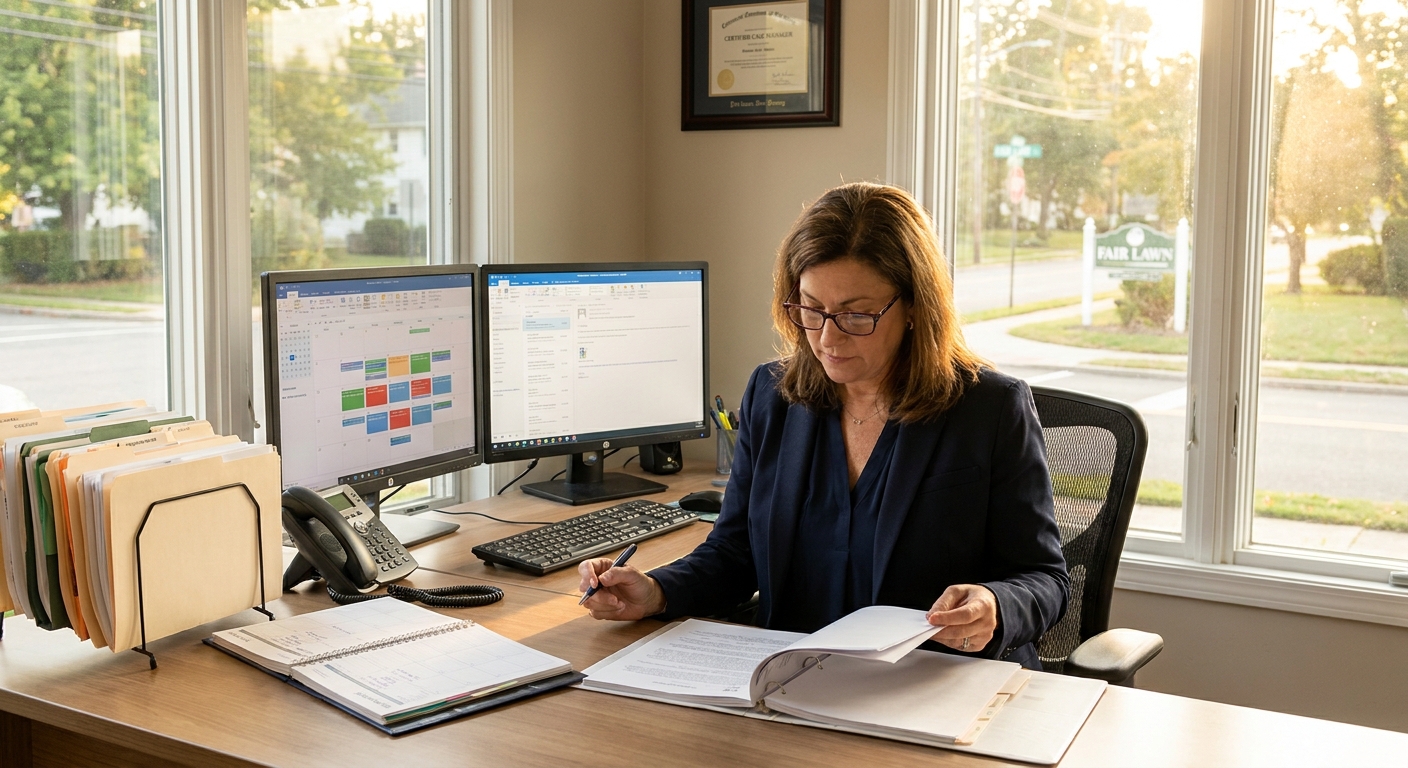
You keep your morning routine, drop your kids at school, go to work, pick them up after, make dinner, and then drive to treatment while your partner handles bedtime. You’re in group three hours later, processing the same cravings and triggers everyone else is naming out loud, and you drive home knowing you’ll do it again tomorrow. This is IOP, the structure and clinical intensity of residential care, rebuilt around the life you’re trying to keep intact.
That is the whole point of an intensive outpatient program done right. You receive treatment while maintaining the life you have been fighting to hold together. If you are the one silently keeping the shifts covered and the paycheck coming while something underneath quietly comes apart, this is written for you. This is a judgement free zone. Nobody here is going to ask you to burn it all down to seek wellness.
What the Intensive Outpatient Program Fair Lawn Residents Rely On Really Involves
An intensive outpatient program is a structured level of clinical care that provides therapeutic hours each week while you continue to live at home and go to work. Resilience Recovery Center runs its intensive outpatient program in Fair Lawn at ASAM level 2.1, the placement standard the American Society of Addiction Medicine uses to match a person to the right intensity of care.
The program is built in three tiers, and you step down as you stabilize. The top tier is 15 hours a week: five days of three-hour sessions. From there you move to 9 hours a week across three days, then aftercare, three hours on a single day, to keep you connected as life evolves. Each tier runs roughly 30 days, though the timing follows your progress, not a calendar. Individual experiences with this structure vary.
The schedule bends around your job, not the other way around. A morning track (9:00 AM to 12:00 PM) and an evening track (6:00 PM to 9:00 PM) both run Monday through Friday. Individual counseling and psychiatric follow-up can happen by telehealth when getting to the River Road office between shifts is not realistic. You pick the track that fits your schedule, and you build your recovery plan around the hours you are already awake and available.
Can You Actually Do IOP While Working Full Time in Fair Lawn?
Many people attend IOP while maintaining employment, and this is a common concern the program was designed to address. Fair Lawn and the rest of Bergen County include many dual-income households where missing work has financial implications. The morning and evening tracks exist so you can attend either before your shift or after it, and telehealth covers the individual and psychiatric appointments that would otherwise require time off.
Where some programs leave paperwork to clients, this one offers support with the process. FMLA and temporary disability paperwork can be complex, and errors can create challenges. Here, you are paired with a case manager, and the center’s Medical Director, an MD and board-trained psychiatrist, reviews your paperwork to help ensure it follows protocol before submission. In one case, a client’s FMLA documentation was completed, reviewed by the doctor, and sent to his HR department, which granted him 90 days of protected leave. His temporary disability claim was filed alongside it, and his position remained available while he focused on treatment. Individual outcomes vary, and employment protection depends on multiple factors including employer policies and eligibility requirements.
We are here to support you every step of the way, including the parts that have nothing to do with the therapy room and everything to do with managing your real world responsibilities while in treatment.
Medication-Assisted Treatment and the Doctor Who Actually Oversees It
Medication-assisted treatment (MAT) at Resilience Recovery Center is managed in-house by a Medical Director who is an MD and a board-trained psychiatrist, rather than outsourced to a clinic across town that doesn’t communicate with your therapist. That distinction matters. When your prescriber and your clinical team share the same table, your medication and your therapy can be coordinated more effectively.
The MAT options include buprenorphine (Suboxone), Sublocade, naltrexone, and Vivitrol. A person stepping into IOP after detox elsewhere sees the doctor for a psychiatric evaluation and medication management. One person coming out of detox was started on Suboxone and then scheduled for monthly Sublocade injections. Every medication decision is reviewed and followed up weekly, with regular communication across the team.
Medication is one component of treatment, not the entire approach. It may help manage cravings and stabilize physical symptoms so therapeutic work becomes more accessible, though individual responses vary. Medication here is sequenced to support therapy, not to replace it. Consider a 36-year-old client with alcohol use disorder and generalized anxiety who entered the evening track after detox and was prescribed naltrexone at 50 mg daily. Over his first four weeks, he reported reduced cravings, improved sleep patterns, and maintained his full-time job. Individual responses to medication vary.
The Therapy Behind the Program and the People Who Lead It
Your treatment plan is built from a comprehensive biopsychosocial and ASAM assessment, so it starts with your actual history, your co-occurring conditions, and your real responsibilities rather than a template. Many people arrive with more than one challenge: opioid or alcohol use disorder alongside trauma and PTSD, depression, anxiety, bipolar disorder, or ADHD. All of it is addressed in one coordinated plan.
The clinical work draws on multiple evidence-based approaches. Cognitive behavioral therapy (CBT) helps you identify and examine thought patterns. Dialectical behavior therapy (DBT) builds skills for managing intense emotions. Motivational interviewing explores your personal reasons for change. Trauma-informed care addresses past experiences that may contribute to present challenges. The program also includes psychoeducation, relapse prevention planning, hypnotherapy, 12-step support, and health and wellness coaching, plus individual and group sessions.
Clinical leadership includes Clinical Director Tammy Nussbaum, LCADC and CCS, with 20 years of experience. The therapists are dual-licensed as LCADC, LAC, and LSW, alongside CADC and CCADC counselors, CPRS peer recovery specialists, a certified case manager, and a pastor for those who incorporate spiritual elements in their recovery. In the interest of transparency, the center is not yet CARF or Joint Commission accredited. What you receive is care from named, licensed professionals.
Case Management, Housing, and What the Outcomes Actually Show
Clinical care exists alongside practical support when life circumstances create additional challenges. Wraparound case management is part of this program. The team coordinates housing placement, vocational coaching, transportation, legal paperwork, and disability applications alongside therapy.
Some examples include: One client came out of inpatient treatment without housing or employment. Case management secured him a two-week sober living scholarship of $500, provided resume and interview coaching, and supported him through six job interviews. He obtained employment, reached 90 days in recovery, and maintains both housing and work. Individual outcomes vary. Richard experienced multiple relapses over two years. Once he was connected to employment support, he began working full time at a local supermarket and his pattern changed. These represent individual experiences, and results differ from person to person.
Among current active clients, preliminary data shows six of six people moving through the 15-hour, 9-hour, and aftercare tiers at the 30-day mark. One 36-year-old client on naltrexone maintained his full-time job through the program and had consistent attendance. Two other clients who had struggled with both work and housing are both currently paying rent and employed. Individual experiences and outcomes vary. In their own words, clients have expressed that “this place really cares,” and they had not received treatment like this despite going through other facilities before.
Licensing, Insurance, and Where to Find Us in Fair Lawn
Resilience Recovery Center holds New Jersey state licensure and DMHAS approval for intensive outpatient substance use treatment at ASAM level 2.1. The center has met state requirements to deliver this level of care, and the facility operates under the oversight and regulations of the New Jersey Department of Health.
The center accepts major commercial insurance plans, including Blue Cross Blue Shield, Aetna, Cigna, and UnitedHealthcare. The admissions team verifies your benefits and walks you through your out-of-pocket responsibility before you enroll, so you understand costs before starting.
The Fair Lawn office sits at 17-17 River Road, a location that places treatment within reach for working people across Bergen County without sacrificing hours in commute time. Most clients can reach the building in 15 to 25 minutes from surrounding towns, and parking is available directly at the site. You can tour it, meet the people, and ask questions in person.
If you have decided you need help but you are concerned about what seeking it might involve, start with one call.
Call Resilience Recovery Center at (973) 200-7473 to schedule a biopsychosocial assessment, verify your insurance benefits, and discuss morning or evening IOP start dates in Fair Lawn, NJ.
Frequently Asked Questions
How many hours per week is IOP at Resilience Recovery Center in Fair Lawn?
The top tier is 15 hours per week, delivered as five days of three-hour sessions. As you stabilize, you step down to 9 hours per week across three days, then to a 3-hour, one-day-per-week aftercare tier. Each stage runs roughly 30 days, adjusted to your progress rather than a fixed clock.
Can I attend IOP if I work full time in Fair Lawn, NJ?
Many people attend IOP while working. Both a morning track (9:00 AM to 12:00 PM) and an evening track (6:00 PM to 9:00 PM) run Monday through Friday, and individual counseling and psychiatric follow-up are available by telehealth. The team also coordinates FMLA and temporary disability paperwork to support income and position protection while you attend, though eligibility and outcomes depend on individual circumstances and employer policies.
Does IOP here include medication for opioid or alcohol use disorder?
Yes. An in-house Medical Director who is an MD and psychiatrist prescribes and manages Suboxone, Sublocade, naltrexone, and Vivitrol, with weekly follow-up. Medication is integrated with your therapy rather than handled by a separate outside clinic. Medication addresses certain physical aspects while therapy addresses psychological and behavioral factors. Individual responses to medication vary.
Is Resilience Recovery Center licensed by the state of New Jersey?
Yes. The center holds New Jersey state licensure and DMHAS approval for outpatient and intensive outpatient treatment at ASAM level 2.1, meeting state requirements to deliver this level of care.
What is the difference between IOP and standard outpatient treatment in Fair Lawn?
An intensive outpatient program in Fair Lawn provides 9 to 15 hours of structured group therapy, psychoeducation, and case management each week. Standard outpatient treatment typically involves fewer than 9 hours and centers on individual counseling. IOP is the more intensive option, often used after detox or as a step down from a higher level of care.
Will my insurance cover IOP at Resilience Recovery Center?
The center accepts major commercial plans, including Blue Cross Blue Shield, Aetna, Cigna, and UnitedHealthcare. The admissions team verifies your benefits and reviews your out-of-pocket costs with you before enrollment, so you understand your coverage before you begin. Coverage varies by individual plan.
Start Your Recovery Journey Today
If you’re looking for structured support while maintaining your daily routine, an intensive outpatient program in Fair Lawn might be the right step forward. Resilience Recovery Center offers compassionate care designed around your life, not the other way around. Reaching out doesn’t mean you have everything figured out,it just means you’re ready to explore what’s possible.