
Why group counseling for substance abuse matters
When you think about getting help for addiction, you might picture one-on-one sessions with a therapist. That kind of work is important, but group counseling for substance abuse is where many people discover a deeper sense of resolve and accountability.
Group therapy is not a side option in treatment. More than 90% of substance use disorder treatment facilities in the United States use group therapy as a core part of care, often in open-enrollment groups where people can join and leave over time [1]. You see the same thing in mutual-help groups like NA and other programs, where attending meetings is closely linked to reduced drug use and lower addiction severity [2].
If you are looking for structured therapy without going into residential rehab, understanding how group counseling works can help you decide whether it belongs in your recovery plan and how it can strengthen your commitment to change.
How group counseling supports lasting change
Group counseling for substance abuse gives you benefits you simply cannot get on your own. It connects you with people who are working toward the same goal, and it places you in a space where your choices and insights matter not only to you, but to everyone in the room.
Breaking isolation and shame
Addiction often thrives in secrecy. You might hide your use, your cravings, or your relapses from friends and family. Over time, this isolation feeds shame and makes it harder to ask for help.
Group therapy directly challenges that pattern. Instead of trying to manage everything alone, you sit with others who understand what you are going through. Research on group treatment for substance abuse shows that group formats reduce isolation, provide hope, and help you manage depression and shame that often travel with addiction [3].
Seeing others speak honestly about their experiences gives you permission to do the same. You realize that your struggles are not proof that you are broken, they are part of a disease that many people are actively working to recover from.
Harnessing healthy peer pressure
On your own, it is easy to negotiate with yourself. You can talk yourself into “one more” or convince yourself you will restart tomorrow. In group counseling, you are surrounded by people who remember what you said last week and who are willing to ask how you are doing with the commitments you made.
That kind of positive peer pressure is one reason group therapy can work as well as or even better than individual therapy for some people. It gives you:
- Accountability to show up regularly
- Encouragement when you hit a rough patch
- Gentle confrontation if you start making excuses
- Real-time feedback on how your thinking may be putting you at risk
Guidelines from the Substance Abuse and Mental Health Services Administration (SAMHSA) describe these forces of affiliation, support, and constructive confrontation as core reasons group therapy improves prognosis and extends the benefits of treatment [3].
Seeing recovery in real time
In a well-run group, you sit with people at very different points in their journey. Some may be just entering treatment. Others may have months or years of sobriety and are using group counseling to maintain their progress.
This mix gives you something individual counseling cannot: a live, ongoing picture of recovery. You can watch how others:
- Navigate triggers and cravings
- Repair relationships
- Build new routines
- Respond to setbacks without giving up
Programs that use group therapy as a core part of treatment highlight this benefit. When you see someone who once sat where you are now managing life with more stability, it makes long-term sobriety feel more realistic and worth fighting for [4].
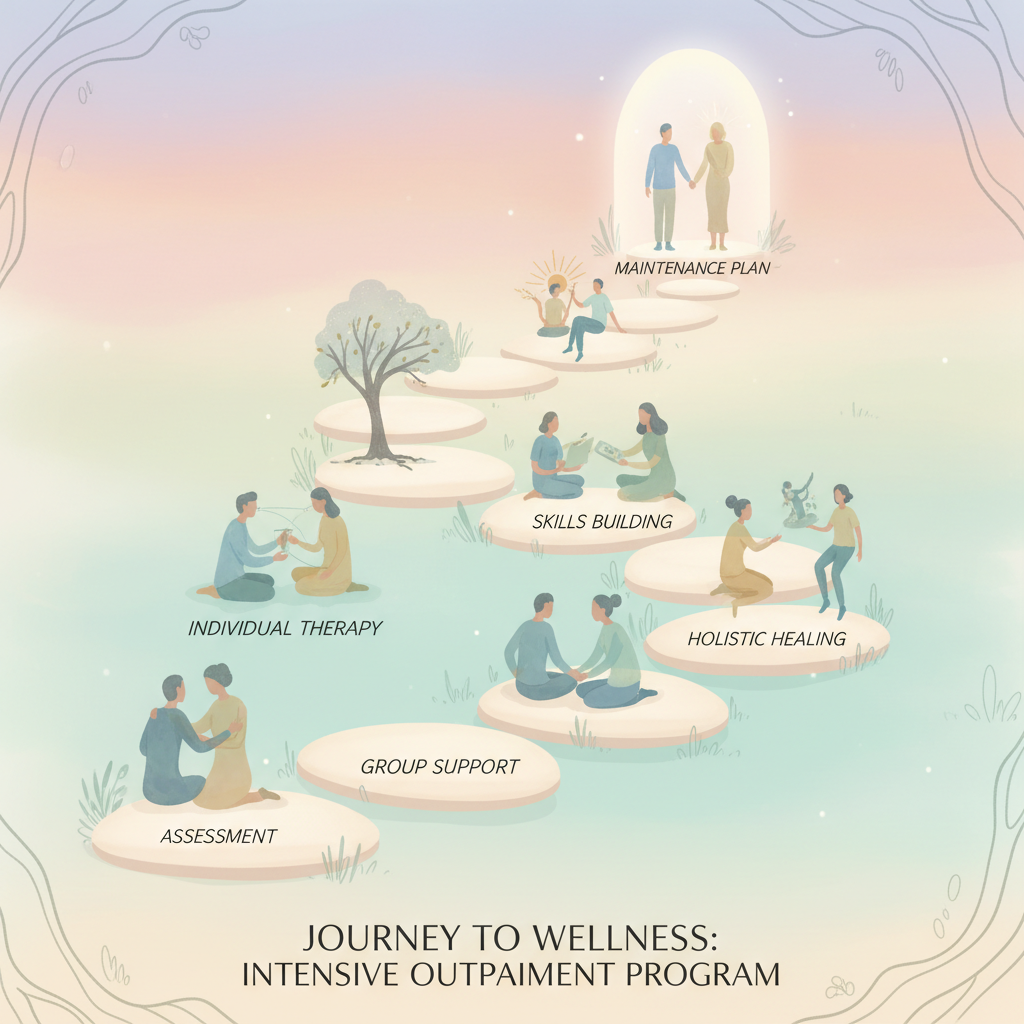
If you choose a structured group therapy for addiction recovery program, you will typically have this progression built into your experience.
Types of group counseling you might use
Not all groups are the same. Understanding the different models will help you choose settings that match your needs and stage of change. SAMHSA’s guidelines on substance abuse treatment describe five primary group therapy models that clinicians use [5].
Psychoeducational groups
Psychoeducational groups are designed to increase your understanding of addiction and recovery. In these groups you learn about:
- How substances affect your brain and body
- The connection between stress, emotions, and cravings
- The stages of change and what relapse really means
- Practical strategies for coping with high-risk situations
These groups are especially useful if you feel unsure about treatment or are still deciding how committed you are to change. They are more structured, and the leader typically takes an active teaching role [5].
Psychoeducation is often built into a broader substance abuse counseling program, so you can combine learning with more interactive therapeutic work.
Skills development groups
Skills groups focus on things you can practice. They are grounded in cognitive behavioral principles and usually involve 8 to 10 participants, which allows everyone time to participate [5].
In a skills group you might work on:
- Refusal skills for when someone offers you alcohol or drugs
- Managing anger and conflict in healthier ways
- Communication techniques that reduce stress and misunderstanding
- Coping strategies for cravings and emotional triggers
Leaders model skills, encourage practice, and give feedback as you try new behaviors. This approach serves as a bridge between insight and action and fits naturally with a structured behavioral therapy for substance abuse plan.
Cognitive behavioral groups
Cognitive behavioral therapy (CBT) groups help you understand how your thoughts, beliefs, and expectations feed your substance use. Early recovery is often a good time for this work, since you are starting to see how your old patterns are affecting your life.
Sessions might include:
- Identifying thinking traps that lead to “just this once” decisions
- Challenging beliefs like “I cannot cope without using”
- Planning for high-risk situations and practicing alternative responses
- Building relapse prevention strategies together
SAMHSA notes that CBT groups for substance use typically use structured protocols that include relapse prevention and social support components [5]. These groups align closely with an addiction relapse prevention therapy approach and can be a central part of your therapy based addiction recovery program.
Support and interpersonal process groups
Support groups provide a safe place to talk about your day-to-day life in recovery. They often draw from 12-step principles and mutual-help traditions. The focus is on:
- Coping with cravings and stress
- Managing work, family, and health while staying sober
- Receiving empathy and encouragement
- Staying connected to a recovery community
Interpersonal process groups go deeper into patterns in your relationships. These groups explore how you interact with others, where you feel stuck, and how old wounds influence your behavior today. They require skilled leaders and a longer-term commitment [3].
You might engage in these groups alongside individual therapy for addiction so you can process what emerges one-on-one and in the group setting.
What actually happens in a group session
Before you walk into your first group counseling session, it helps to know what to expect. While every program has its own style, effective SUD groups tend to share several important features.
Structure and guidelines
Group sessions typically begin with a brief check-in, review of group guidelines, and clarification of the day’s focus. Common ground rules include:
- Respecting confidentiality
- Allowing others to speak without interruption
- Avoiding graphic “war stories” that may trigger others
- Focusing on your own experiences rather than giving advice
Confidentiality is especially important. Many people hesitate to share because they worry their story may leave the room. Programs that emphasize clear confidentiality agreements usually see more trust and openness over time [6].
Balancing participation
Not everyone in group talks the same amount. Some people are naturally quiet. Others are used to filling space. Skilled facilitators work to balance these tendencies so that no one dominates and no one disappears into the background.
Without that balance, dominating behavior by one or two members can silence quieter voices and undermine the sense of safety, so leaders intervene early and redirect the conversation as needed [6].
If you are more reserved, your therapist will likely support you in taking small, manageable risks in sharing so you can benefit from being fully part of the group.
From education to skills practice
Many clinics rely heavily on lectures, worksheets, and videos during group sessions. Research with SUD clinicians in the United States found that didactic education is still very common, while active practice such as role-playing or mindfulness exercises is less frequent [1].
However, the same research highlights a growing emphasis on evidence-based components like motivational interviewing and CBT in groups [7]. This shift is important for you because:
- Education alone can increase awareness
- Skills practice and feedback help you behave differently when you leave group
When you join a structured substance abuse therapy program, you can ask how often sessions involve active practice rather than only lecture-style teaching.
In addiction recovery, the groups that change you most are usually the ones where you do the work in the room, not just listen to someone talk at the front.
Common challenges in group counseling and how you work through them
If you have never done group therapy before, some parts of it may feel uncomfortable at first. That does not mean the process is not working. Often, the difficult moments are where growth begins.
Hesitation and fear of judgment
Many people walk into their first group feeling anxious. You might wonder:
- “What if I say the wrong thing?”
- “What if people judge me?”
- “What if my story is too much or not enough?”
These concerns are normal. Group leaders are trained to recognize this and to create a welcoming, nonjudgmental environment. They will encourage gradual participation, not pressure you to share everything at once.
Over time, as you listen to others be vulnerable, you may find your own fear easing. Seeing someone else take a risk and be met with support can unlock your own willingness to open up, which is a key benefit of group therapy during addiction recovery [4].
Conflict and strong emotions
Whenever you put people together, conflict is possible. You might disagree with someone’s choices or feel triggered by another member’s story. The goal is not to avoid all conflict, but to handle it constructively.
Well-facilitated groups use conflicts and tense moments as opportunities for growth. When members learn to express frustration, set boundaries, and repair misunderstandings inside the group, they can carry those skills into their families, workplaces, and friendships [6].
Uneven readiness to change
In many outpatient SUD settings, groups are “open,” which means new people can join at any time. Research with clinicians in Midwestern clinics found that this format requires flexibility because people enter group with different levels of readiness, from just starting to think about change to actively working on relapse prevention [1].
This can be frustrating if you are very motivated and others seem less engaged, or if you are just starting and feel overwhelmed by people further along. Skilled leaders respond by:
- Tailoring discussions so each member has something useful to work on
- Pairing newer members with peers further along for mentorship
- Naming the differences in readiness openly so that no one feels ignored
If you are in an addiction therapy outpatient program, your clinician may adjust your group placement over time so that you move into groups that match your current needs and goals.
How group counseling fits into therapy-driven outpatient recovery
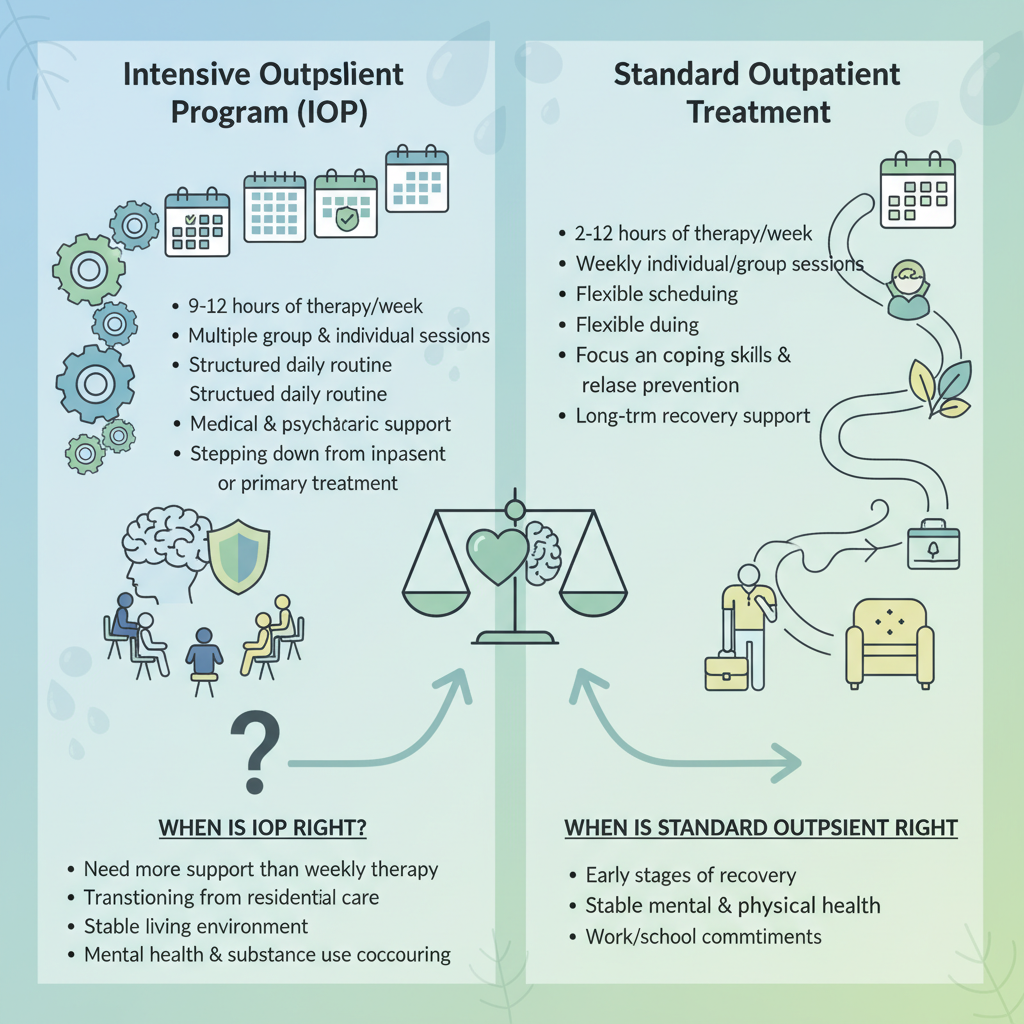
If you do not want or need residential rehab, you can still access a robust, therapy-focused approach to recovery through outpatient care. Group counseling is a central piece, but it is not the only one.
Combining group therapy with individual counseling
Group and individual counseling work best together. Individual sessions give you space to:
- Explore personal history and trauma
- Address co-occurring mental health concerns
- Prepare for difficult conversations in group
- Digest and integrate group experiences
- Develop highly tailored relapse prevention plans
Group settings give you a place to practice what you discuss individually in a social environment. For many people, this combination offers more support than either format alone.
A comprehensive addiction counseling program or addiction therapy program will typically include both individual and group sessions so you can work at depth and in community.
Building relapse prevention into your routine
Relapse prevention is not a single session or worksheet. It is an ongoing process of learning where you are vulnerable, planning for risk, and refining your strategies as life changes.
Group counseling supports relapse prevention by letting you:
- Hear about real-life triggers before you face them
- Practice refusal and boundary-setting in a safe environment
- Learn from others’ relapses and comebacks without repeating the same mistakes
- Get feedback when your thinking starts drifting toward risk
When this work is integrated with a dedicated substance abuse relapse prevention program and targeted addiction therapy treatment program, you develop a set of tools that will stay with you well beyond your time in formal treatment.
Integrating behavioral health therapy
Addiction rarely exists in isolation. Anxiety, depression, trauma, and other behavioral health concerns often play a significant role in why you started using and why it has been difficult to stop.
Therapy-driven outpatient programs address this reality through integrated behavioral health therapy for addiction. Group counseling can focus on:
- Coping with mood swings in early sobriety
- Managing trauma symptoms without using substances
- Understanding how mental health medications and addiction treatment intersect
- Building everyday routines that support both mental health and recovery
This integration is equally important whether you are in drug addiction therapy treatment or an alcohol addiction therapy program. In either case, you are addressing the whole picture, not just the substance.
Adding mutual-help groups to your plan
Many people benefit from attending mutual-help groups (MHGs) like Narcotics Anonymous or other community-based meetings in addition to formal therapy. Research from 2019 to 2024 shows that involvement in MHGs is consistently associated with reduced drug use and lower addiction severity [2].
These groups can be:
- In-person
- Online
- Hybrid
If you are already using a structured addiction recovery counseling program, your therapist can help you select mutual-help meetings that align with your values, especially if you take medications for addiction treatment and want a setting that supports that choice.
Getting started with group counseling for substance abuse
Taking the first step into group counseling can feel intimidating. You do not have to map out every detail on your own. A good starting point is to connect with a program that specializes in therapy-centered outpatient care, where group counseling is one component of a larger, coordinated plan.
Within a comprehensive addiction recovery counseling services or therapy based addiction recovery program, you can expect:
- A clinical assessment to understand your history, substances of use, mental health, and support system
- A personalized recommendation that balances group, individual, and possibly family therapy
- Clear information about group formats, schedules, and expectations
- Ongoing adjustment of your treatment plan as you progress
If you are not sure where to start, SAMHSA’s National Helpline offers free, confidential referrals to local treatment facilities, support groups, and community organizations 24 hours a day, 365 days a year [8]. The helpline does not provide counseling directly, but it can connect you with programs in your area that include group counseling options.
From there, you can choose services that fit your life, such as:
- A focused substance abuse counseling program
- Targeted drug addiction counseling services
- An alcohol recovery counseling program if alcohol is your primary substance
These outpatient options allow you to stay connected with work, school, and family while you build a strong foundation for long-term recovery.
Group counseling for substance abuse gives you more than coping skills. It surrounds you with people who understand the stakes, share your goals, and help you hold firm when urges and doubts show up. When you combine that level of peer support with structured, evidence-based therapy and a clear relapse prevention plan, you significantly increase your chances of building a sober life that feels worth protecting.