
Understanding an addiction therapy outpatient program
When you are exploring treatment options, an addiction therapy outpatient program can offer structured support without requiring you to step away from your entire life. In an outpatient setting, you attend planned therapy sessions during the week and then return home afterwards. You do not stay overnight, which gives you more flexibility to manage work, school, and family responsibilities while still focusing on recovery.
Outpatient addiction treatment is therapy based. Your schedule may include individual counseling, group sessions, family meetings, education about substance use, and relapse prevention work. Many programs also integrate medication management when appropriate, especially for alcohol or opioid use disorders, along with behavioral therapies such as cognitive behavioral therapy (CBT) and motivational approaches [1].
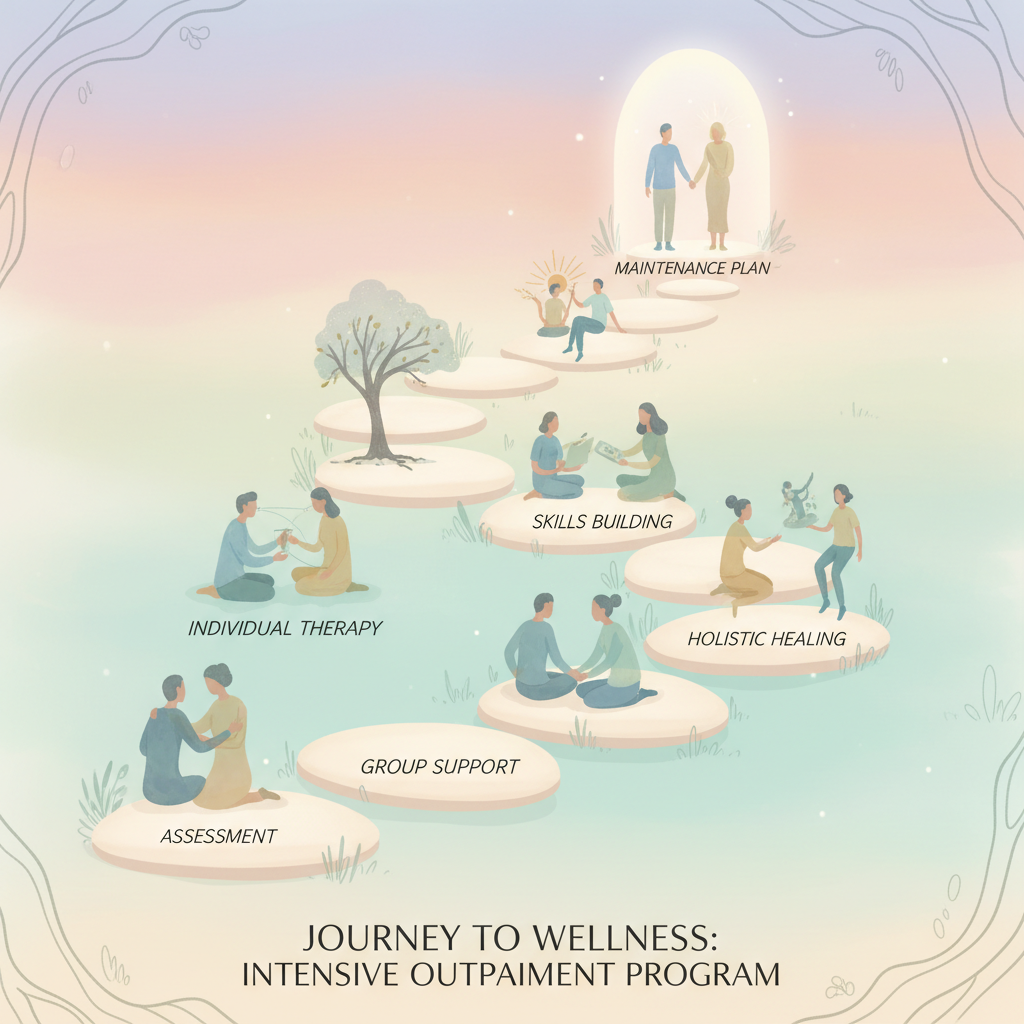
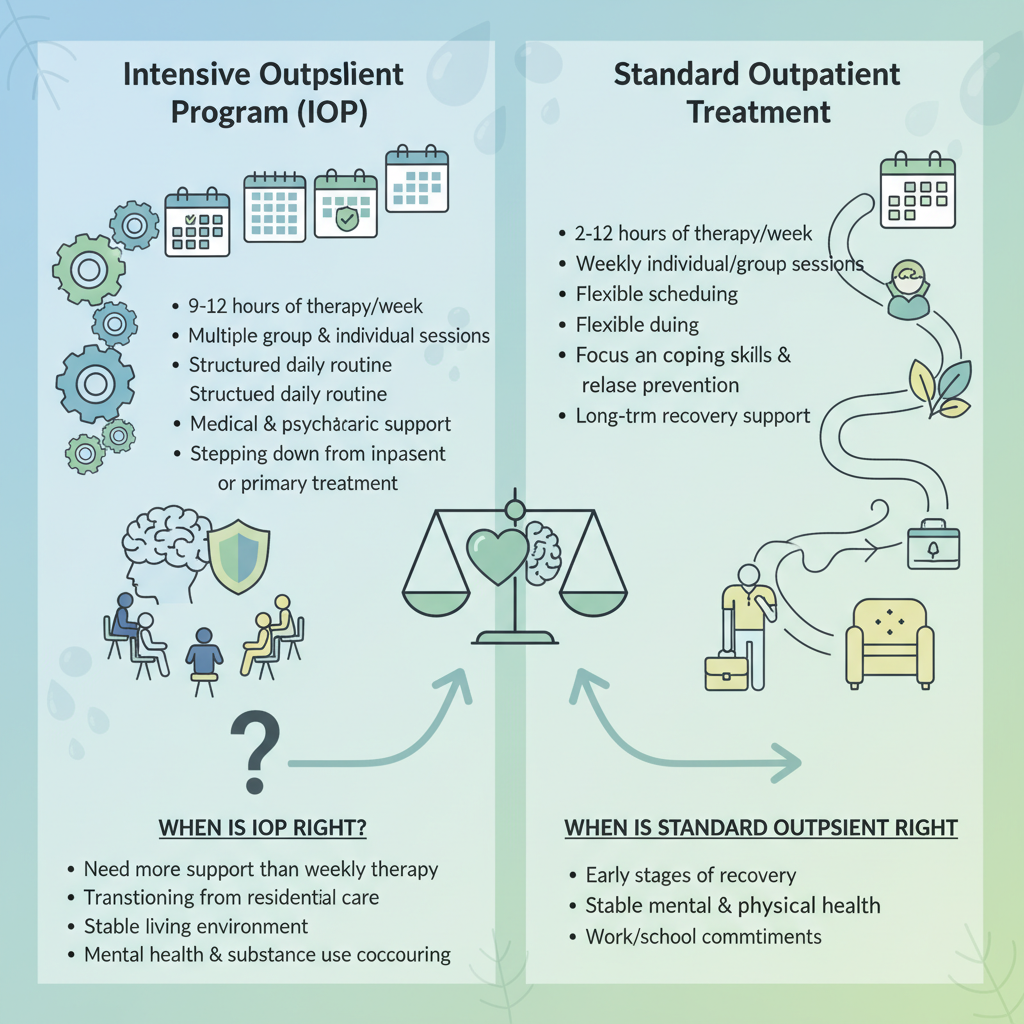
Intensive outpatient programs, often called IOPs, typically meet around three days a week for about three hours per session and combine one on one therapy, group therapy, educational programming, experiential activities, and family coaching to support lasting recovery [2]. More intensive partial hospitalization programs (PHP) may meet five days a week for about five hours a day and can be a step down from inpatient care or an alternative if you need a high level of structure [2].
By choosing a therapy focused outpatient program, you give yourself regular contact with clinical support while you actively practice new skills in your daily life. This combination of structure and independence is one of the reasons outpatient rehab is considered both effective and practical for many people [3].
Comparing outpatient and inpatient treatment
If you are deciding between inpatient and outpatient care, it helps to understand how these approaches differ and how they can work together. Inpatient treatment provides 24/7 support in a residential setting. This can be important if you have severe withdrawal risks, complicated medical or psychiatric conditions, or an unstable home environment. Studies suggest that people in inpatient programs are more likely to complete treatment than those in outpatient care, particularly when they have high severity substance use disorders [4].
Outpatient rehab, on the other hand, is non residential. You live at home or in a sober environment and attend scheduled therapy appointments instead of residing on site [5]. This level of care tends to be ideal if you have mild to moderate addiction, if you are stepping down from inpatient treatment, or if you have a stable support system and can safely stay in your own community. Research indicates that for many people with alcohol dependence, community based outpatient detox can actually lead to better detox completion and abstinence outcomes than inpatient detox, with no increase in serious safety events [4].
In many cases, the most effective path is not inpatient versus outpatient, but inpatient followed by a structured outpatient program. One randomized trial found that inpatient treatment followed by outpatient care provided a modest early advantage in abstinence for individuals with high severity alcohol use disorder, though that advantage decreased after several months [4]. This pattern supports the idea of a treatment continuum: higher intensity when you need it most, then a step down to an addiction therapy outpatient program that helps you build a stable life in recovery.
Benefit 1: Maintain your daily responsibilities
One of the primary benefits of choosing an addiction therapy outpatient program is the ability to keep showing up for your life. You can stay connected to your work, family, and community while you receive structured care. This is especially important if you are a caregiver, a student, or someone whose employment cannot be paused for a long residential stay.
Outpatient schedules are designed with flexibility in mind. Depending on your level of care, you might attend daytime or evening sessions, several times per week or a few hours each day. These sessions can include a combination of individual therapy for addiction, group therapy for addiction recovery, and skills based workshops. Some programs also offer telehealth sessions, which can reduce travel time and make it easier to stay consistent with your appointments [1].
Because you remain in your home environment, you can immediately apply what you learn. When you practice coping strategies with real stressors, you and your therapist get an accurate picture of what is working and what needs adjustment. Over time, this real world practice in combination with regular counseling helps you build a sustainable recovery plan that fits your actual life.
Benefit 2: Access intensive, structured therapy
Although outpatient programs are flexible, the best ones are still very structured and therapy driven. You are not simply checking in. You are engaging in a coordinated substance abuse therapy program that targets the psychological, behavioral, and relational patterns that keep addiction in place.
In an intensive outpatient program, you typically receive:
- Weekly or twice weekly individual therapy for addiction
- Multiple group counseling for substance abuse sessions each week
- Education on substance use, mental health, and recovery
- Skills training for emotion regulation, communication, and stress management
- Relapse prevention planning and monitoring
Sessions often draw from evidence based approaches like CBT, motivational interviewing, and family therapy, which focus on changing thoughts and behaviors linked to substance use [1]. For opioid or alcohol use disorders, medication management may also be part of your addiction therapy treatment program, which can improve comfort and reduce cravings [1].
The result is a treatment plan that is deliberate and organized. Your therapist is not just reacting to crises. Together you are following a roadmap that aligns with your goals, your history, and your stage of change.
Benefit 3: Focus on behavioral therapy for lasting change
Recovery is not only about removing substances. It is about understanding why you use them and learning healthier ways to cope. An addiction therapy outpatient program emphasizes behavioral therapy for substance abuse and behavioral health therapy for addiction so that you address the drivers of your substance use.
Behavioral therapies help you:
- Identify high risk situations and internal triggers
- Notice and challenge unhelpful thoughts that lead to cravings
- Build alternative coping skills for stress, anxiety, depression, or trauma responses
- Practice new behaviors in real time and review them in session
Cognitive behavioral therapy is a core component in many programs. Through CBT, you learn to map the chain from trigger to thought to feeling to action and then interrupt that chain with more effective responses. Motivational approaches help you resolve ambivalence about change and stay engaged in your therapy based addiction recovery program. Family therapy can support healthier boundaries and communication within your home, which is especially valuable if you are returning to the same environment in which you used substances [1].
When you work this deeply on your behavior patterns, your chances of sustaining long term sobriety increase. You are not relying on willpower alone. You are learning specific tools and strategies and practicing them repeatedly until they become more natural.
Benefit 4: Strengthen relapse prevention skills
Relapse is common in substance use disorders, but it does not have to define your recovery. A major advantage of outpatient addiction therapy is the ongoing focus on addiction relapse prevention therapy and substance abuse relapse prevention program strategies.
In a therapy driven outpatient program, relapse prevention is not a single session or handout. It is woven into your entire treatment plan. You and your therapist work together to:
- Identify your unique warning signs and triggers
- Develop detailed coping strategies for each high risk scenario
- Create a step by step plan for what to do if cravings increase
- Involve supportive people who can help you stay accountable
Because you are living at home, you have immediate opportunities to test your relapse prevention plan. If something does not work as expected, you bring the experience back to therapy and revise the plan. This ongoing feedback loop is one reason outpatient care is so well suited to building durable relapse prevention skills.
External support groups can also play a role here. Many programs encourage or help you connect with mutual help groups such as Alcoholics Anonymous, Narcotics Anonymous, or SMART Recovery, which can offer peer support and additional accountability [2]. As you combine professional addiction recovery counseling services with community support, you create multiple layers of protection around your recovery.
Benefit 5: Improve your mental and emotional health
Substance use rarely exists in isolation. Many people who seek a substance abuse counseling program are also managing depression, anxiety, trauma, or other mental health conditions. An addiction therapy outpatient program is designed to address both, rather than treating your substance use and mental health as separate problems.
Through addiction recovery counseling, you can safely talk about past experiences, shame, grief, and the emotions that may have contributed to your substance use. Therapists trained in behavioral health can help you develop skills to manage mood swings, intrusive thoughts, or trauma related symptoms without turning to drugs or alcohol.
If you are dealing with alcohol or drug use along with a co occurring mental health concern, integrated care can be especially important. For example, some programs combine alcohol addiction therapy program services with medication management for mood or anxiety disorders when clinically appropriate. Others coordinate drug addiction counseling services with psychiatric care to make sure your treatment approaches do not conflict. This kind of comprehensive support gives you a better chance of stabilizing both your mental health and your recovery.
Benefit 6: Build peer support and accountability
Recovery often feels less overwhelming when you realize you are not going through it alone. In outpatient treatment, group therapy for addiction recovery and group counseling for substance abuse are central parts of the process. These groups create a setting where you can share experiences, learn from others, and practice new relationship skills in a safe environment.
In group sessions, you might explore themes like managing cravings, rebuilding trust, handling anger, or preparing for social situations without substances. Hearing how others cope can give you practical ideas that you can adapt to your own life. At the same time, offering support to your peers can increase your own sense of responsibility and confidence.
This sense of camaraderie is not just emotional. It is also practical. When you know that others are showing up and doing the work with you, it becomes easier to attend sessions consistently and stay engaged in your addiction counseling program. Over time, these relationships can extend beyond treatment, giving you a sober network that continues to support your recovery.
Benefit 7: Support for different substances and severities
Addiction looks different from one person to another, and an effective outpatient program reflects that. Whether you are seeking drug addiction therapy treatment, an alcohol recovery counseling program, or support for multiple substances, therapy based care can be tailored to your specific pattern of use.
Some outpatient programs are especially structured around opioid use disorders. Many opioid treatment programs are outpatient and combine medication such as methadone, buprenorphine, or naltrexone with counseling to treat opioid dependence effectively [1]. Guidelines from the British Columbia Ministry of Health highlight that, for many people, opioid withdrawal can actually be managed more safely and flexibly in outpatient settings, particularly when tapering medications slowly over time [4].
Other programs focus on alcohol or stimulant use and may integrate specialized education and skills training to address the effects of those substances. Regardless of your substance of choice, your clinicians will work with you to determine the right intensity of care. For some, a less intensive substance abuse therapy program a few hours a week is adequate. For others, a higher intensity intensive outpatient or partial hospitalization schedule is more appropriate [5].
Benefit 8: Often more accessible and affordable
Practical considerations matter. An addiction therapy outpatient program is usually less expensive than residential rehab because you are not paying for room, board, and 24 hour supervision. This lower cost can make treatment more accessible, especially if you anticipate needing ongoing support over many months.
Insurance coverage is another factor. Many private plans, as well as Medicaid, Medicare, and marketplace plans, help cover outpatient addiction treatment services. Facilities may also offer in network arrangements and payment options to improve access [3]. When costs are more manageable, you are more likely to stay with your addiction therapy program long enough to see meaningful results.
If you do not currently have insurance or are unsure where to start, you can contact SAMHSA’s National Helpline at 1 800 662 HELP (4357). This free and confidential service is available 24/7 every day of the year to connect you with local treatment facilities, community based organizations, and support groups, including outpatient options [6]. The helpline can also direct you to state funded programs or facilities with sliding fee scales or that accept Medicare or Medicaid.
How Resilience Recovery Center supports therapy driven outpatient care
When you choose a therapy driven outpatient program, you are choosing to invest in long term change rather than a short term fix. At a center that prioritizes counseling and behavioral health, your care is built around structured, evidence based therapies instead of relying only on detox or brief education.
A comprehensive outpatient approach typically includes:
- A personalized addiction therapy treatment program based on your history, goals, and current needs
- Regular addiction recovery counseling sessions to explore underlying issues and build coping skills
- Integrated behavioral therapy for substance abuse that targets thought and behavior patterns linked to use
- Focused addiction relapse prevention therapy and planning to reduce your risk of returning to use
- Access to specific services such as a substance abuse counseling program, drug addiction therapy treatment, or alcohol addiction therapy program depending on your situation
By engaging in this kind of therapy based care, you give yourself consistent support while you rebuild your life in real time. You are not waiting until after treatment to face your day to day challenges. You are working through them with professional guidance and peer support every step of the way.
If you are ready to explore a structured, counseling focused path to recovery that fits your life, an addiction therapy outpatient program can provide a balanced combination of flexibility, accountability, and depth.