Understanding the steps in an intensive outpatient program
When you start looking at the steps in an intensive outpatient program, it can feel like you are trying to decode a new language. You may be comparing IOP with inpatient rehab or weekly outpatient counseling and wondering what level of structure you really need. Understanding how intensive outpatient treatment works, step by step, can help you decide if this level of care fits your life, your responsibilities, and your recovery goals.
An intensive outpatient program gives you several hours of structured treatment multiple days per week, while still allowing you to live at home. Most IOPs provide a minimum of about 9 hours of care per week, often in three 3 hour sessions, and may increase the frequency or duration if you need more support [1]. This blend of structure and flexibility is what makes IOP different from both inpatient and standard outpatient care.
If you want a deeper dive into how this level of care operates, you can also review how intensive outpatient treatment works and what to expect in an iop program.
Step 1: Initial contact and pre‑screening
The first step in an intensive outpatient program usually begins before you ever walk through the door. Once you reach out, an admissions or intake team gathers basic information to determine whether IOP might be appropriate for you.
You can expect questions about your substance use, mental health history, any recent detox or inpatient stays, current medications, medical conditions, and your home environment. At this stage, the goal is not to diagnose you but to understand whether you are likely to be safe in a nonresidential setting or if you may need a higher level of care such as inpatient or residential treatment. If you are still deciding between iop vs inpatient rehab, this conversation can be an important part of the decision.
Some programs conduct this pre screening by phone, others do it virtually. If there are signs that you need medical detox or 24 hour supervision, the team will usually recommend starting with inpatient care, then stepping down to IOP once you are stable. If your needs match IOP level care, you move to the next step, a full evaluation.
Step 2: Comprehensive assessment and evaluation
Once you decide to move forward, you take part in a more detailed clinical assessment. This is one of the most important steps in an intensive outpatient program because it shapes your entire treatment plan.
Many IOPs start with a combined addiction and psychiatric assessment similar to the approach at Blake Recovery Center, where a physician evaluates both your substance use and mental health to build a personalized plan [2]. You can expect:
- A detailed substance use history
- Screening for co occurring mental health disorders such as anxiety, depression, PTSD, or bipolar disorder
- A review of your medical history and current medications
- Questions about family, work, and social support
- Exploration of previous treatment attempts and what has or has not helped
You may also complete standardized questionnaires that assess withdrawal risk, cravings, trauma history, or suicide risk. This process can feel intense, but it gives your treatment team a full picture of your situation so they can recommend the right structure and intensity.
If you want to understand more about who is a fit for this level of care, you can read who should attend an intensive outpatient program, who qualifies for intensive outpatient treatment, and when to choose intensive outpatient rehab.
Step 3: Determining if IOP is the right level of care
Not everyone who seeks help is best served in IOP. One of the early steps in an intensive outpatient program is confirming that IOP is actually the right fit compared with inpatient or standard outpatient counseling.
You may be a good candidate for IOP if:
- You do not require medical detox or 24 hour supervision
- You have a relatively stable living environment
- You can get to and from the program several times per week
- You need more structure than weekly therapy but do not need to live in a facility
Intensive outpatient programs are often used in two situations. They can provide a higher level of care when weekly outpatient therapy is not enough to keep you safe or out of the hospital, and they can serve as a step down when you are transitioning from inpatient or residential care back to daily life [3].
If your symptoms are mild and you mainly need ongoing support, you might compare iop vs outpatient addiction treatment. If you are coming out of detox or a residential program, you might look instead at addiction recovery intensive outpatient structure and how iop helps addiction recovery to see how this level of care can support your next phase.
Step 4: Creating your individualized treatment plan
After your assessment, your team creates a written treatment plan that outlines the goals, services, and schedule that will guide your time in IOP. This is not a generic plan. It is based on your specific history, co occurring conditions, risks, and strengths.
A comprehensive IOP treatment plan typically includes:
- Your primary treatment goals, such as abstinence, reduced use, or stabilization of mental health symptoms
- Specific therapies you will participate in, such as individual and group sessions, family therapy, or medication management
- Education topics you will cover, such as relapse warning signs, stress management, and healthy lifestyle skills
- A tentative length of stay, although your progress, rather than a fixed time, usually guides how long you remain in IOP [1]
At some programs, like those described by Magnolia Medical Group, this step includes a detailed consultation with specialists and therapists to design a combination of therapeutic appointments and peer support meetings that match your level of addiction severity and support system [4].
You can learn more about common therapy structures at intensive outpatient program therapy structure and how intensive outpatient therapy helps addiction.
Step 5: Understanding the IOP schedule and time commitment
One of the most practical steps in an intensive outpatient program is understanding what your weekly schedule will look like. IOP is designed to be intensive but still flexible enough to let you work, attend school, or care for family.
Many programs provide between 9 and 15 hours of therapy per week, often in 3 to 4 hour blocks, three to five days per week [3]. Some programs, such as those described by Providence Treatment, schedule sessions three to four times per week for two to four hours each, typically for 8 to 12 weeks [5]. Others, like Magnolia Medical Group, describe schedules where sessions start out daily and then gradually step down to three to five days per week, with each session lasting four to nine hours [4].
Evening or early morning sessions are common so you can maintain work or school responsibilities. For example, the IOP at Blake Recovery Center meets about three evenings per week for three hour sessions, so participants can maintain daily responsibilities while engaging in treatment [2].
If you are weighing how this might fit into your life, it may help to review:
- how many hours is an intensive outpatient program
- intensive outpatient program schedule for addiction
- can you work while in an intensive outpatient program
- how long does an iop program last
IOP is a real time commitment, but that level of structured support is often exactly what helps you stabilize in early recovery.
Step 6: Beginning core therapies and groups
Once your schedule is set, you begin the heart of IOP, the therapy work. The core components of most intensive outpatient programs include structured individual, group, and often family therapy combined with psychoeducation about substance use and mental health conditions [1].
Individual therapy
You normally meet one on one with a licensed therapist on a regular basis. These sessions help you:
- Identify personal triggers and high risk situations
- Address underlying issues such as trauma, grief, or relationship problems
- Develop coping strategies tailored to your specific challenges
Programs like Providence Treatment emphasize that individual therapy is where you work most directly on your unique needs and long term strategies [5].
Group therapy
Group sessions are a central part of IOP. In these groups, you share experiences, practice skills, and receive feedback from peers who are facing similar challenges. Group therapy promotes accountability and motivation and builds social support, which is critical in recovery [5].
Some IOPs also include family therapy groups so loved ones can learn about addiction, improve communication, and support your recovery. This is part of the approach at programs like Blake Recovery Center, where participants engage in both individual and family therapy alongside group counseling [2].
Step 7: Evidence based treatment approaches you may encounter
Another key step in an intensive outpatient program is exposure to a range of evidence based therapies. These approaches are backed by research and have been adapted specifically for intensive outpatient settings.
Common modalities used in IOP include:
- Cognitive Behavioral Therapy (CBT), which helps you identify triggers, challenge unhelpful thoughts, and build new coping skills. CBT is well suited to individuals living in their normal environments, and many programs encourage you to practice these skills between sessions [6].
- 12 Step Facilitation, which introduces you to the philosophy and practices of fellowships such as Alcoholics Anonymous. This approach emphasizes acceptance, accountability, spiritual growth, and active involvement in community based 12 Step meetings [6].
- Motivational approaches, such as Motivational Enhancement Therapy, which use empathic, client centered counseling to help you resolve ambivalence about change. Research has found that these approaches can be as effective as CBT and 12 Step facilitation in reducing alcohol use [6].
- Matrix Model based approaches, especially for stimulant dependence. These integrate CBT, 12 Step, and motivational strategies through a structured program that may include relapse prevention groups, family involvement, and close coordination by a primary therapist [6].
- Therapeutic community elements, community reinforcement, and contingency management, which focus on changing your environment, reinforcing healthy behaviors, and supporting long term lifestyle change [6].
Some IOPs also include adjunct therapies such as EMDR, equine therapy, yoga therapy, Transcranial Magnetic Stimulation, or ketamine infusions as a complement to traditional therapy, depending on your needs and what is available [3].
If you want more detail on how these therapies are structured across your week, see intensive outpatient program therapy structure.
Step 8: Education, skills training, and relapse prevention
In addition to therapy sessions, education and skills training are key steps in an intensive outpatient program. Psychoeducation helps you understand addiction and mental health conditions, while skills training teaches you how to navigate daily life without substances.
Many programs provide educational sessions that cover:
- Addiction as a chronic, treatable disease
- The impact of substances on your brain, body, and relationships
- Relapse warning signs and relapse prevention planning
- Coping with cravings and managing stress
- Sleep, nutrition, and exercise habits that support recovery
Providence Treatment, for example, notes that educational sessions are designed to equip you with the knowledge and practical tools needed to maintain recovery once treatment ends [5].
Relapse prevention work often includes identifying high risk situations, building a sober support network, rehearsing refusal skills, and planning for how you will respond if you slip. Since IOP allows you to remain in your home and community, you can immediately apply what you learn and then bring real life successes and challenges back into sessions for feedback [1].
Recovery in IOP is not just about stopping substance use during sessions. It is about practicing new behaviors in your real life, with your treatment team supporting and adjusting your plan as you go.
Step 9: Ongoing monitoring, medication, and progress reviews
Throughout your time in IOP, your primary therapist and broader team continually monitor your progress. This is another important step in an intensive outpatient program, because your needs can shift as you stabilize, encounter new stressors, or move into later stages of recovery.
Regular monitoring may include:
- Attendance and participation reviews
- Urine drug screens or breath tests, if part of the program
- Symptom check ins for anxiety, depression, or other mental health concerns
- Medication management appointments with a psychiatrist or prescribing clinician, especially if you take psychiatric medications [3]
At programs like Magnolia Medical Group, primary therapists use these ongoing assessments to adjust the program, identify problems early, and make sure the treatment remains effective [4].
Progress, not a preset timeline, usually determines when you move to a less intensive level of care. This flexibility is a core feature of IOP across many settings [1]. If you want more detail on effectiveness, you can explore how effective are intensive outpatient programs.
Step 10: Planning for step down and aftercare
As you near completion of IOP, your team works with you to plan the next steps. This step of discharge planning and aftercare is just as important as the early phases of treatment.
Many programs create a written aftercare plan that can include:
- Stepping down to standard outpatient therapy
- Ongoing psychiatric or medication follow up
- Continued participation in support groups such as 12 Step, SMART Recovery, or other mutual aid groups
- Recommendations for sober housing, vocational support, or community resources
- Crisis and relapse plans with clear steps to take if you feel at risk
Some programs, such as the IOP at Blake Recovery Center, also offer alumni meetings, check ins, or virtual follow up sessions to support long term recovery [2].
Magnolia Medical Group emphasizes that an important final step after you finish IOP is consulting with your therapists about the next course of action, which may include less intensive outpatient care, additional therapy, or other supports to maintain sobriety and prevent relapse [4].
If you are thinking ahead about life after IOP, it can help to look at how iop helps addiction recovery and the benefits of intensive outpatient treatment to understand the longer term impact of this level of care.
How IOP compares to inpatient and standard outpatient care
As you consider the steps in an intensive outpatient program, it is natural to compare them with the structure of inpatient rehab and traditional outpatient therapy. Each level of care serves a different purpose, and the right fit depends on your current risks and needs.
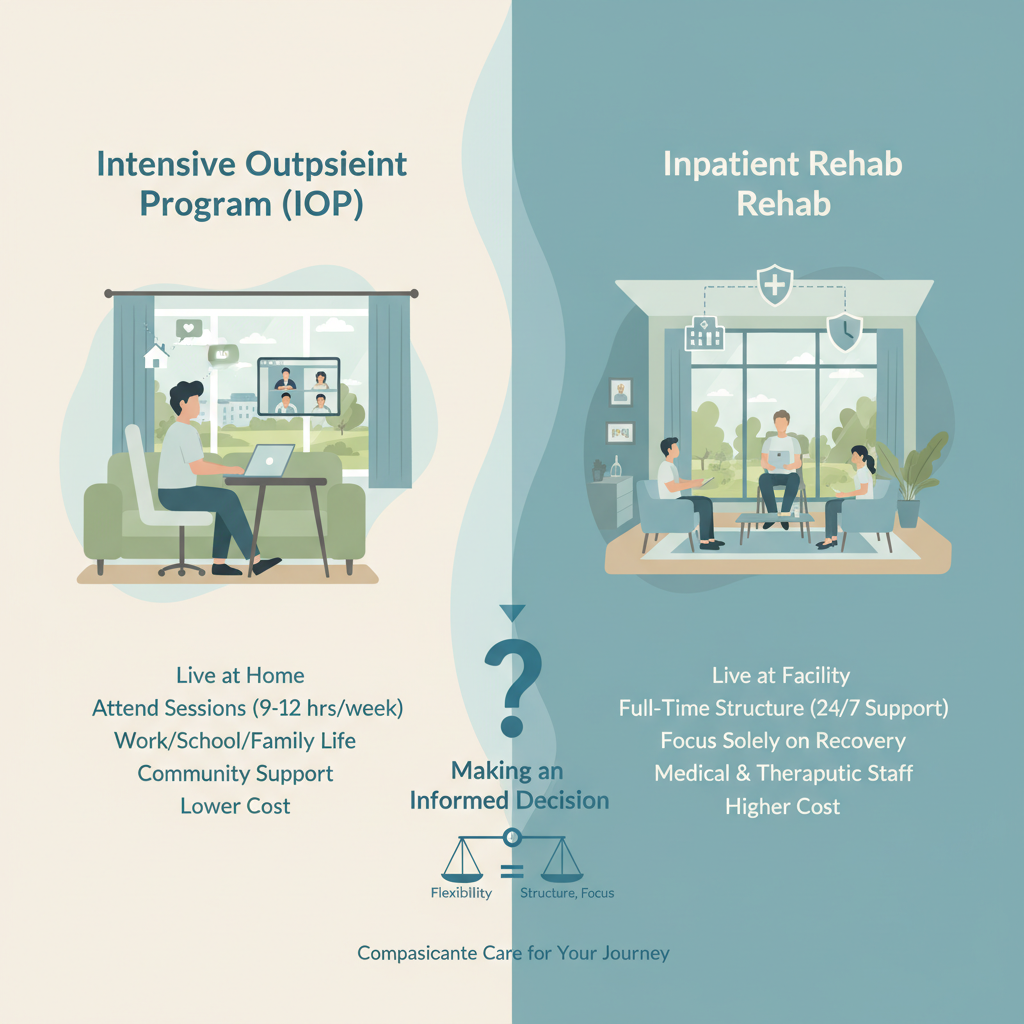
- Inpatient or residential treatment provides 24 hour supervision and a highly structured schedule while you live at the facility. It is typically best if you are at high risk of medical complications, severe withdrawal, or immediate harm to yourself or others.
- Intensive outpatient programs provide a middle ground. You receive multiple hours of care several days per week, often for 8 to 12 weeks or longer, but you sleep at home and begin rebuilding your life in your community. IOP can be a starting point if weekly therapy is not enough, or a step down from inpatient care as you transition back to daily responsibilities [7].
- Standard outpatient treatment usually involves one or two therapy sessions per week. It may be appropriate if your symptoms are stable and you have a strong support system, or as a long term follow up after IOP or inpatient care.
Summary comparison of care levels
| Feature | Inpatient / Residential | Intensive Outpatient Program | Standard Outpatient |
|---|---|---|---|
| Living situation | Live at facility | Live at home | Live at home |
| Typical weekly hours | 24 hour support | 9+ hours, often 9 to 15 | 1 to 3 hours |
| Best for | High risk, need detox or constant monitoring | Need structure but can stay safe at home | Stable, need maintenance support |
| Ability to work / attend school | Usually limited | Often possible with schedule adjustments | Usually possible |
If you are still deciding which level fits you best, you may find it helpful to review what is an intensive outpatient program, how intensive outpatient treatment works, and iop vs inpatient rehab.
Deciding if the steps of IOP are right for you
If you want more support than weekly therapy but you do not need 24 hour supervision, IOP may provide a balance between intensive treatment and real life responsibility. Exploring resources such as who should attend an intensive outpatient program, when to choose intensive outpatient rehab, and addiction recovery intensive outpatient structure can help you decide whether this step is the right next move in your recovery journey.