
How Effective Are Intensive Outpatient Programs in Helping People Recover
You are weighing IOP because someone told you it works, but the voice in your head keeps asking whether three hours a night is enough when you have spent years drinking yourself to sleep, or whether your loved one will stay sober when they walk out the door every night and go back to the same house, the same job, the same triggers that broke them in the first place. That is the honest question underneath the search, and it deserves an honest answer. How effective intensive outpatient programs are once the session ends and real life picks back up depends less on the hours logged and more on whether the treatment was built to work inside your actual week, with your job, your kids, and your obligations still standing.
Most articles on this topic point to completion rates or national averages and never touch the fear that keeps you up. At Resilience Recovery Center in Fair Lawn, NJ, the measure that matters is whether you are still employed, still connected to your family, still meeting your court dates, and newly equipped with tools on your tool belt that hold up against real world stressors. That is a different bar than a certificate at the end of a program.
How Effective Are Intensive Outpatient Programs When You Cannot Afford to Lose Your Job?
IOP effectiveness is not measured by completion rates or abstinence alone. It can be measured by whether someone maintains work, family, and legal stability while building recovery skills that function in real life, not just in a controlled setting. When you cannot step away from your responsibilities for thirty or sixty days, the right question is not “how strict is the program” but “does this program keep me standing while it changes me.”
Residential care removes a person from every trigger and then hands them back their life all at once. That works for some people, and there are situations where it is the safest match. For a working adult who is functioning on the outside while falling apart on the inside, the kind of change that may last is the one practiced in the environment where the drinking or the using actually happens. You may learn to leave a stressful shift and not stop at the liquor store. You may learn to sit at the dinner table with tension in the room and regulate instead of numb. Those are not skills you can rehearse in a facility bubble, because they are earned in your own kitchen, your own commute, your own Tuesday.
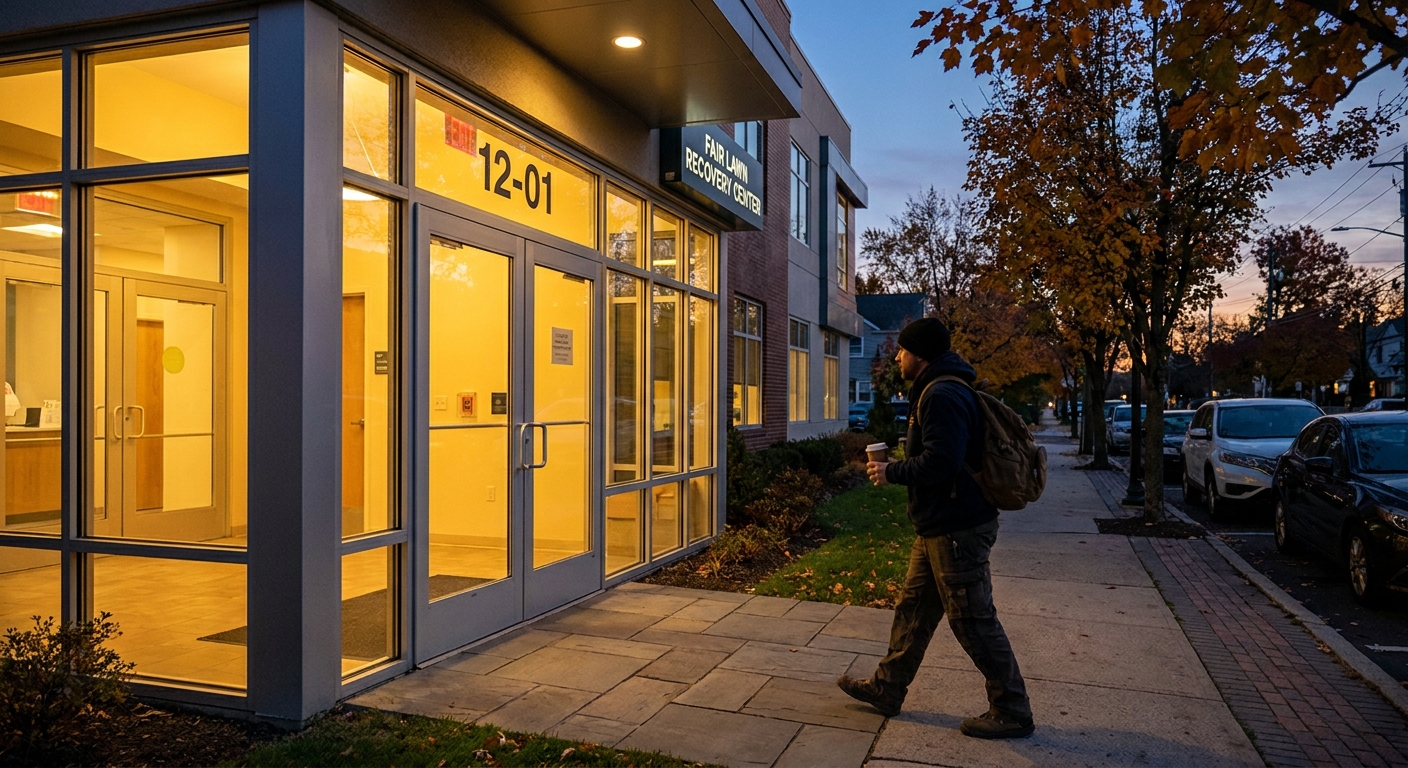
The center has watched clients return to work after their evening group, put those skills into practice the very next morning, and report back what worked and what did not. That real-time feedback loop between session and daily life creates learning that sticks, because the tools are being tested in the exact moments they need to hold. The center’s whole-person care model leans into that reality with job placement, vocational support, and housing coordination folded into the clinical plan, so recovery and the paycheck do not have to compete.
How the Brain Responds to Structure Without Institutionalization
Structure can change behavior through repetition, accountability, and time, and the brain may rewire around what it practices. Fifteen hours a week across five days gives the nervous system consistent contact that may support forming new patterns while you still sleep in your own bed and show up to your own job. That is behavioral change without the disruption of being institutionalized.
The neuroscience lens shapes what actually happens in the room. Rather than framing cravings and relapse as moral failures, the groups teach brain-based psychoeducation on cravings, the reward system, stress, and decision making, and on why recovery may get easier as the brain heals. That reframing does something practical: it lowers the shame that keeps people silent, because this is a judgement free zone where a craving is understood as a brain event, not proof that you are weak or broken. When the shame drops, people may stay, and staying is where the change can happen.
Clients also learn nervous system regulation techniques they can use anywhere, including mindfulness, grounding, breathing skills, and emotional regulation. For those in medication assisted treatment, the psychiatric provider explains in plain terms how medications like buprenorphine, Sublocade, naltrexone, and Vivitrol may reduce cravings and support brain recovery, so the medical side and the skills side reinforce each other instead of pulling apart. The founder’s Neuroscience Coach Certification informs this approach directly, blending brain science with hands-on recovery experience so that education becomes something you can actually apply the next time a trigger hits.
As Ivan Kavunik, Ivan Kavunik, puts it: “I have a Neuroscience Coach Certification, which has helped shape how I understand addiction, cravings, motivation, stress, and behavior change from a brain-based perspective. I also have hands-on experience working in the addiction treatment and recovery field, including developing recovery-focused programming and working directly with individuals at different stages of recovery.”¹
Why Morning and Evening Tracks Keep Working Adults Engaged
Yes, you can work full time and still do this. IOP at Resilience Recovery Center runs Monday through Friday, three hours a day, fifteen hours a week, with a morning track from 9:00 AM to 12:00 PM and an evening track from 6:00 PM to 9:00 PM. That design exists for one reason: so you can pursue recovery without stepping away from the job and family that give your life its shape.
Here is the part most programs miss. Your employment and your family roles are not obstacles to recovery, they may be protective factors. The person who has a reason to be sober on Monday morning, a boss expecting them and children counting on them, has structure that treatment cannot manufacture. A program that forces you to choose between recovery and your livelihood can end up costing you both, while a schedule that bends around your shift may keep you engaged long enough for the work to take hold.
Around that core schedule, individual therapy, psychiatric and medication management appointments, and case management are coordinated to your availability, with telehealth options when an in-person slot will not fit. The center sees better attendance and fewer dropouts when clients can keep their existing commitments intact rather than being forced to choose between treatment and the rest of their lives. Engagement is not a soft metric. It is one of the strongest predictors that treatment may have an impact.
What Happens When Court Dates, Work Deadlines, and Housing Crises Collide With Treatment?
The team adjusts the plan instead of discharging you. Real life does not pause for treatment, so case management coordinates your schedule around mandated court appearances, probation check-ins, and drug testing, using signed releases, so an external obligation does not turn into a gap in care or a reason to quit.
Consider a real pattern the center sees often. One client came in doing IOP while still working, still in school, and still carrying apartment responsibilities that were about to collapse under him. The team completed his FMLA paperwork and temporary disability, placed him in sober living, and gave him a softer landing so he could focus on his sobriety instead of drowning in logistics. Another client faced a hard job deadline that could have ended his treatment. Rather than making him choose, the team built a tailored schedule using the day and night programming plus telehealth, so he committed to a Friday group along with individual and medical sessions and kept both his recovery and his position.
This is what wrap around case management actually means in practice. When housing is unstable, there is a recovery-oriented housing network. When employment is at risk, there is FMLA coordination and temporary disability support. When the legal system is involved, there is legal coordination that keeps the treatment team and the court on the same page. Federal confidentiality protections under 42 CFR Part 2 govern how any of that information is shared, so coordination never comes at the cost of your privacy. You are not left carrying it alone, and the center is here to support you every step of the way.
How Step-Down Progression Ties to Measurable Stability, Not Calendar Time
Progress is earned, not scheduled. Stepping down from five-day IOP to three-day programming to one-day aftercare is tied to observable stability rather than a date on the calendar, which is what makes the step reflect real readiness instead of wishful thinking.
The path moves in clear phases. IOP runs five days a week for fifteen hours. The first step down goes to three days a week for nine hours. Continuing care and outpatient move to one day a week for three hours. Before intensity decreases, the team generally looks for at least 85 percent attendance over the previous thirty days and consecutive negative drug screens. Those criteria matter because they turn a vague sense of “doing better” into something you can actually see and measure.
This protects you from the most common trap in recovery, which is stepping down too soon because life is loud and treatment feels inconvenient. Reducing structure the moment things feel calm can precede a return to use, because stability that has not been tested is fragile. Tying each step to demonstrated attendance and verified sobriety means the reduced support arrives only when there is genuine ground under your feet, so you may keep getting back on your feet in a way that holds. For someone who has relapsed before and is bracing for the same hope-and-disappointment cycle, that structure is not red tape. It is the safeguard that may make this attempt different.
New Jersey Licensure, ASAM Standards, and What Regulatory Approval Guarantees
State licensure guarantees the program meets New Jersey’s regulatory standards for quality, patient safety, confidentiality, and evidence-based clinical care. The center holds New Jersey Department of Health licensure and Division of Mental Health and Addiction Services approval to provide outpatient and intensive outpatient treatment at ASAM Level 2.1, which means the facility has been inspected, its clinical protocols reviewed, and its operations deemed compliant with state requirements.
That last detail is more than a code. ASAM Level 2.1 is the clinical designation for intensive outpatient care, and matching a person to it starts with an assessment against the ASAM Criteria. When the assessment indicates 2.1, IOP is not a compromise or a budget version of “real” treatment. It is the clinically indicated level of care, the right tool for that person’s needs. Understanding this reframes the whole question, because the issue was never whether IOP is rigorous enough in the abstract. The issue is whether it is the correct match for your situation, and that is a clinical determination, not a guess.
Credentials behind the care matter too. The Clinical Director is a Licensed Clinical Alcohol and Drug Counselor (LCADC) who also holds the Certified Clinical Supervisor (CCS) credential, which means the clinical work is overseen by someone qualified to both treat and supervise. In full transparency, the center is not yet CARF or Joint Commission accredited and is actively pursuing national accreditation, so state licensure and DMHAS approval already meet the standards required for legitimate, reimbursable treatment, with the accreditation work underway reflecting a program raising its own bar.
Questions Fair Lawn Families Ask About IOP Effectiveness
How effective are intensive outpatient programs compared to residential treatment? For some people, research finds IOP produces outcomes comparable to residential care. The difference is how effectiveness is measured: by whether someone keeps their job, family roles, and legal obligations while building skills that work in real-world settings, not only in a controlled environment.
Can you work full time while attending IOP in Fair Lawn, NJ? Yes. Morning sessions run 9:00 AM to 12:00 PM and evening sessions run 6:00 PM to 9:00 PM, and individual therapy, psychiatric care, and case management are coordinated around your work schedule, with telehealth available when an appointment will not otherwise fit.
What happens if you miss sessions for court or work? The team coordinates around court dates, probation check-ins, and work deadlines through case management and telehealth rather than discharging you for facing real obligations.
How long does intensive outpatient treatment last? Duration depends on individual progress. Clients step down from five-day to three-day to one-day programming after demonstrating at least 85 percent attendance and consecutive negative drug screens over the prior thirty days.
Does insurance cover IOP for substance use disorder in New Jersey? Many New Jersey commercial plans, including BCBS, Aetna, Cigna, and UnitedHealthcare, may cover IOP as medically necessary care under mental health parity law. The center verifies your benefits and coordinates FMLA when employment protections are needed.
What makes IOP work for someone who has relapsed before? For some people, effectiveness comes from brain-based education that reframes cravings as neurological events, practical regulation tools, MAT coordination, and real-world supports like housing and legal coordination, rather than willpower alone.
Call Resilience Recovery Center in Fair Lawn, NJ to verify your insurance benefits and schedule an assessment that determines whether intensive outpatient programming fits your clinical needs while you keep your job and your family commitments intact. Bring one concrete detail to that call, your work schedule, so the team can build the morning or evening track around your actual week from the very first conversation.
Expertise and insights from
- Ivan Kavunik, Ivan Kavunik
Take the First Step Toward Lasting Change
If you’re wondering whether an intensive outpatient program could work for you or someone you care about, you’re already asking the right questions. Resilience Recovery Center in Fair Lawn, NJ offers the structured support and flexibility you need to build real, sustainable recovery while staying connected to your daily life. Reach out today to speak with our team about your options.
Call Resilience Recovery Center
Individual results vary. The client experiences described here are individual stories and are not a promise of any specific outcome.