Group Therapy and Psychoeducation Program in Fair Lawn NJ
You’ve heard “group therapy” a hundred times, but you’re still asking the real question: what actually happens in the room? You’re standing at the edge of treatment, balancing a full-time job, a family that depends on you, and cravings that won’t quit, and someone just told you to show up for group three nights a week.
Here is the honest answer. Group therapy for addiction in Fair Lawn is not a circle of strangers venting. At Resilience Recovery Center on River Road, group therapy and psychoeducation are part of the outpatient and intensive outpatient programs. They are structured, they are led by licensed clinicians, and they are built around helping you develop skills you might use Thursday morning at your desk and Friday night when the old crowd texts, without asking you to walk away from work, family, or the life you have been holding together.
What Group Therapy and Psychoeducation Actually Mean in Outpatient Treatment
Group therapy is a clinical intervention led by a licensed clinician, and psychoeducation is the teaching side of that work: the neuroscience of substance use, how medications behave in your body, and how to plan for the moments that used to end in relapse. These are two different tools doing two different jobs inside the same program.
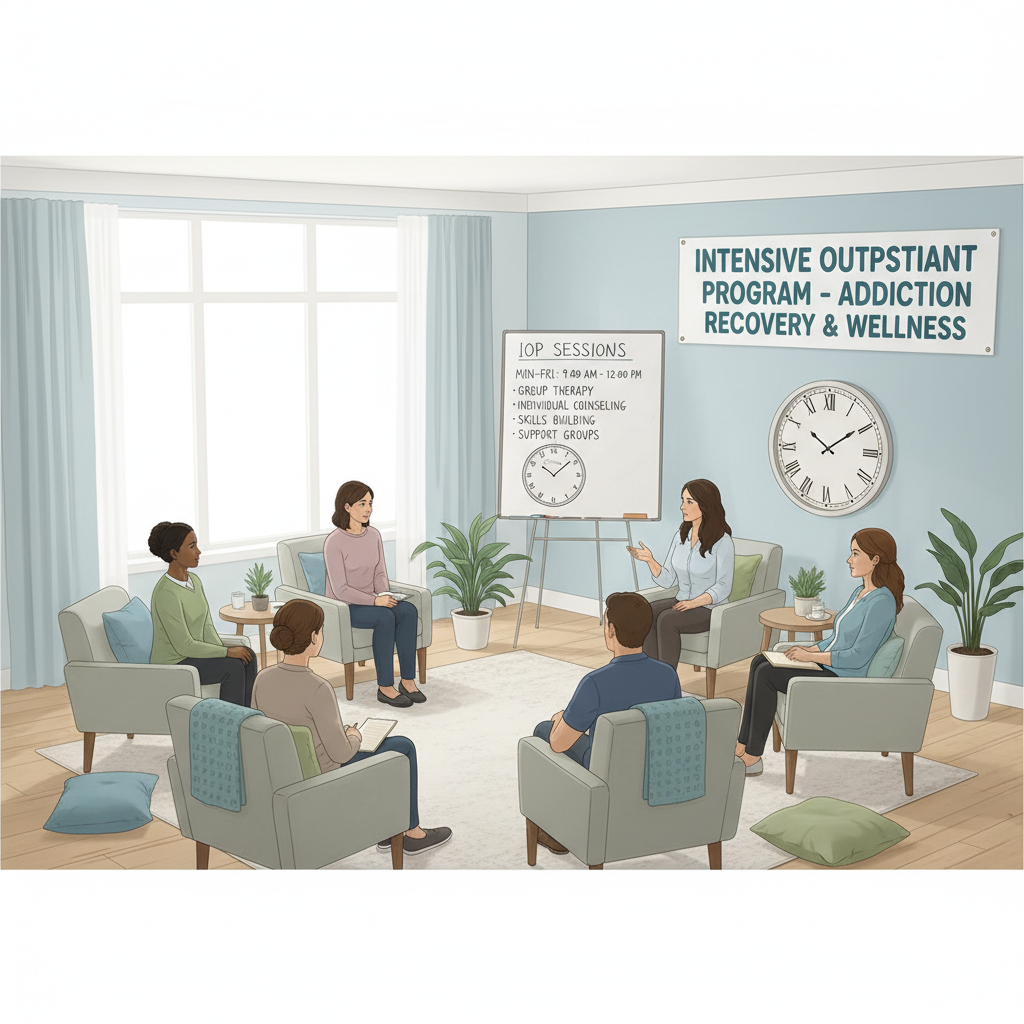
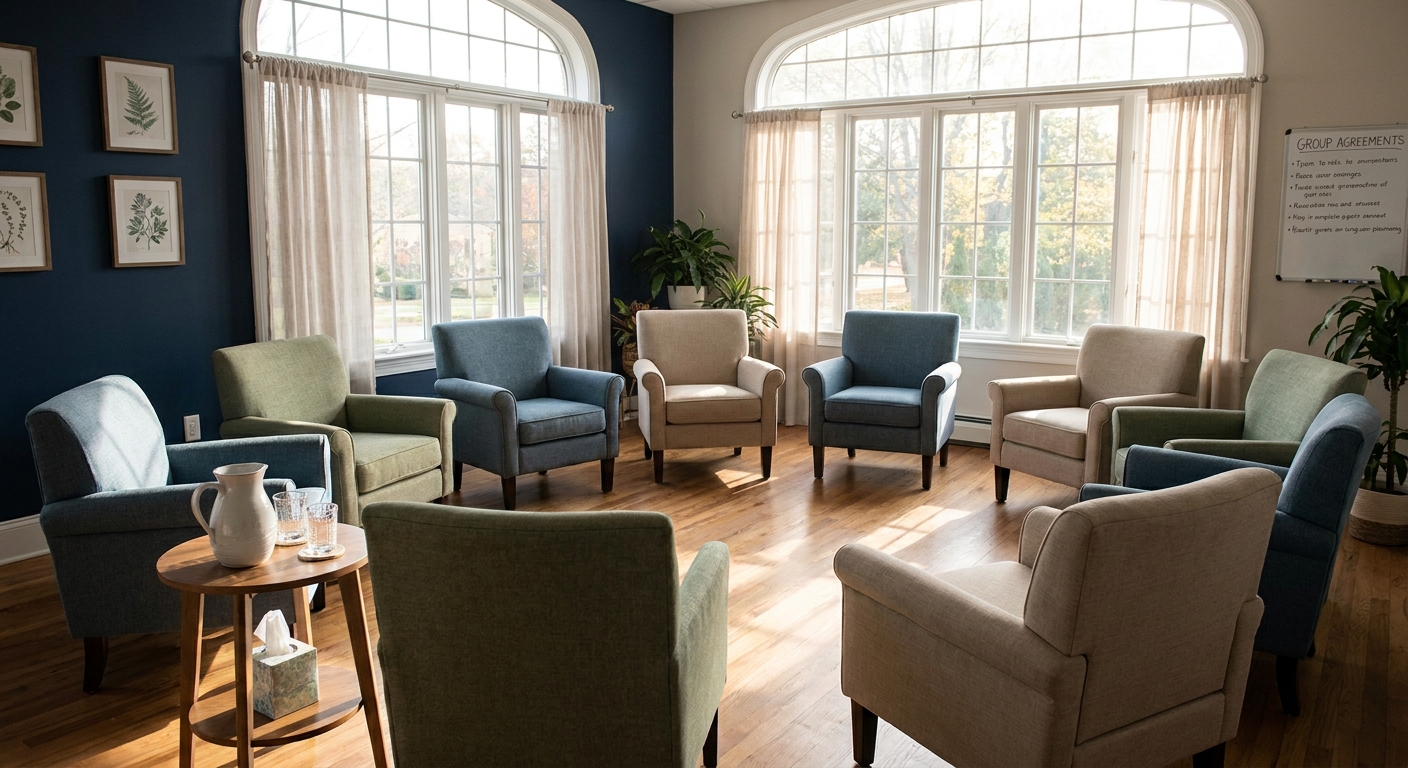
The distinction matters, because most people picture something closer to a peer meeting. A peer meeting is valuable, and a 12-step recovery program runs inside the Resilience schedule for exactly that reason. But group therapy is different. It is facilitated care with a curriculum, structured so a cohort can process emotions, rehearse coping skills, and get feedback in real time from someone trained to guide it. The SAMHSA clinical guidance on substance use treatment group therapy describes group work as a core modality, noting that the group itself can become a source of accountability and skill practice you cannot get one-on-one.
Psychoeducation carries the other half of the load. Understanding why a craving spikes, what it is doing to your reward system, and how a medication like buprenorphine or naltrexone changes that equation can turn a mysterious, shameful experience into something you can name and manage. When you understand the mechanism, you may stop believing the craving means you failed. You might start treating it as a signal you have a plan for. That shift, from confusion to strategy, is what group therapy for addiction in Fair Lawn at Resilience is designed to support.
Can Group Therapy for Addiction in Fair Lawn Fit Around a Full-Time Job?
Evening and daytime sessions run at every level of care, so you may be able to attend without stepping away from work, and the whole schedule is built on a step-down structure that lowers your hours as you stabilize.
Here is what that looks like in practice. The most intensive level, IOP-5, runs five days a week for 15 hours total. As your clinical progress supports it, you step down to IOP-3 at nine hours a week, and then to aftercare at three hours a week, one day at a time. This is not an arbitrary countdown. Each move down is a clinical decision tied to how you are actually doing, and the point is to keep enough structured support in place that you don’t drop off a cliff between levels.
Because daytime and nighttime programs are available at all three levels, a working adult may be able to build treatment around a real week. You keep your morning, you go to work, you handle pickup and dinner, and then you come to group in the evening. Nobody has to explain a mysterious three-week absence to an employer. Nobody has to choose between a paycheck and getting well. This is the reason the program exists in the shape it does: the schedule is designed to protect the very things that give you a reason to stay in treatment.
What Happens Inside Each Group Session: Formats, Topics, and Who Leads Them
Each week blends several distinct group formats: relapse prevention planning, brain-based neuroscience psychoeducation, medication and MAT education led by the psychiatric provider, motivational interviewing, hypnotherapy led by a licensed hypnotherapist, a 12-step recovery program, case management groups, and health and wellness sessions. The clinical program is directed by a Licensed Clinical Alcohol and Drug Counselor (LCADC) who also holds the Certified Clinical Supervisor (CCS) credential.
That credential matters more than it may sound. It means the person setting the clinical standard for every group is licensed at the highest counseling tier in New Jersey for addiction care and is qualified to supervise other clinicians. Groups are facilitated by licensed clinicians and, for medication topics, by an in-house psychiatric provider. This is what separates clinical group therapy from a support meeting: trained eyes in the room, a curriculum with a purpose, and documentation that tracks whether the work is landing.
Relapse Prevention Planning and Trigger Mapping
Relapse prevention planning is the group where abstract intentions become a written, personal plan. You map your triggers, the specific people, places, times of day, and internal states that precede use, and then you build concrete responses for each one before you are standing in front of them. The work is rehearsed in the group, so that when a real trigger hits outside the room, the response may be already familiar rather than improvised in a moment of stress. Relapse prevention is one of the core skills the program is designed to teach you, and it is practiced, not just discussed.
Neuroscience Psychoeducation on Cravings and the Reward System
The neuroscience group explains what a craving actually is at the level of the brain’s reward circuitry. When you understand that a craving is a predictable, time-limited surge in a hijacked reward system and not a moral failure, two things may happen: the shame drops, and the urge becomes something you can wait out with a strategy. This is where medication education fits, too. The psychiatric provider runs MAT education groups covering buprenorphine products including Sublocade, naltrexone, and Vivitrol, so you understand exactly how your medication is working alongside the behavioral skills you are building.
How Do Medication and Co-Occurring Mental Health Care Fit Into the Group Program?
Medication and co-occurring mental health care are coordinated inside the same treatment plan, not handled in separate buildings by people who never talk. Resilience is dual-licensed to treat co-occurring conditions, and the psychiatric provider, therapists, and case managers all work off one shared plan.
Medication-assisted treatment is fully integrated into the group and psychoeducation schedule. The in-house psychiatric provider handles buprenorphine products including Sublocade, naltrexone, and Vivitrol, with ongoing medication management and direct communication between the prescriber, your therapist, and your case manager. That coordination is the whole point. Medication alone does not address the psychological, behavioral, and social factors that drive substance use, and group work alone does not address the physiology of dependence. Put together, under one plan, each covers the other’s blind spot.
The same logic applies to mental health. The program is equipped to treat co-occurring anxiety, depression, trauma and PTSD, bipolar disorder, and adjustment disorders as part of one treatment plan, rather than referring you out and hoping the pieces line up. Many people entering treatment are managing a mental health condition and a substance use disorder at the same time, and treating only one leaves the other free to pull you back. When your psychiatric care and your substance use care are written into the same plan and reviewed by the same team, the gaps that so often derail early recovery simply have fewer places to open up.
Case management holds all of this together. Every client is assigned a case manager at admission, caseloads are kept low at roughly ten clients per case manager, and your individualized treatment plan is written within 72 hours of admission and reviewed every 30 days. When you move between levels of care, your case manager coordinates the appointments and, with your consent, shares the clinical information so there is no gap. This is wrap around case management, and it is the reason the group experience does not exist in a vacuum.
What Coordinated Group Care Changed for One Patient
One patient had been in treatment 26 times before he came to Resilience. He arrived high acuity, needing housing, vocational support, and help with unresolved legal issues. During his time in treatment, he found a job, his legal obligations were settled, he secured stable living, and he achieved 90 days of sobriety.
Read that number again. Twenty-six prior attempts. If you are a spouse or a parent who has watched someone go to treatment and come back to the same problems more than once, you know the specific exhaustion of hoping again. You also know why he kept relapsing: the programs treated the substance use and sent him back into a life where he still had no housing, no income, and a court date hanging over him. Group therapy alone was never going to fix that, and it did not.
What changed was the model around the group. His case manager worked the practical barriers alongside the clinical work. In the week of admission his resume was reviewed and edited. By week two he had job-search accounts set up and had submitted applications. By week three, transportation was arranged for follow-up interviews. By week four, onboarding started at the job he landed. That is what handling real-world stressors inside the treatment plan looks like, and it is why the group work had a stable enough life to take root.
What to Verify Before You Commit to a Group Program in Fair Lawn
Before you commit anywhere, verify state licensure, whether the program is dual-licensed for co-occurring conditions, and how they handle your insurance. For New Jersey residents, the state credentials are the trust signal that matters most. Resilience Recovery Center holds full licensure from the New Jersey Department of Health and approval from the New Jersey Division of Mental Health and Addiction Services for outpatient substance use treatment.
In the interest of being straight with you, the center is not currently CARF or Joint Commission accredited. Those are voluntary national accreditations, and some families ask about them. What is legally required to operate a licensed outpatient program in New Jersey is DOH licensure and DMHAS approval, and the facility meets those state standards, including the dual-licensure that permits integrated treatment of co-occurring mental health conditions. That dual license is not a formality. It is what makes it lawful and clinically sound to treat your anxiety, trauma, or depression in the same plan as your substance use disorder.
On cost, the program verifies benefits for BCBS, Aetna, Cigna, and UHC, along with many other commercial plans, and the insurance check is done at no charge before you start, so you understand your coverage and any out-of-pocket responsibility up front. This is a judgment-free zone, and the first phone call is not a commitment. It is information. You get to know the schedule, the levels of care, the credentials, and the numbers before you decide anything, which is exactly how a decision this important should be made.
Frequently Asked Questions
Can I attend group therapy for addiction in Fair Lawn at Resilience Recovery Center while working full-time?
Evening IOP and outpatient groups run after business hours at every level of care, so you may be able to attend without missing work. Daytime sessions are also available if that fits your schedule better.
What is the difference between group therapy and psychoeducation in an IOP program?
Group therapy focuses on processing emotions and building coping skills with a licensed clinician facilitating. Psychoeducation teaches the neuroscience of addiction, how medications work, and relapse prevention strategy. One builds skills through practice, the other builds understanding you can act on.
Does the group therapy program at Resilience Recovery Center include medication-assisted treatment?
An in-house psychiatric provider coordinates buprenorphine products including Sublocade, naltrexone, and Vivitrol, and runs MAT education groups built into the IOP schedule, with ongoing medication management coordinated with your therapist and case manager.
How long do I have to attend group therapy sessions at Resilience Recovery Center?
Duration is individualized. The step-down structure typically moves from IOP-5 at 15 hours a week, to IOP-3 at nine hours a week, to aftercare at three hours a week, and each step down is based on your clinical progress rather than a fixed timeline.
Will my insurance cover group therapy and psychoeducation at Resilience in Fair Lawn?
Resilience verifies benefits for BCBS, Aetna, Cigna, and UHC, along with many other commercial plans. Staff confirm your coverage and any out-of-pocket cost before you start, at no charge.
What qualifications do the group therapy leaders at Resilience Recovery Center have?
The Clinical Director is a Licensed Clinical Alcohol and Drug Counselor (LCADC) who also holds the Certified Clinical Supervisor (CCS) credential. Groups are led by licensed clinicians, with medication and MAT education groups run by the in-house psychiatric provider.
Call Resilience Recovery Center in Fair Lawn at the number on this page to verify your insurance, ask about evening IOP start dates, and schedule an intake assessment. You do not have to keep carrying this alone, and the first call is simply a conversation about what fits your life. The one thing worth remembering as you weigh it: the group work holds when the life around it is stable, which is exactly why the housing, vocational, and case management support are built into the same plan as the therapy.
Take the Next Step With Group Support in Fair Lawn
If you’ve been wondering whether group therapy could strengthen your recovery or help you feel less alone in what you’re facing, a conversation can bring clarity. Resilience Recovery Center’s outpatient program in Fair Lawn offers structured group therapy and psychoeducation designed to meet you where you are. Reach out today to learn how our approach might fit your needs.
Call Resilience Recovery Center
Individual results vary. One person’s experience does not predict any specific outcome.