
Understanding alcohol intensive outpatient treatment
Alcohol intensive outpatient treatment, often called an IOP, gives you structured, evidence-based care while you continue living at home. You receive more support and accountability than traditional weekly counseling, but without the 24/7 supervision of inpatient rehab. This level of care can be especially helpful if you have work or family responsibilities, a stable and safe home environment, or you are stepping down from detox or residential treatment.
Intensive outpatient programs typically provide a minimum of 9 hours of treatment per week, spread over several days, and can last from a couple of months up to a year depending on your needs [1]. At Resilience Recovery Center, your alcohol intensive outpatient treatment is designed to fit into your real life, not take you out of it.
How IOP fits into the levels of care
Alcohol use disorder exists on a spectrum, and treatment does too. Understanding where intensive outpatient treatment fits can help you decide whether it is right for you.
Where IOP sits in the continuum
In a typical addiction treatment continuum, levels of care move from most intensive to least intensive:
- Medical detox or inpatient detox
- Residential or inpatient rehab
- Partial hospitalization program (PHP)
- Intensive outpatient program (IOP)
- Standard outpatient treatment and ongoing recovery support
Detox and inpatient care provide 24/7 monitoring and are recommended if you are at high medical or safety risk, especially during alcohol withdrawal. Alcohol withdrawal can be life threatening, so if you are at risk for severe or complicated withdrawal, you are usually referred to inpatient or residential detox instead of an outpatient setting [2].
Intensive outpatient programs provide a higher level of structure than weekly counseling, but you return home each day. Many people enter IOP after detox or residential care to support a smoother transition back into daily life [3]. You can also begin in IOP if you do not need 24/7 supervision or medical detox.
When IOP is usually recommended
You might be a good candidate for alcohol intensive outpatient treatment if you:
- Have a safe and supportive living environment
- Do not need inpatient medical detox or 24 hour monitoring
- Want to keep working, going to school, or caring for family while in treatment
- Have already completed inpatient rehab and now need step down support
- Need more structure than traditional outpatient therapy can provide
If you are managing both alcohol use and mental health conditions like anxiety or depression, an intensive program that treats both at the same time may be recommended. Many IOPs, including Resilience Recovery Center, are designed as a dual diagnosis intensive outpatient program so you can address co occurring mental health concerns alongside alcohol use.
What your weekly schedule typically looks like
One of the main questions you may have is how alcohol intensive outpatient treatment actually fits into your week. While exact schedules vary, most IOPs follow a similar time structure.
Typical time commitment
Research shows that intensive outpatient programs usually require at least 9 hours of treatment per week and often fall in the 9 to 20 hour range, spread across multiple days [1]. Many programs meet about three days a week for around three hours per day [3].
At Resilience Recovery Center, your schedule is structured but flexible, with options such as:
- Morning tracks if you work evenings or nights
- Afternoon tracks if you prefer mid day sessions
- An evening intensive outpatient program for addiction if you work standard daytime hours or have daytime caregiving responsibilities
This flexibility allows you to keep important parts of your routine while still prioritizing treatment.
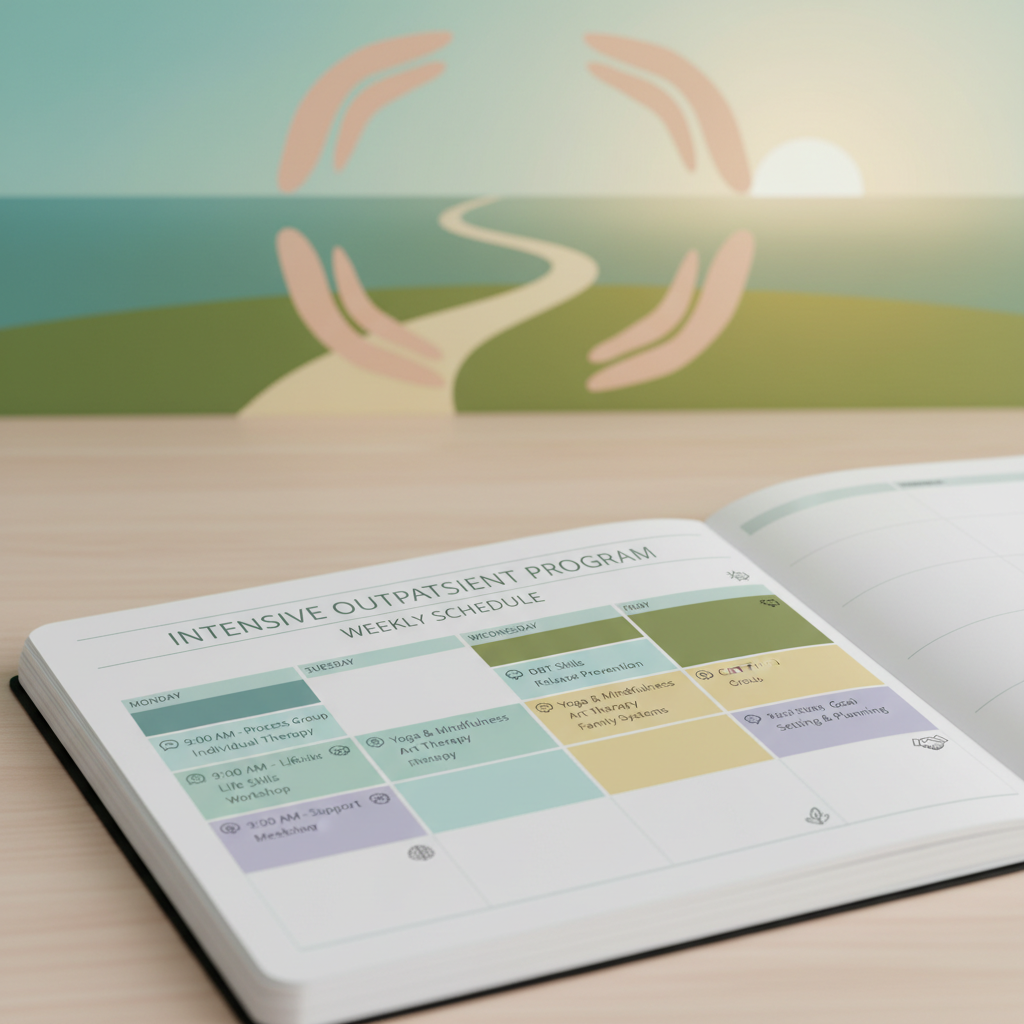
Sample weekly schedule
Your specific schedule is tailored to your needs, but a typical week in an alcohol intensive outpatient treatment program might include:
- 3 evenings per week in group therapy and skills sessions
- 1 individual therapy session
- Family or couples session as needed
- Coordination with your psychiatrist or primary care provider if you take medication
By returning home after each session, you can immediately practice the skills you are learning, then bring your real world experiences back into sessions to get feedback and support.
Core components of alcohol intensive outpatient treatment
Although each program has its own structure, most alcohol intensive outpatient treatment programs include several common elements. These components work together to support both sobriety and overall mental health.
Individual therapy
You meet one on one with a licensed therapist to work through personal triggers, past experiences, and current stressors that influence your drinking. Approaches often include:
- Cognitive behavioral therapy (CBT) to help you identify and change thought patterns and behaviors that keep you stuck
- Motivational interviewing to strengthen your internal motivation and commitment to change
- Relapse prevention planning focused on the situations and emotions that are riskiest for you
If you have experienced trauma, grief, or relationship challenges, individual sessions give you a private space to process these issues at a pace that feels safe.
Group therapy and psychoeducation
Group therapy is a cornerstone of most intensive outpatient programs. In alcohol IOP, you attend groups that are more focused and longer than typical outpatient support meetings. These sessions may cover topics such as:
- Understanding addiction and how alcohol affects the brain and body
- Managing cravings, urges, and high risk situations
- Coping with stress, anger, shame, and anxiety without drinking
- Building healthier communication and boundaries in relationships
- Creating a relapse prevention and recovery maintenance plan
Evidence reviewed by the U.S. government shows that substance abuse IOPs that combine individual, group, and family therapy with psychoeducation can be as effective as inpatient or residential care for many people in reducing substance use and increasing abstinence over time [4].
At Resilience Recovery Center, you participate in both alcohol focused groups and broader substance abuse intensive outpatient program sessions, depending on your needs. This helps you learn from others who are working through similar issues, whether alcohol is the only substance involved or one of several.
Family and relationship support
Alcohol use affects more than just you, it impacts partners, children, parents, and close friends. Many IOPs include family components such as:
- Education about addiction and recovery for loved ones
- Coaching on how to rebuild trust and set healthy boundaries
- Joint sessions focused on communication and problem solving
Outpatient alcohol treatment programs often encourage family involvement and coaching because it supports long term recovery [3]. You can decide who to involve, and your treatment team helps you navigate difficult conversations in a structured way.
Relapse prevention and skill building
Relapse prevention is not a single session or worksheet. In a well structured alcohol intensive outpatient treatment program, it is woven throughout your experience.
Understanding your personal relapse patterns
You work with your therapist and group to look closely at:
- The people, places, and situations that tend to precede heavy drinking
- The emotions that feel hardest to tolerate without alcohol
- Thought patterns that justify “just one drink” or minimize consequences
With this information, you develop a personalized relapse prevention plan that outlines early warning signs, high risk scenarios, and concrete steps to take when those signs appear.
Building practical coping skills
You also practice specific tools you can use in the moment instead of drinking, including:
- Grounding and breathing techniques to ride out cravings
- Communication skills to say no, ask for help, or exit high risk situations
- Time management and stress reduction strategies to reduce overwhelm
- Healthy replacement activities that align with your values and goals
Because IOP allows you to remain in your community and home, you can immediately test these skills in real life, then refine them back in group or individual therapy. This real world practice, paired with intensive support, helps you adjust to community life more smoothly than if you moved directly from inpatient care to standard outpatient therapy [4].
Dual diagnosis and mental health support
Many people who struggle with alcohol use also live with depression, anxiety, PTSD, or other mental health conditions. If these issues are not addressed, it can be difficult to maintain sobriety.
Integrated treatment for co occurring conditions
Research notes that many intensive outpatient programs now treat co occurring mental health conditions alongside alcohol addiction, using integrated and individualized care plans [2]. At Resilience Recovery Center, your alcohol intensive outpatient treatment can also function as a behavioral health intensive outpatient program.
This means your team may:
- Screen and assess you for depression, anxiety, trauma symptoms, and other concerns
- Coordinate medication management with a psychiatrist or prescribing provider when appropriate
- Use evidence based therapies that target both substance use and mental health symptoms
- Help you understand how alcohol use and mental health influence one another in your life
Why dual diagnosis care matters
When your alcohol use and mental health are treated together rather than separately, you have a better chance of making sustainable change. For example, if you primarily drink to manage anxiety, learning to reduce and cope with anxiety directly can lower the urge to drink. If you are dealing with low mood or hopelessness, addressing those feelings can make it easier to believe that recovery is possible and worth the effort.
A dual diagnosis intensive outpatient program is especially important if you have had repeated relapses when only one part of the problem was treated at a time.
Evidence behind intensive outpatient care
You might worry that outpatient treatment is somehow “less serious” or less effective than inpatient rehab. The research paints a more nuanced picture.
A large body of clinical trials and studies has found that intensive outpatient programs for alcohol and drug use disorders can be as effective as inpatient or residential treatment in reducing substance use and increasing abstinence for people who are appropriate for outpatient care [4]. Studies also suggest that longer engagement in treatment, whether inpatient or outpatient, improves the chances of recovery [3].
For individuals with very severe substance use, unstable living situations, or recent suicidal thoughts, inpatient or residential care is often recommended instead. However, for many people with alcohol use disorder, particularly those with safe housing and stable supports, IOP provides equivalent outcomes along with the benefit of remaining in your community [4].
At Resilience Recovery Center, your alcohol intensive outpatient treatment is part of a full intensive outpatient rehab program that draws on this research to guide length of stay, session frequency, and aftercare planning.
How Resilience Recovery Center structures your alcohol IOP
While the core elements of IOP are similar across programs, the way they are delivered and tailored to you can make a significant difference in your experience.
Evidence based, personalized care
Your treatment at Resilience Recovery Center combines research backed approaches with an individualized plan. Depending on your needs, your plan may include:
- Alcohol focused groups in an alcohol recovery intensive outpatient program track
- Broader addiction groups within our addiction intensive outpatient program
- Targeted therapies if you use other substances, coordinated with our drug rehab intensive outpatient program or intensive outpatient program for drug addiction
- Individual therapy that addresses both alcohol use and co occurring conditions
- Coordination with medical providers for any needed medications
Your plan is reviewed and adjusted regularly as you progress, so treatment remains aligned with your goals and challenges.
Flexible, real life friendly scheduling
Recognizing that you may have work, school, or caregiving responsibilities, Resilience Recovery Center offers flexible day and evening options within its structured outpatient addiction program. You and your team decide on a schedule that balances:
- The intensity needed to support your sobriety
- Your existing responsibilities and commitments
- Your energy levels and preferred times of day
This flexibility can lower barriers to starting and staying in treatment, which is crucial because longer treatment durations are linked with better outcomes [3].
Transitioning from higher levels of care
If you have already completed detox or residential rehab, moving directly back into everyday life without support can feel abrupt. Intensive outpatient treatment is often recommended as a step down level of care to help you bridge this gap.
Smoother step down after inpatient
After leaving a structured environment, you may suddenly face:
- Old triggers and social circles
- Work stress or family conflicts
- Unstructured free time that used to be filled with drinking
Research and clinical experience both support the idea that stepping down to an intensive outpatient level after inpatient treatment can support a smoother transition and longer term recovery [3].
At Resilience Recovery Center, your intensive outpatient recovery program is coordinated with any prior treatment. Your new team collaborates with previous providers when possible, reviews your history, and builds on strategies you have already learned rather than starting from scratch.
Long term recovery planning
From the beginning of IOP, your team helps you think beyond the program itself. This includes:
- Planning for ongoing individual or group therapy after IOP
- Connecting you with mutual support groups such as Alcoholics Anonymous or other recovery communities, since ongoing support is encouraged for lasting recovery [3]
- Identifying sober activities, routines, and community resources that support your new lifestyle
Your addiction recovery intensive outpatient treatment at Resilience Recovery Center is not only about getting you through the next few months, it is about building a foundation for the years ahead.
Costs, insurance, and access
The cost of alcohol intensive outpatient treatment can vary based on program length, how many hours per week you attend, and your specific insurance coverage. Many health plans cover at least part of IOP services [2].
Before starting, it is important to:
- Verify your insurance benefits so you understand deductibles, co pays, and coverage limits
- Ask about sliding scale fees or financial assistance if you are underinsured or uninsured
- Clarify what services are included in IOP and which may be billed separately
Resilience Recovery Center works with you to review your options so that finances are as transparent as possible up front. If you need a different level of outpatient support, your team can also help you explore our outpatient addiction treatment program or other intensive outpatient therapy for addiction options.
How to decide if alcohol IOP is right for you
Choosing a level of care is a personal decision, but you do not have to make it alone. A professional assessment is the best way to determine whether alcohol intensive outpatient treatment is appropriate.
During an assessment, you can expect to discuss:
- Your drinking history and any other substance use
- Prior treatment experiences, including detox or inpatient care
- Medical and mental health history
- Current living situation and support system
- Work, school, and family responsibilities
Based on this information, your clinician may recommend IOP, a different outpatient level, or a higher level of care such as residential treatment. At Resilience Recovery Center, this assessment also helps shape which specific track, such as an alcohol use disorder intensive outpatient program or iop for substance abuse recovery, will be the best match for you.
You do not have to choose between getting help and keeping your life moving forward. Alcohol intensive outpatient treatment is designed so you can do both.
If you are ready to learn more, you can reach out to Resilience Recovery Center to schedule an assessment and explore whether our addiction treatment iop program is the right next step for your recovery journey.