
How an Opioid Addiction MAT Clinic Can Support Your Recovery
You’re ready to stop using, but you’re also terrified: terrified the medication won’t work, terrified your employer will find out, terrified you’ll walk into a clinic and get handed a prescription with no real plan for what happens next. That fear is the reason so many people wait, and waiting with opioids is dangerous. A MAT clinic can address that fear directly when it does not just hand you a medication and point you toward the door. At Resilience Recovery Center in Fair Lawn, medication is one part of a coordinated plan built around your actual life: your work shift, your family, the responsibilities you have been holding together while everything else came apart. This is a judgment free zone, and you do not have to have it figured out before you call.
What Actually Happens from Your First Call to Your First Dose
If you call ready to start, you can be scheduled for an initial assessment right away, sometimes seen within an hour depending on how fast you can get here, with your first dose of medication possible the same week when it is medically appropriate. There is no weeks-long waitlist standing between you and relief.
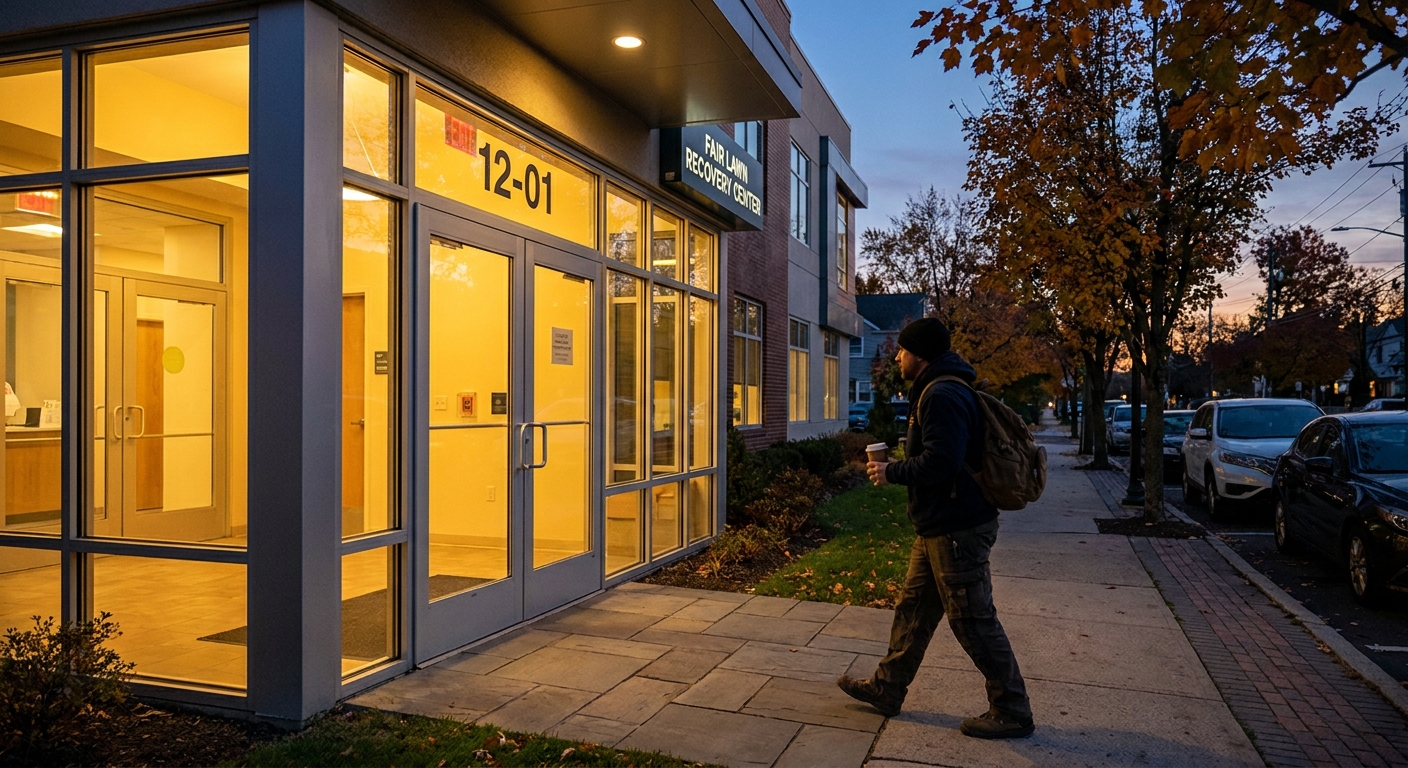
Here is what that looked like for one patient we treated. He walked in on a Monday morning after weeks of daily fentanyl use. He completed a medical evaluation, and within about two hours he received his first dose of Suboxone. By the end of that same week, he had a full treatment schedule built around his work shift.
The same-day process itself takes roughly three hours and covers three things: an admissions assessment, a drug screen, and a biopsychosocial assessment that maps your history, your health, and your real-world stressors. After day one, you leave with a set schedule instead of a vague promise to call you back. In some cases, people complete assessment and begin treatment within 24 to 48 hours.
“Medically appropriate” is the phrase that decides your path. As long as your drug screen does not show substances that require medical detox, you may begin outpatient MAT here. If the screen shows something that needs to be cleared safely first, such as alcohol dependence requiring detox, the team coordinates a referral to a trusted medical detox partner for clearance, then brings you back into intensive outpatient care. Resilience does not provide detox itself, so this handoff is arranged honestly and quickly rather than pretending to be something it is not. Medications for opioid use disorder work by reducing cravings and withdrawal symptoms, and starting promptly can matter when someone is ready to stop using.
How the Medical Director Decides Which Medication May Be Right for You
The Medical Director, an MD and psychiatrist, determines which medication may fit you after confirming you are medically appropriate, choosing among buprenorphine products like Suboxone and the monthly Sublocade injection, or naltrexone. There is no single answer that applies to everyone, which is why an actual physician makes this call based on your assessment, not a template.
Consider how it unfolded for one client we worked with. The Medical Director started him on a daily dose of Suboxone. After about a week, his cravings had eased noticeably. Once he was stabilized, he was scheduled to transition to the Sublocade shot, a monthly injection of the same active ingredient, buprenorphine. That progression, daily film to monthly injection, is one option for people who stabilize and would rather not manage a daily medication while juggling a demanding job.
The practical difference between the two matters for a working adult. Suboxone is taken daily and gives the prescriber a close, day-to-day read on how you are responding in the early weeks. Sublocade is administered once a month, which removes the daily routine and the worry of a missed dose once you are stable. Naltrexone works differently: it is not an opioid at all and is used to block opioid effects for people who have already completed withdrawal and want a non-opioid option. Buprenorphine, the active ingredient in Suboxone and Sublocade, may reduce cravings and withdrawal while lowering overdose risk in some patients, and when paired with therapy and case management, these medications can support long-term recovery.
None of these decisions happen in isolation. Your prescriber, your therapist, and your case manager stay in regular communication about medication adherence, side effects, and cravings, so if something is not working as hoped, it gets caught and adjusted rather than ignored until you relapse. Everyone’s response to medication varies, and this coordination is how the plan keeps pace with you.
What the First 30 Days of MAT Treatment Actually Include Beyond Medication
MAT here does not mean a prescription and a wave goodbye. The first 30 days pair your medication with a structured treatment schedule so the medication can help steady your cravings while the therapy teaches you how to rebuild.
Your intensive outpatient program starts at five days a week, 15 hours total, with a review at 30 days to consider stepping down as you stabilize. Inside that structure you receive individual counseling, group therapy, relapse prevention planning, and case management. The Medical Director runs medication education groups, and your medication is also discussed in psychoeducation sessions and in motivational interviewing, so you understand what you are taking, why, and what to watch for. This is where recovery skills get built.
The point is that medication can support recovery, but it does not replace therapy, personal accountability, or the recovery skills you develop in those stabilized weeks. Buprenorphine may quiet the noise of cravings and withdrawal in some patients. It cannot, on its own, teach you how to handle the argument with your spouse, the pressure of a Friday deadline, or the trigger of driving past the place you used to buy. That work happens in the room, with people who understand.
All of it is scheduled around your work shift, not the other way around. That is deliberate. The people who come here are trying to get better without stepping away from the jobs and families that give recovery a reason to hold. Building the schedule around your responsibilities is how care stays uninterrupted instead of forcing you to choose between treatment and a paycheck.
How Resilience Works to Protect Your Job When You’re Concerned About Starting Treatment
Your treatment is confidential, and the team can complete the FMLA and temporary disability paperwork that may help protect your job while you get stable, treating opioid use disorder as the medical condition it is. Fear of losing work is one of the biggest reasons working adults delay, so this is handled directly, not left for you to figure out alone.
The Family and Medical Leave Act, or FMLA, allows eligible employees protected time away for a serious health condition without losing their position. Opioid use disorder qualifies as a medical condition, which means the paperwork treats your recovery the same way it would treat any other health issue that requires time and care. Your employer receives what the law requires, not the details of your diagnosis.
Here is how that played out for one client we treated. The team completed his FMLA paperwork and sent it to HR, which allowed him time off work. They also filed his temporary disability so his job was secure when he returned. He was able to focus on getting well instead of lying awake wondering whether he would have anything to come back to.
This is the difference between a clinic that prescribes and one that does wraparound case management. Beyond the paperwork, the case management team can arrange sober living placement, coordinate with your employer where appropriate, handle transportation, and take real-world stressors off your plate so you can put your energy into staying sober. “We are here to support you every step of the way” is not a slogan here; it is what the case managers actually spend their days doing.
Why a Coordinated Opioid Addiction MAT Clinic May Help When Medication Alone Doesn’t
A coordinated opioid addiction MAT clinic can help because medication may stabilize cravings and withdrawal, and that stability is what can let you engage in the therapy and skill-building that support ongoing recovery. Medication may clear the fog, and the coordinated care around it teaches you how to live in the clarity.
When your prescriber, therapist, and case manager operate as one team, fewer things fall through the cracks. Medication adherence, side effects, and recovery progress are reviewed together rather than in separate silos where no one has the full picture. If your cravings creep back up or a side effect starts interfering with work, it surfaces in a real conversation among the people responsible for your care, and the plan adjusts.
Care that matches the intensity of services to the person’s needs is the standard in substance use treatment, and a coordinated opioid addiction MAT clinic reflects that principle in practice. Medication alone tends to face challenges not because the medication is weak, but because the person is left to handle every real-life pressure with no support, no accountability, and no new skills. Fill the gaps and the outcomes may change. For anyone still weighing whether treatment is worth another try, the federal FindTreatment.gov tool and the resources at HHS are honest places to start, and every person’s response to treatment is different.
Who Delivers MAT at Resilience Recovery Center in Fair Lawn
The care is delivered by a licensed clinical team led by Clinical Director Tammy Nussbaum, LCADC, CCS, who brings 20 years of experience, alongside a Medical Director who is an MD and psychiatrist overseeing MAT coordination. Credentials matter when you are trusting people with something this serious.
Resilience Recovery Center holds New Jersey Department of Health facility license number 2001007 and is approved by the New Jersey Division of Mental Health and Addiction Services (DMHAS) to provide outpatient and intensive outpatient substance use treatment. The broader team includes LCADC, CADC, CCADC, LAC, and LSW clinicians, CPRS peer recovery specialists who have walked this road themselves, a certified case manager, and a pastor for those who find strength in letting go and letting God.
All care operates under HIPAA and 42 CFR Part 2, the federal privacy standard that gives substance use records extra protection, which is why your treatment stays between you and your care team. In the interest of transparency, the center is not yet CARF or Joint Commission accredited, though it is actively pursuing accreditation. You deserve to know exactly where things stand, not a polished half-truth.
Call Resilience Recovery Center in Fair Lawn today to schedule a same-day assessment and learn whether MAT may be medically appropriate for you, or ask about FMLA and temporary disability support if you’re afraid starting treatment will cost you your job. You can begin this week, and the first phone call is the one thing standing between waiting and starting your path forward.
Frequently Asked Questions
How quickly can I start MAT if I call today?
If medically appropriate, you may complete a same-day assessment, roughly three hours covering admissions, a drug screen, and a biopsychosocial assessment, and begin treatment within 24 to 48 hours in some cases at Resilience Recovery Center in Fair Lawn.
What is the difference between Suboxone and Sublocade?
Suboxone is a daily medication. Sublocade is a monthly injection of the same active ingredient, buprenorphine, for patients who stabilize and prefer less frequent dosing. Your Medical Director determines which may fit you.
Will my employer find out if I start MAT?
Your treatment is confidential under 42 CFR Part 2. Resilience can help you complete FMLA and temporary disability paperwork that may help protect your job, and your employer receives only what the law requires, not the details of your diagnosis.
Does MAT just mean getting a prescription and leaving?
No. At Resilience, MAT is integrated into a full treatment plan that includes IOP therapy, individual counseling, case management, and ongoing coordination between your prescriber, therapist, and case manager.
What happens if I need detox before starting MAT?
If your drug screen shows substances that require medical detox, the team coordinates a safe detox referral with a trusted partner for medical clearance before you begin outpatient MAT here.
How much does MAT cost in Fair Lawn?
Cost depends on your insurance. Resilience accepts major plans including BCBS, Aetna, Cigna, and UHC, and can verify your benefits and out-of-pocket costs during your first call.
Take the First Step Toward Lasting Recovery
If you’ve been uncertain whether medication-assisted treatment is right for you, or if past attempts at recovery haven’t brought the lasting change you need, the team at Resilience Recovery Center in Fair Lawn, NJ is here to listen without judgment. Recovery is possible, and you don’t have to figure it out alone. Reach out today to speak with someone who understands what you’re going through.
Call Resilience Recovery Center
Individual results vary. The client experiences described here are individual stories and are not a promise of any particular outcome.