
Understanding an intensive outpatient program for drug addiction
If you are struggling with substance use but cannot step away from work, school, or family, an intensive outpatient program for drug addiction can give you structured treatment while you continue living at home. Instead of 24/7 care, you attend multiple sessions each week, usually totaling 9 to 15 hours, and then return to your own environment in the evenings.
Intensive outpatient programs, or IOPs, are designed to bridge the gap between inpatient rehab and standard outpatient counseling. Research shows that high quality IOPs can be as effective as inpatient treatment for many people with substance use disorders when care is matched to your needs and delivered consistently over time [1]. This makes IOP a practical and powerful level of care if you need real change but also need to keep your daily life moving.
At Resilience Recovery Center, you can use an addiction intensive outpatient program as your primary path to recovery, or as a step down after detox or residential care. In either case, you receive focused support, clear structure, and a plan for long term recovery.
How IOP treatment is structured
The structure of an intensive outpatient program for drug addiction is what makes it effective. You follow a consistent weekly schedule, attend group and individual sessions, and work with a clinical team that helps you stay accountable.
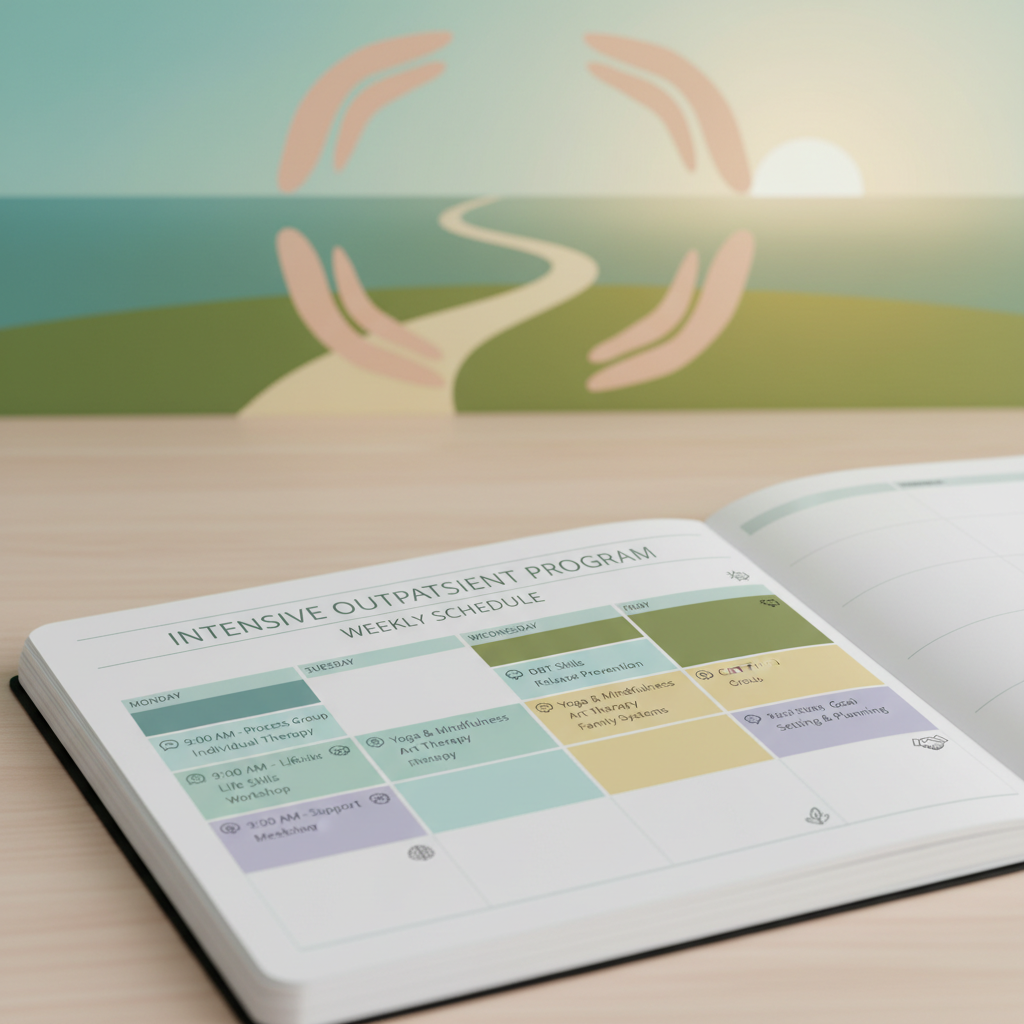
Typical weekly schedule and time commitment
Most intensive outpatient programs meet 3 to 5 days per week, for 3 to 4 hours each day. For example, the IOP at Freedom Recovery in Ohio follows this kind of format while allowing people to sleep in their own beds and maintain normal routines [2].
At Resilience Recovery Center, your weekly plan may include:
- Several group therapy sessions focused on relapse prevention, coping skills, and peer support
- At least one individual therapy session to work through personal history and current stressors
- Education on addiction, mental health, relationships, and physical wellness
- Check ins with medical or psychiatric providers when needed
You receive a predictable structure each week, similar to what you find in an intensive outpatient rehab program, but your evenings and nights are spent at home, not in a facility. This gives you room to practice skills in real time and bring your experiences back into the therapy space.
Core therapies you can expect
High quality IOPs use evidence based therapies that have been shown to reduce substance use and improve quality of life. Studies reviewing programs from 1995 to 2012 found that when intensive outpatient care uses structured, research backed approaches, outcomes are comparable to inpatient treatment for many people [1].
In a drug rehab intensive outpatient program at Resilience Recovery Center, you may work with:
- Cognitive Behavioral Therapy to identify and change thought patterns that drive cravings and risky decisions
- Dialectical Behavior Therapy skills like emotion regulation and distress tolerance
- Group therapy focused on connection, accountability, and shared problem solving
- Family sessions that help rebuild trust and improve communication at home
When you combine this level of structure with the flexibility of living at home, you get a realistic pathway for long term change.
Benefits of staying at home while in treatment
One of the biggest advantages of an intensive outpatient program for drug addiction is that you do not have to pause your life to get care. You stay in your own environment while still receiving a meaningful dose of support each week.
Balancing treatment with work, school, and family
Many people avoid rehab because they are afraid of losing their job, stepping away from children, or disrupting school. IOP is built to work with these responsibilities instead of against them. Programs like those at Freedom Recovery, Midwest Recovery Center, and The Meadows show that you can attend several hours of treatment per week and still maintain your daily roles [3].
At Resilience Recovery Center, flexible scheduling and options like an evening intensive outpatient program for addiction help you:
- Attend treatment outside of standard work hours
- Continue parenting or caregiving responsibilities
- Keep up with school, training, or volunteer commitments
- Preserve your income and health benefits while in care
This flexibility is especially important because less than half of people who start treatment finish it, and completion is strongly linked to better outcomes [4]. When treatment fits your life, you are more likely to stay engaged.
Practicing recovery skills in real time
Another advantage of staying at home during an intensive outpatient recovery program is the chance to use new skills immediately. Instead of waiting until you leave a residential setting, you face real triggers and stressors while still having close support from your treatment team.
With IOP, you can:
- Practice craving management techniques when they actually arise
- Try new communication strategies with family and friends
- Test out time management and self care routines during your regular week
- Bring back specific challenges from your day into group and individual sessions
Programs like those described by Midwest Recovery Center emphasize that this real world practice helps you build sustainable habits and lowers the risk of relapse [5]. Resilience Recovery Center uses this same principle so that your progress does not stay in the therapy room, it shows up in your daily life.
Evidence based care and long term effectiveness
When you choose an intensive outpatient program for drug addiction, you are not choosing a lighter or less serious approach. The intensity comes from the coordinated, research informed services you receive each week.
How effective are intensive outpatient programs
Large reviews of IOPs have found that:
- Programs typically provide at least 9 hours of therapy per week, often more [1]
- There are substantial reductions in drug and alcohol use between intake and follow up across many studies
- For most people, outcomes are similar to inpatient care when clinical needs are appropriately matched
The National Institute on Drug Abuse has also noted that outpatient care, including IOP, can be as effective as inpatient treatment when it is tailored to your addiction severity, mental health needs, and life circumstances [2].
However, success is not only about the type of program, it depends on completing the course of care and following through with aftercare and ongoing support. Since relapse rates in recovery are in the range of 40 to 60 percent, similar to other chronic health conditions, you benefit most when your IOP includes strong relapse prevention and long term planning [4].
What evidence based treatment looks like at Resilience
Resilience Recovery Center builds your substance abuse intensive outpatient program around practices that research supports. That includes:
- A minimum weekly dose of therapy so you have enough contact to make progress
- Individualized treatment plans that adjust as your needs change over time
- Integration of medication support when appropriate, especially for opioid or alcohol use disorders
- Ongoing measurement of symptoms and functioning so you and your team can see what is working and what needs adjustment
Facilities that pursue accreditation, such as CARF, demonstrate a commitment to high quality, individualized care that strengthens IOP effectiveness [4]. While accreditation status may vary by location, Resilience Recovery Center follows similar standards for safety, ethical practice, and outcome focused treatment.
Support for dual diagnosis and mental health
If you are using substances to cope with anxiety, depression, trauma, or other mental health challenges, an intensive outpatient program that ignores these issues will not be enough. You need integrated care that treats both conditions at the same time.
Why dual diagnosis support matters
Many people in an intensive outpatient program for drug addiction also meet criteria for a mental health disorder. When these conditions are treated separately, you are left trying to manage symptoms on your own. Research and clinical practice show that you are more likely to sustain recovery when both are addressed together [2].
At Resilience Recovery Center, a dual diagnosis intensive outpatient program helps you:
- Understand how your mood, thoughts, and trauma history interact with substance use
- Learn skills for regulating emotions without turning to drugs or alcohol
- Receive psychiatric evaluation and medication management when appropriate
- Build a full wellness plan that includes sleep, nutrition, movement, and stress reduction
This integrated approach aligns with leading programs that combine substance use treatment and mental health care in a single, coordinated plan [5].
Behavioral health support within IOP
In addition to addiction specific work, Resilience offers a behavioral health intensive outpatient program framework inside your IOP. That means your team is attentive to:
- Panic attacks, chronic worry, or persistent low mood
- Symptoms related to trauma, such as nightmares, avoidance, or hypervigilance
- Relationship difficulties, loneliness, or grief
- Cognitive challenges like poor concentration or memory issues
You are treated as a whole person, not only as someone with a substance use disorder. This comprehensive approach strengthens your ability to stay in recovery even when life remains stressful or uncertain.
Relapse prevention and skill building
Relapse prevention is not a single session at the end of treatment. It is built into the entire structure of your addiction recovery intensive outpatient treatment.
Learning practical coping strategies
Throughout your time at Resilience Recovery Center, you practice concrete skills that help you navigate cravings, triggers, and high risk situations. In an intensive outpatient therapy for addiction, you can expect to learn how to:
- Recognize early warning signs of relapse in your thoughts, emotions, and behaviors
- Create a detailed plan for what to do when cravings spike
- Manage stress through grounding techniques, breathing exercises, and healthy routines
- Set boundaries with people or environments that put your recovery at risk
Programs like those highlighted by Tribe Intensive emphasize that IOP treatment focuses on equipping you with strategies and support for long term recovery, because healing continues long after formal treatment ends [6]. Resilience follows this same principle.
Building a recovery support network
You do not recover in isolation. Group therapy and peer interaction are central parts of any strong addiction treatment IOP program. At Resilience, you:
- Connect with others who are also committed to change
- Share experiences, setbacks, and victories in a safe setting
- Learn from peers who have found practical solutions to common challenges
- Develop accountability relationships that can last beyond the program
By the time you complete your iop for substance abuse recovery, you are not only leaving with skills, you are leaving with people you can reach out to when life becomes difficult. This shared support lowers the chance of isolation, which is a common risk factor for relapse.
Recovery is an ongoing process, not a single event. An intensive outpatient program gives you time, structure, and community so that change can take root and continue.
How Resilience Recovery Center tailors care to you
While there are standard elements in every intensive outpatient program for drug addiction, your care at Resilience is designed around your specific situation, history, and goals.
Personalized treatment planning
From your first assessment, your team looks beyond diagnosis and asks:
- What substances have you been using and for how long
- What treatments have you tried before and what helped or did not help
- What your current responsibilities are at work, school, and home
- What supports you already have in place and where the gaps are
Using this information, your clinicians design a structured outpatient addiction program that fits your schedule and your needs. If you also struggle with alcohol, you may be connected with an alcohol intensive outpatient treatment or alcohol recovery intensive outpatient program. If your main concern is prescription or illicit drugs, your plan may focus more on drug addiction intensive outpatient therapy.
Your plan is not static. It is reviewed regularly, adjusted when you make progress, and refined when new challenges arise. This kind of continual evaluation and modification is a key element of effective addiction treatment according to national data [4].
Flexible scheduling and step down options
As you work through your intensive outpatient program for addiction, your needs may shift. You may start with a higher intensity schedule, then step down to fewer weekly hours as you stabilize.
Resilience supports you through this process by offering:
- Daytime and evening session options, including an evening intensive outpatient program for addiction when needed
- A clear path from IOP to a less intensive outpatient addiction treatment program
- Coordination with other providers, such as primary care physicians, psychiatrists, or therapists in the community
This gradual transition helps you avoid the sudden drop off that can happen when you leave higher levels of care. Instead of feeling like treatment ends abruptly, you move step by step toward greater independence with ongoing support.
Is an intensive outpatient program right for you
An intensive outpatient program for drug addiction is not the right choice for every situation, but it may be a strong fit if you:
- Need more structure than weekly therapy but do not require 24 hour supervision
- Are medically stable and do not need inpatient detox
- Have a reasonably safe and supportive home environment
- Want to keep working, parenting, or attending school while in treatment
- Are motivated to participate actively in group and individual sessions
Studies show that IOPs are especially effective for people who are ready to engage, who do not have acute medical or psychiatric crises, and who can benefit from practicing skills in their actual daily environment [1]. For others with very severe substance use, history of life threatening withdrawal, or recent suicidal behavior, a brief period of residential care may be recommended before stepping down to IOP.
If you are unsure where you fit, an assessment at Resilience Recovery Center can help you understand your options. You can explore whether a drug rehab intensive outpatient program, alcohol use disorder intensive outpatient program, or combined addiction recovery intensive outpatient treatment matches your current needs.
Taking your next step with Resilience Recovery Center
There is a significant gap between the number of people who need help for addiction and the number who actually receive it. SAMHSA data from 2023 shows that more than 95 percent of people in the United States who needed drug rehab did not get care [4]. You do not have to be part of that statistic.
By choosing an intensive outpatient program for drug addiction at Resilience Recovery Center, you give yourself:
- A structured, evidence based path to recovery
- The ability to live at home and keep important responsibilities
- Integrated support for mental health and substance use
- Practical skills for relapse prevention and long term wellness
- A team that understands your goals and walks alongside you
If you are ready to explore how a substance abuse intensive outpatient program or intensive outpatient recovery program can fit into your life, you can reach out for an assessment and start building a plan that respects your responsibilities and supports your healing. Your circumstances may be complicated, but treatment can still meet you where you are and help you move forward step by step.