Group Therapy and Psychoeducation for Addiction Recovery in Fair Lawn
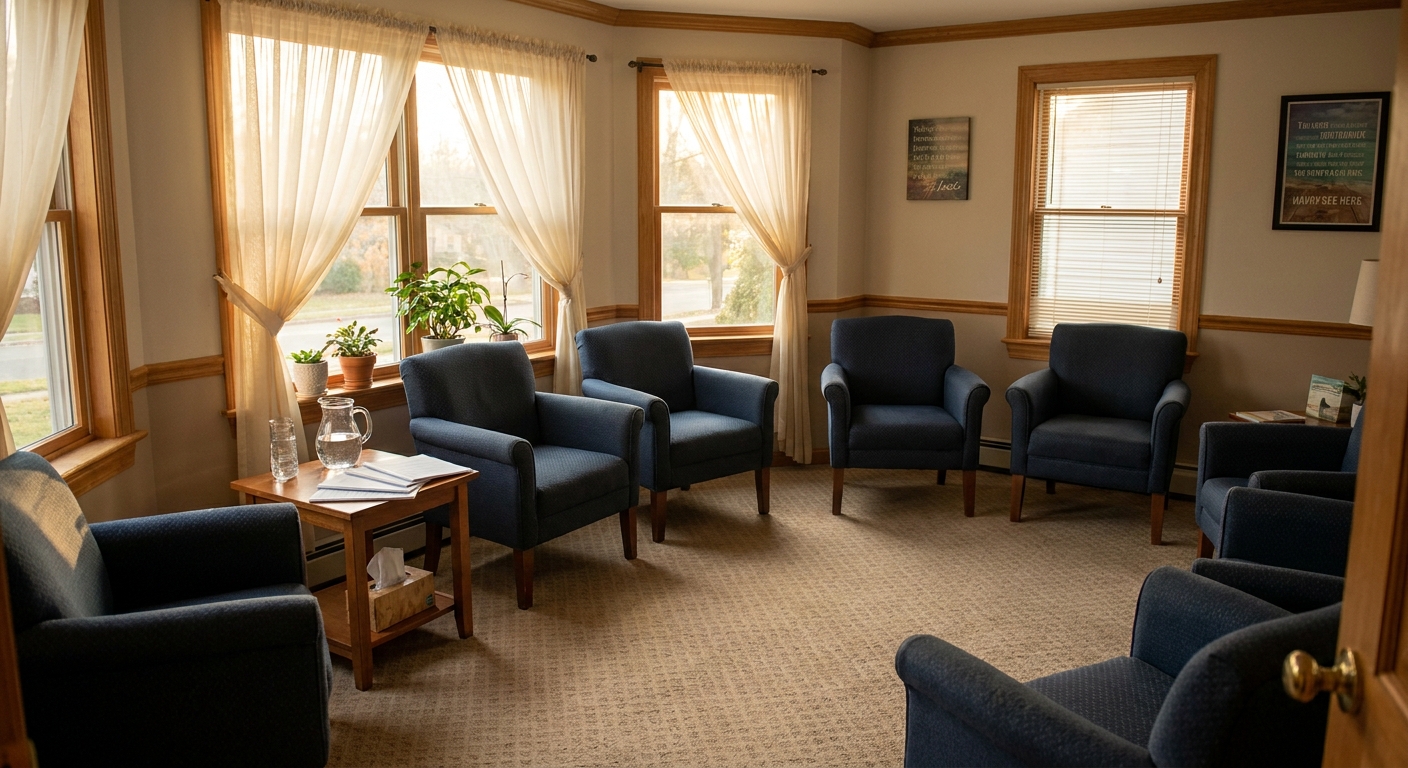
You walk into your first group session at Resilience Recovery Center on a Wednesday evening after work, sit in a circle of people you’ve never met, and the facilitator opens with a question you weren’t expecting. Not “Why are you here?” but “What did your brain tell you today when a craving hit, and what did you do instead of listening to it?” The next few hours aren’t a lecture, they’re a live workshop on how the reward system works, what triggers actually are at the neural level, and how other people in the room used grounding techniques, called their sponsor, or rewrote the thought before it became a relapse. You leave with a worksheet, coping strategies you practiced in the room, and the sense that you are not doing this alone. That’s what group therapy and psychoeducation look like at Resilience Recovery Center in Fair Lawn, NJ: not theoretical discussions about recovery, but the practical mechanics of staying sober while you’re still working, parenting, and managing everything else. This is how group therapy addiction recovery in Fair Lawn actually runs when it is built for people who still have to show up for their lives.
What Group Therapy and Psychoeducation Mean in Substance Use Disorder Treatment
Group therapy is a therapist-led session where you practice coping skills and receive real-time feedback from peers who understand what you’re carrying, while psychoeducation teaches you the neuroscience of addiction, how medications work, and why specific recovery strategies actually hold up under pressure. At Resilience Recovery Center, both are the foundation of the treatment model, delivered as interactive skill-building rather than passive lectures. Every session combines education with discussion, practical exercises, worksheets, and real-world recovery planning so you can apply what you learn the moment you walk out.
The difference from individual therapy matters. One-on-one work goes deep on your personal history and private challenges. Group work gives you something a single room with one clinician cannot: a live testing ground. When you say out loud that you almost drank on Friday and someone nods because they nearly did the same, the shame loses its grip. You learn you are not uniquely broken, you are one of many people learning the same skills. National clinical guidance from SAMHSA describes group therapy as a core, evidence-based component of substance use disorder care precisely because peer connection and accountability reinforce individual gains.
Psychoeducation runs alongside the process work and does a different job. A process group helps you feel and respond, while a psychoeducation group helps you understand. When you finally grasp that cravings are a predictable brain event with a beginning, a peak, and an end, you stop treating them as proof of failure and start treating them as weather that passes. This is a judgment-free zone by design, because the science replaces the self-blame that keeps so many working adults from asking for help in the first place.
How Resilience Recovery Center Structures Group Sessions Around Work and Family Schedules
You can attend group therapy without pausing your job, because the program runs on a step-down model with both morning and evening tracks at every level. IOP-5 delivers 15 hours per week across five days, IOP-3 provides 9 hours weekly across three days, and aftercare continues at 3 hours one day per week. The Outpatient Program sits at a lower intensity, typically one to two clinical group sessions weekly alongside individual counseling, medication management, and case management. Morning programming runs 9:00 AM to 12:00 PM and evening programming runs 6:00 PM to 9:00 PM, Monday through Friday, so you choose the track that fits around your shifts and your family.
That structure exists for a specific reason. The biggest fear working adults bring through the door is not the treatment itself, it is losing everything they’ve been holding together while they get it. If treatment forces you to quit your job, you lose the paycheck, and then the house, and now recovery has cost you the very stability you needed to build it on. The step-down design answers that fear directly. You start at the intensity your clinical needs call for, then step down as you stabilize, moving from IOP-5 to IOP-3 to aftercare without a gap in care. That gradual descent gives you a softer landing back into full-time life instead of a cliff.
Consider the parent working days who cannot be gone at 9:00 AM. She takes the evening track, drops her kids at school, works her shift, hands off bedtime to her partner, and is in group by six. Or the tradesman on an early crew who takes the morning track before an afternoon job. When transportation, a work obligation, or a temporary health concern would otherwise break attendance, telehealth may be incorporated for individual counseling, psychiatric follow-up, and select outpatient services where clinically appropriate and permitted by insurance. Case management, medication coordination, and individual therapy are scheduled around your calendar wherever possible. The whole point is continuity, keeping you engaged while the real-world stressors keep coming.
The Rotating Psychoeducation Curriculum: What You Will Learn Week to Week
The psychoeducation curriculum follows a structured rotating schedule rather than repeating the same material every week, which means you receive comprehensive education across your full treatment episode no matter when you start. Whether you begin in week one or week six, the rotation ensures you eventually cover the whole map instead of hearing the same three topics on a loop.
The content is deliberately brain-based. You learn the neurobiology of addiction, how the brain’s reward system gets hijacked, and why cravings and post-acute withdrawal syndrome behave the way they do, along with how substance use affects decision making, memory, motivation, and emotional regulation. The medical side of the curriculum is run in part by the medical director, whose medication groups teach how buprenorphine, Sublocade, naltrexone, and Vivitrol reduce cravings and support the brain as it heals. From there the curriculum moves into nervous system regulation: mindfulness, grounding, breathing, and emotional regulation you can use the moment stress spikes. Trigger identification, stress management, and relapse prevention planning turn that understanding into a written, individualized plan you carry with you.
The curriculum does not stop at clinical content, because staying sober for a working adult depends on the practical scaffolding of a life. Sessions cover financial literacy and money management, vocational readiness, communication skills, boundary setting, healthy relationships, community reintegration, and family education. This is where the integrated model shows itself. The same coordination that connects you to recovery-oriented housing options, job placement, and wrap-around case management shows up inside the psychoeducation room, so what you learn about a budget or a boundary on Tuesday connects to the case manager helping you get back on your feet on Wednesday. You learn why recovery gets easier as the brain heals, and that is not a slogan, it is a timeline the education helps you trust.
Evidence-Based Modalities Delivered Inside Group Sessions
The groups are built on named, evidence-based modalities delivered interactively, not read from a slide. Clinicians use Cognitive Behavioral Therapy to help you spot unhealthy thinking patterns and recognize triggers, Dialectical Behavior Therapy skills modules covering mindfulness, emotional regulation, distress tolerance, and interpersonal effectiveness, Motivational Interviewing to strengthen your own reasons for changing, and trauma-informed care principles that keep the room safe.
Each one does specific work. Cognitive Behavioral Therapy anchors the relapse prevention curriculum, which follows a structured CBT-based approach: you learn to catch a high-risk thought, challenge it, manage the craving, and choose a different action before it becomes a drink or a dose, then fold that into an individualized relapse prevention plan. DBT skills give you concrete moves for the moments logic disappears, so when your distress spikes you have a grounding technique instead of a relapse. Motivational Interviewing meets you where your ambivalence actually lives, because most people in early recovery are not fully sure they want to stop, and pretending otherwise helps no one.
What separates these groups from a classroom is how they run. Every session combines education with open discussion, practical exercises, skill-building activities, worksheets, and real-world recovery planning, so you leave able to apply the skill that same night. You do not just hear about distress tolerance, you practice it in the room, name a real trigger you’ll face this weekend, and build the specific plan for it with people who will ask you next session how it went. That immediate application is the difference between knowing about recovery and doing recovery.
Who Facilitates Group Therapy for Addiction Recovery in Fair Lawn, and What Credentials They Hold
Your groups are led by licensed and certified behavioral health professionals who meet New Jersey’s regulatory standards for substance use disorder treatment. Facilitators hold credentials including Licensed Clinical Alcohol and Drug Counselor (LCADC), Licensed Clinical Social Worker (LCSW), Licensed Professional Counselor (LPC), and Certified Alcohol and Drug Counselor (CADC), with CADC Interns providing services only under the direct supervision of licensed clinical staff. Psychiatric services, medication management, and medical oversight are provided by licensed medical professionals when clinically indicated and coordinated with the treatment team.
The clinical program is led by a Clinical Director who is a Licensed Clinical Alcohol and Drug Counselor (LCADC) holding the Certified Clinical Supervisor (CCS) credential. That combination matters for group work specifically, because a strong supervisor sets the standard for how every facilitator manages a room: how they keep the group safe, how they redirect a session that drifts, and how they make sure quieter members get heard while no single person dominates. Skilled facilitation is what turns strangers into a working group instead of a venting session.
All programming operates under New Jersey Department of Health and Division of Mental Health and Addiction Services licensure, with confidentiality protected under HIPAA and 42 CFR Part 2, the federal rule that gives substance use records extra protection. For a working adult whose deepest fear is exposure, that legal privacy is not a footnote, it is the reason you can speak freely in the room. In the interest of transparency, the center does not represent itself as CARF or Joint Commission accredited unless and until those accreditations are obtained. The credentials it does hold are real, verifiable, and state-regulated.
How Group Therapy Addresses Co-Occurring Mental Health Conditions Alongside Addiction
Group therapy here treats mental health and substance use together, in the same room and the same plan, rather than splitting them onto separate tracks. Because the team is dual-licensed, the integrated model addresses anxiety disorders, depressive disorders, trauma-related conditions, post-traumatic stress symptoms, adjustment disorders, stress-related disorders, grief, and emotional dysregulation alongside the substance use disorder, because for most people these conditions feed each other.
The reason for the integration is clinical, not cosmetic. If you drink to quiet anxiety and a program only treats the drinking, the anxiety stays and eventually drives you back. Treating both at once recognizes the strong connection between them and builds interventions that promote emotional stability, healthy coping, and relapse prevention at the same time. The same clinicians guiding your recovery skills are equipped to address the depression or trauma sitting underneath the substance use, delivered through individual counseling, group therapy, and psychoeducation within one individualized plan.
In practice, this means a psychoeducation session on nervous system regulation is doing double duty: the grounding skill that interrupts a craving is the same skill that interrupts a panic spiral. A group on emotional regulation helps the person whose anger has torched relationships and the person whose numbness has isolated them. Trauma-informed principles run through all of it, keeping the environment safe for someone carrying PTSD while they build tolerance for the feelings they once used substances to escape. When specialized trauma therapy beyond the scope of outpatient programming is indicated, you are referred to an appropriate provider, so nothing falls through the cracks. This is what letting go of the belief that you have to fix it all alone can look like when the whole person is treated at once.
Why Psychoeducation Reinforces That Medication Supports Recovery But Does Not Replace Therapy
Psychoeducation teaches that medication is a powerful support for recovery, not a substitute for the work of recovery. You and your family learn how buprenorphine, Sublocade, Vivitrol, and naltrexone work, who may benefit, expected outcomes, risks, and the importance of ongoing clinical monitoring, while the curriculum reinforces that lasting change comes from active participation in therapy, behavioral change, skill development, peer support, and healthy lifestyle practices.
Medication Assisted Treatment education is woven into the clinical programming rather than presented as a stand-alone service, and that framing is intentional. Medication that quiets cravings buys you the mental space to actually do the therapy, to attend the groups, to build the plan. It does not, by itself, teach you to handle the argument with your spouse, the layoff, or the anniversary that used to trigger a binge. Understanding both truths at once reduces two opposite kinds of shame: the shame of taking medication at all, and the false belief that a medication is a moral shortcut. Neither is accurate, and the education corrects both.
Resilience Recovery Center coordinates MAT with education and accountability rather than prescribing it, keeping your medication aligned with your therapy, your case management, and your recovery goals. Family psychoeducation extends the same message to the people who love you, teaching them that addiction is a chronic but treatable medical condition, and showing them how to recognize relapse warning signs and support recovery without enabling it. When the household understands why medication and therapy work together, the person in treatment stops having to defend their care at the dinner table. We are here to support you every step of the way, and that support includes making sure everyone around you understands the plan. If you are just starting to look for options, FindTreatment.gov is a free federal resource for understanding levels of care before you call.
Frequently Asked Questions
Can I attend group therapy in Fair Lawn if I work full-time?
Yes. Resilience Recovery Center runs both a morning track from 9:00 AM to 12:00 PM and an evening track from 6:00 PM to 9:00 PM at every IOP and aftercare level, Monday through Friday, so you can attend around your job and family schedule instead of stepping away from either.
What actually happens during a group therapy session for addiction?
Sessions combine psychoeducation on the neuroscience of addiction with interactive skill-building: peer discussion, worksheets, hands-on exercises, and real-world recovery planning using CBT, DBT skills, and Motivational Interviewing. You practice a coping skill in the room and leave with a concrete plan to use it that week.
How many group therapy hours per week does IOP require in Fair Lawn?
The step-down model runs IOP-5 at 15 hours per week across five days, IOP-3 at 9 hours weekly across three days, and aftercare at 3 hours one day per week. The Outpatient Program runs lower, typically one to two clinical group sessions weekly. You move down the levels as you stabilize, without a gap in care.
What credentials do the group facilitators hold?
Facilitators hold LCADC, LCSW, LPC, and CADC credentials, with CADC Interns supervised by licensed staff. The clinical program is led by a Clinical Director who is an LCADC with the Certified Clinical Supervisor (CCS) credential, under New Jersey Department of Health and DMHAS licensure.
Does group therapy addiction recovery in Fair Lawn address anxiety and depression too?
Yes. The dual-licensed team treats anxiety, depression, trauma, PTSD, adjustment disorders, grief, and emotional dysregulation alongside substance use disorder within the same group programming and individual plan, because these conditions usually drive each other.
How does psychoeducation explain medication-assisted treatment?
MAT education teaches how medications like buprenorphine, Sublocade, naltrexone, and Vivitrol reduce cravings and stabilize brain chemistry, while reinforcing that sustainable recovery still requires active therapy participation, behavioral change, and skill development. Medication supports the work, it does not replace it.
Call Resilience Recovery Center in Fair Lawn to schedule an intake assessment and learn which group therapy track, morning or evening, fits your work and family schedule. One call tells you exactly what your week would look like and how quickly you could start, without stepping away from the job and the people you have been fighting to hold onto.