
Expertise provided by Ivan Kavunik, Owner
Understanding group therapy for addiction recovery
Psychoeducational group therapy is a structured, clinician-led group that teaches you how addiction and mental health work, then pairs that education with peer support so you can apply it to your own life. It combines learning, discussion, and practice in one setting, and it usually runs inside outpatient, intensive outpatient, partial hospitalization, or inpatient programs.
At Resilience Recovery Center, group therapy and psychoeducation are the foundation of the treatment model. Groups run inside the Outpatient Program (OP) and the Intensive Outpatient Program (IOP) at 22-10 NJ-208 Suite 2, Fair Lawn, NJ 07410. You attend in a morning or evening track, then go back to your job, your kids, and the commitments you are still holding together.
If you are exploring group therapy for addiction recovery, you are looking for a way to change your life without stepping away from your responsibilities. Group work gives you structure, skills, and support while you continue to live at home. When it is grounded in evidence-based behavioral therapy, group treatment can help you rebuild your life and protect your sobriety over the long term.
Group therapy does not have to replace one-on-one counseling. At Resilience Recovery Center, you can use group therapy alongside individual therapy for addiction, relapse prevention work, and other behavioral health services, so you receive support from both peers and clinicians.
What is Psychoeducational Group Therapy?
A psychoeducational group teaches you something new about addiction, mental health, or recovery skills, and then helps you connect it to your own experience through discussion and activities. It is education with a purpose: you leave knowing why something happens and what to do about it.
Resilience Recovery Center puts it simply: “psychoeducation teaches you the tools.” These groups might cover how addiction affects the brain, how to recognize triggers, how emotional regulation works, or how to build healthier coping skills. The team designs them to feel “more like an interactive conversation than a classroom lecture.” You ask questions. You take part in activities. You test the material against your own life.
Federal treatment guidance in SAMHSA’s TIP 41 on group therapy in substance abuse treatment describes psychoeducational groups as especially useful for people who are still ambivalent about change. That includes people in precontemplation or contemplation, who are just starting to question their substance use. If you are not sure you are ready, this kind of group meets you where you are.
What Topics are Covered in Psychoeducational Group Therapy?
Resilience Recovery Center builds its psychoeducation groups around four areas: addiction education, mental health awareness, practical life skills, and personal development. The curriculum follows a structured rotating schedule, so every client receives the full education no matter which week they begin. Here is how a typical month unfolds:
- Week one: how addiction affects the brain. Dopamine, cravings, triggers, and the connection between thoughts, emotions, and behaviors. The goal is to help you recognize your own patterns “without feeling ashamed or judged.”
- Week two: emotional regulation and mental health. Anxiety, depression, negative thinking, stress management, and healthier coping mechanisms.
- Week three: relapse prevention and real-life challenges. Identifying high-risk situations, setting boundaries, managing relationships, recognizing warning signs, and building accountability.
- Week four: rebuilding a healthy lifestyle. Nutrition, exercise, sleep, financial responsibility, employment readiness, goal setting, and developing a sense of purpose outside of substance use.
The order is intentional. Resilience Recovery Center wants you to first understand what is happening in your mind and body, then learn to manage your emotions, then apply those skills to real situations, and finally build a lifestyle that supports long-term recovery. Recovery is not one-size-fits-all, so the clinical team adjusts topics based on the needs, progress, and challenges of the people in each group.
As Ivan Kavunik, Owner, puts it: “We also incorporate interactive activities, group discussions, role-playing, and creative exercises throughout the month to keep clients engaged. The order is intentional because we want clients to first understand what is happening in their minds and bodies, then learn how to manage their emotions, apply those skills to real-world situations, and ultimately begin building a lifestyle that supports long-term recovery.”
What topics and skills are covered in a psychoeducational group (e.g., coping skills, relapse prevention, emotional regulation)?
Across the rotation and the wider group curriculum at Resilience Recovery Center, you build skills such as:
- Cognitive restructuring through Cognitive Behavioral Therapy (CBT)
- Dialectical Behavior Therapy (DBT) skills and emotional regulation
- Coping skills development and stress management
- Mindfulness, grounding exercises, and breathing skills for nervous system regulation
- Relapse prevention and recovery planning
- Trauma-informed psychoeducation and co-occurring mental health education
- Communication skills, healthy relationships, and boundary setting
- Financial literacy, money management, and vocational readiness
- Nutrition and wellness
- Aftercare preparation and community reintegration
- Family education, with family sessions when clinically appropriate
How group therapy supports lasting change
Group therapy is more than a circle of people telling their stories. In effective programs, sessions follow proven therapeutic models and are led by clinical staff who understand both addiction and group dynamics.
When you engage in group therapy for addiction recovery, you gain advantages that are hard to recreate on your own:
- Reduced stigma and shame. Learning the science of cravings and the brain’s reward system helps you see addiction as something that can be understood and treated, not a character flaw. Resilience Recovery Center teaches this early so you can recognize patterns without judgment.
- Less isolation. Addiction often thrives in secrecy. Hearing someone else describe a thought you have had can replace shame with recognition.
- More choices. Knowing why you react the way you do gives you options you did not have before.
- Practical tools. You leave each group with something you can use that week, not just information you heard.
- Positive accountability. When you sit with others who are committed to recovery, their progress and honesty can motivate you to stay on track. You also get honest feedback when you are minimizing risk.
- Learning through shared experience. You watch how others manage cravings, repair relationships, return to work, and handle setbacks, and you see what recovery looks like at different stages.
Resilience Recovery Center sees real change in clients who attend consistently. Many people arrive uncomfortable, guarded, or unsure about participating. Over time, the team often sees them become more engaged, build relationships with others, and apply what they learn to everyday life. Communication improves. So does the way people manage emotions, recognize triggers, and respond to stress. The team describes one of the most rewarding changes as watching someone go “from simply attending treatment because they feel they have to, to genuinely wanting to participate in their recovery.”
Evidence-based models used in group therapy
Not all groups are the same. Effective group therapy is built on tested models that match where you are in recovery. Federal guidance in TIP 41 highlights several group types especially useful for substance use disorders, including psychoeducational groups, skills development groups, cognitive behavioral groups, and support and interpersonal process groups. The NIH StatPearls overview of group therapy describes group therapy as a structured clinical format in its own right, not a lesser substitute for individual care.
At Resilience Recovery Center, IOP clients take part in a combination of therapist-led process groups, psychoeducational groups, relapse prevention, cognitive behavioral interventions, life skills development, and recovery-focused education. Here is how the three most common formats differ:
| Psychoeducation group | Process group | Peer support group | |
|---|---|---|---|
| Main focus | Teaching something new: the brain and addiction, triggers, emotional regulation, coping skills | Exploring your thoughts, feelings, behaviors, and personal experiences | Shared experience, encouragement, and connection |
| What happens in session | A set topic, interactive activities, questions, and links to your own life | Open discussion of what you are going through, with therapeutic feedback | Mutual support among people who understand the struggle |
| Who leads | Clinical staff | A clinical professional | Often peers with lived experience rather than licensed clinicians |
| Role in recovery | Teaches you the tools | Helps you understand how and why you need those tools | Reminds you that you are not alone while you learn to use them |
Resilience Recovery Center views all three as “different but equally valuable parts of the recovery process,” because recovery takes education, emotional growth, and a strong sense of community.
Skills development and CBT-based work deserve special mention. If you have tried to quit before, you already know insight alone is not enough. In these groups you identify situations that usually lead you to drink or use, notice the automatic thoughts that show up, challenge beliefs like “I can’t handle this without a drink,” and rehearse relapse prevention plans. Sessions are often small so you can practice in real time and receive feedback from both the facilitator and your peers. Resilience Recovery Center integrates CBT into both group and individual sessions, so the skills you learn in one format are reinforced in the other.
The team designs sessions around evidence-based approaches including CBT, Motivational Interviewing, relapse prevention strategies, and trauma-informed care, and references guidance from SAMHSA and research on addiction neuroscience, behavioral change, and co-occurring mental health disorders. Research alone does not make a group work, though. The team also watches client feedback, participation, and the real-life challenges people bring into the room.
What you can expect in group sessions
It is normal to feel uncertain about what actually happens in group. Knowing what to expect makes the first step easier.
How big are the groups and who leads them?
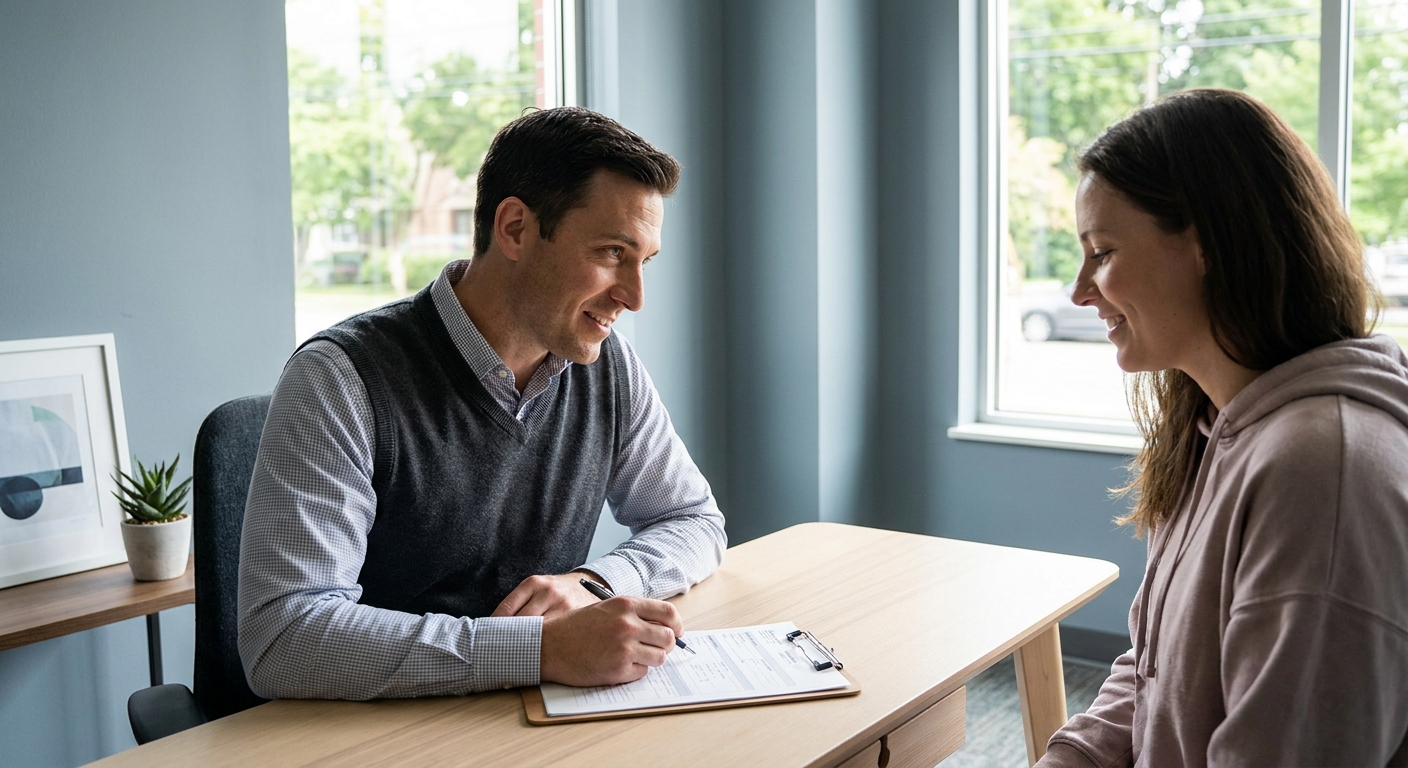
Groups at Resilience Recovery Center are kept small enough for real participation, and every psychoeducation and process group is facilitated by the clinical team rather than run as an open meeting. Clinical leadership at the Fair Lawn program brings over 20 years of experience in behavioral health and addiction treatment, and a medical director oversees psychiatric care and medication-assisted treatment coordination.
The broader team includes counselors, therapists, case managers, and a recovery coach, with lived experience represented at the executive leadership level. Facilitators set clear rules for confidentiality and respect, manage conflict and strong emotions constructively, redirect dominant voices so everyone has space to speak, and support quieter members in participating at their own pace.
What a typical session looks like
Here is how a psychoeducation session at Resilience Recovery Center usually unfolds:
- An opening question. The facilitator introduces a topic with a question that gets you thinking about your own experience. In the Reality Check group, that might be: “Why do people sometimes convince themselves that something is a good idea when they already know how it ended last time?”
- Discussion of the pattern. That question opens a conversation about impulsive thinking, minimizing consequences, and how the brain remembers the reward of a behavior while overlooking what happened afterward.
- The educational portion. Staff explain the science or psychology using relatable examples, group discussion, and sometimes visual materials or worksheets.
- A hands-on activity. In “Play the Tape Through,” you choose an impulsive situation, such as going to a bar just to socialize, contacting someone connected to past use, or making an emotional decision after an argument. You walk through what might happen in the next 10 minutes, the next few hours, and the following day, weighing the immediate reward against the consequences you might not be thinking about.
- Shared perspectives. Group members compare responses and help each other identify alternative choices.
- Bringing it home. Each person names one situation in their own life where they could use what they learned.
The point is that you leave with “something practical they can recognize and apply outside treatment, not just information they heard during a group.”
Groups that keep you engaged
Recovery Tank has clients create and present ideas. There is a recovery-focused Family Feud, along with role-playing that lets you practice real-life situations. Truth or Dare Recovery Edition was expanded with more humorous and personal questions, so you can laugh, connect, and get comfortable without every conversation feeling heavy.
Play the Tape Through was also expanded beyond high-risk substance use situations to include everyday decisions about relationships, spending, anger, and decision-making. That makes it relevant to more people in the room. When a topic is not landing, staff rework the questions, the activity, or the delivery while keeping the clinical purpose intact. In the team’s words, “sometimes the most productive group isn’t the one where everyone completes a worksheet; it’s the one where someone who rarely speaks finally participates because the activity feels relatable.”
Confidentiality and privacy
It is reasonable to wonder whether your story will stay in the room. Group therapy is part of your medical treatment, and your participation is protected by privacy laws such as HIPAA, along with 42 CFR Part 2 confidentiality requirements for substance use treatment records. You will agree to group rules that include not sharing other members’ stories outside the session. A clear structure and a shared commitment to privacy go a long way toward making the room feel safe.
How group therapy fits with other treatment
Group therapy is powerful, but it is not the only tool you need. Long-term recovery usually takes a combination of approaches that address both substance use and your overall mental health.
Built around work and family
Resilience Recovery Center runs groups in a morning track from 9:00 AM to 12:00 PM and an evening track from 6:00 PM to 9:00 PM, Monday through Friday. IOP is built on three-hour sessions. OP is a lower level of care that typically includes one to two clinical group sessions each week, along with individual counseling and other services based on your plan.
Individual therapy, psychiatric appointments, medication management, and case management are coordinated around your schedule, and telehealth is available for some services. Schedules can be tailored. One client who works mornings into the night attends one group on Fridays and handles his individual and medical appointments by telehealth. For employed clients who need it, the team completes FMLA and temporary disability paperwork.
Life does not always cooperate. If you will miss a session, for example because a ride did not show up, you contact the admissions or transportation team right away. Staff try to arrange an alternative pickup, or help you reschedule or make up the session so your care stays continuous. Because the curriculum rotates, a missed week is not a lost week.
Combining group and individual counseling
Some issues are best discussed privately. Trauma history, legal concerns, or specific family conflicts may feel too vulnerable to bring to a group at first. Individual counseling gives you space to work through those in depth. Then you test new skills and insights with peers in group, and you get feedback from both clinical and lived-experience perspectives.
Co-occurring conditions and medication support
Many people in group are also living with anxiety, depression, trauma, or mood symptoms. Resilience Recovery Center treats addiction and mental health inside the same plan rather than separately. The clinical team works with co-occurring conditions including anxiety disorders, depressive disorders, bipolar disorder, trauma and PTSD, ADHD, OCD, mood disorders, and personality disorders.
For clients receiving medication-assisted treatment, medication supports recovery rather than replacing therapy. MAT is discussed in medication education groups and in psychoeducation groups, and it is always paired with individual therapy, group counseling, and case management.
Relapse prevention and ongoing support
Relapse prevention is not a single class. It is a set of skills and routines you build over time. In group you learn to recognize early warning signs in your thinking, emotions, and behavior, to create coping plans for high-risk situations, and to play the tape through when urges appear. Many clients continue working with a recovery coach as they step down from IOP to OP and into aftercare, so the accountability you built in group carries forward as you take on more at work and at home.
Why choose a therapy driven outpatient approach
You may know you want help but not feel ready or able to step away for residential care. Resilience Recovery Center does not offer detox or residential treatment. It focuses on outpatient and intensive outpatient care designed for working adults who need to keep their jobs and family commitments.
In outpatient care, you practice new skills in the same environments that once triggered your substance use. You do not wait until discharge to test yourself. You apply what you learn in real time, with group and individual support to help you adjust.
The team also coordinates the practical barriers that pull people out of treatment. Case management can help with housing resources, transportation, employment and job placement support, and legal obligations such as probation requirements, all under one individualized care plan. The groups serve people working through alcohol use disorder, opioid use disorder, stimulant use disorder, benzodiazepine use disorder, prescription drug misuse, marijuana use disorder, and polysubstance use.
Insurance
Resilience Recovery Center accepts Aetna, Blue Cross Blue Shield, Cigna, and UnitedHealthcare. Coverage details depend on your specific plan. Federal parity law generally requires health plans to cover substance use disorder and mental health benefits no more restrictively than medical and surgical benefits, as explained by CMS and, for employer plans, the U.S. Department of Labor. The admissions team can help you understand what your plan covers before you start.
Overcoming common concerns about group therapy
Hesitation about group therapy is normal. Many people worry about speaking in front of others, being judged, or hearing things that are hard to handle. These concerns are valid, and they can be addressed.
“I am not comfortable talking in front of people”
You are not required to share everything on day one. Facilitators at Resilience Recovery Center let you participate at your own pace, and simply listening at first is fine. The interactive formats exist partly for this reason. A game, a role-play, or a lighter question often makes it easier to speak than a blank invitation to share. As you watch others take risks and receive support instead of criticism, it usually gets easier.
“What if there is conflict in the group”
Disagreements and strong feelings are part of any honest therapeutic process. The key is skilled facilitation. Staff manage conflict and strong emotions constructively, keep the group anchored to its purpose, and make sure no single voice takes over. Handled well, a hard moment in group can become practice for the hard moments at home and at work.
“I am not sure this will work for me”
You do not have to believe in it fully to begin. Psychoeducation is designed for people who are still deciding. Resilience Recovery Center’s mission is to provide compassionate, evidence-based treatment that “meets people where they are, restores dignity, and empowers individuals and families to build sustainable, purpose driven lives in recovery.” Group is where many clients first see that their struggle makes sense, that others share it, and that change can happen without putting the rest of their life on hold.
Expertise and insights from
Ivan Kavunik, Owner