
What a drug rehab intensive outpatient program is
A drug rehab intensive outpatient program gives you structured addiction treatment while you continue to live at home. Instead of staying in a facility 24 hours a day, you attend several treatment sessions each week, usually for multiple hours at a time. You return home afterward to work, care for your family, and manage your daily responsibilities.
Researchers describe intensive outpatient treatment as an intermediate level of care that sits between standard outpatient counseling and residential rehab, offering 6 to 30 hours of services per week over 3 to 5 days, usually for at least 90 days for the best outcomes in substance use reduction and social functioning [1]. In practice, this means you receive focused support several days per week, which helps you build new habits and a recovery routine without stepping away from your life entirely.
At Resilience Recovery Center, your drug rehab intensive outpatient program is designed to be both flexible and structured. You are guided through a clear treatment plan that targets substance use, mental health, and daily functioning while still respecting your work schedule, parenting responsibilities, or school commitments.
How intensive outpatient treatment fits your daily life
When you think about treatment, you might imagine needing to press pause on your entire life. An intensive outpatient program lets you pursue recovery while maintaining your role at work, at home, and in your community. Instead of choosing between getting help and keeping your responsibilities, you can align both.
Balancing treatment with work, school, and family
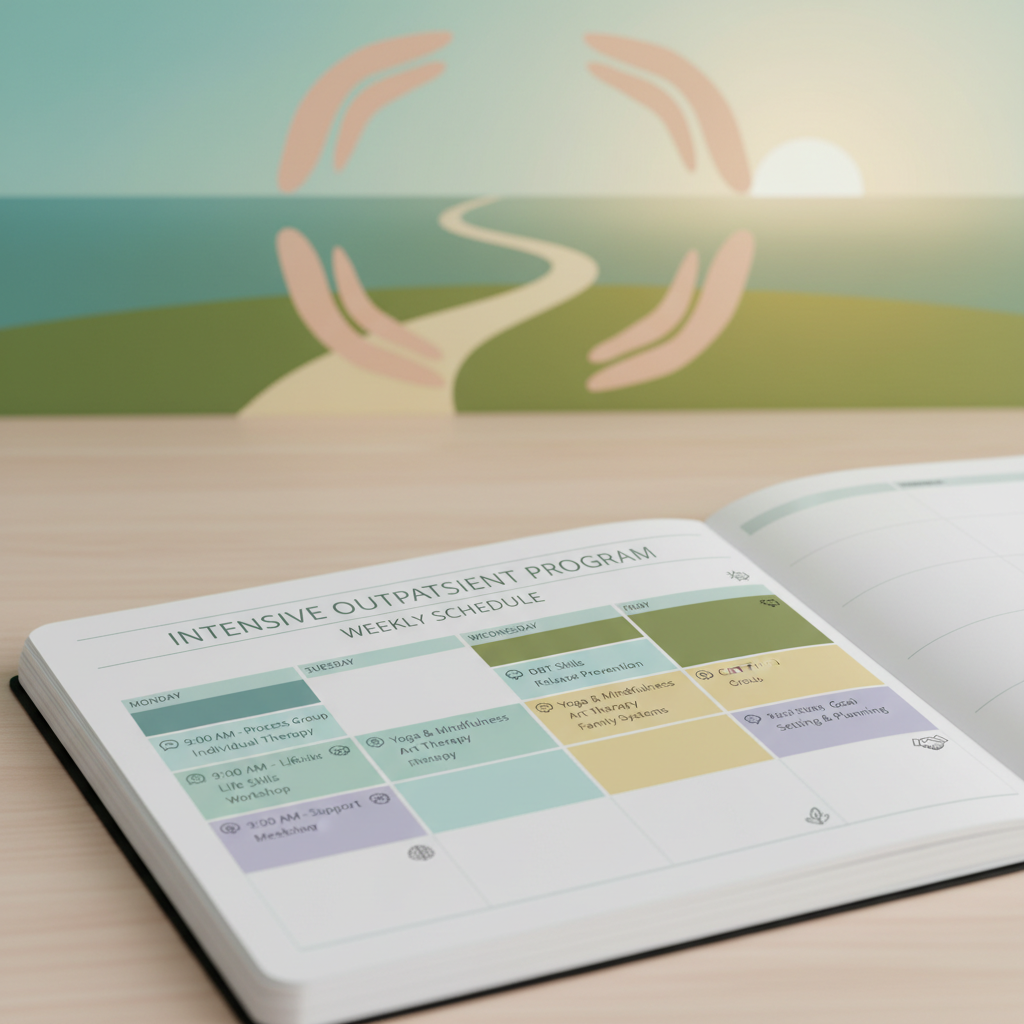
In a typical week, you attend multiple sessions on set days and times. These may be scheduled in the mornings, afternoons, or evenings to work around your job or caregiving duties. Many IOPs across the country are structured as at least 9 hours per week, often in three 3 hour blocks, which has been shown to help people adjust to life in the community while receiving consistent support [2].
Resilience Recovery Center offers options similar to an evening intensive outpatient program for addiction, which can be especially helpful if you work standard daytime hours. You might go to work during the day, attend group and individual therapy in the evening, and then return home to your own bed at night. This rhythm allows you to immediately apply what you learn in therapy to real situations, instead of waiting until you complete residential treatment.
Keeping your home base while you heal
Living at home during treatment has unique advantages. You stay connected with your household, your support system, and your community, which can help you feel less isolated and more grounded. You also practice new coping skills in the exact environments that have been challenging in the past. This real time practice is one reason many experts describe IOPs as a flexible yet structured way to receive quality care without major disruptions to daily life [3].
Your program at Resilience Recovery Center is structured enough to keep you accountable, yet flexible enough to adapt if your schedule or needs change. This helps you build a recovery lifestyle that actually fits the life you live, not an idealized version that only exists inside a treatment facility.
What to expect in a drug rehab intensive outpatient program
Understanding what your days and weeks might look like can make it easier to decide if an IOP is right for you. While every program is slightly different, most include a blend of individual therapy, group therapy, family involvement, and relapse prevention planning.
Core components of treatment
A typical substance abuse intensive outpatient program includes several key elements:
- Individual therapy to focus on your personal history, triggers, and goals
- Group therapy where you learn and practice skills with peers
- Family or couples sessions when appropriate
- Education about addiction, brain chemistry, and recovery
- Relapse prevention planning and skill building
Evidence shows that intensive outpatient programs that use these types of structured, research based services are highly effective. Multiple randomized and naturalistic studies have found that IOPs can achieve reductions in alcohol and drug use that are comparable to inpatient or residential treatment for many people [2].
At Resilience Recovery Center, these elements come together in a structured outpatient addiction program that is personalized to you. Your treatment team works with you to map out the number of sessions per week, the specific groups you will attend, and your goals for each phase of care.
Evidence based therapies you might use
Effective drug rehab intensive outpatient programs rely on therapies that have been scientifically tested. National data highlights that high quality programs commonly include approaches like cognitive behavioral therapy, motivational interviewing, and other structured methods, delivered by medically trained staff and adjusted over time [4].
In your IOP at Resilience Recovery Center, you may work with:
- Cognitive behavioral therapy to identify and change thought patterns that lead to use
- Relapse prevention strategies to prepare for high risk situations
- Skills based groups that focus on emotional regulation, communication, and stress management
- Trauma informed approaches when past experiences are part of the picture
If you have alcohol specific concerns, you can work within an alcohol intensive outpatient treatment track that focuses on alcohol related triggers, health issues, and social situations. If your primary substance is a drug, an intensive outpatient program for drug addiction or drug addiction intensive outpatient therapy can focus on those patterns instead.
How IOP supports relapse prevention
Relapse prevention is one of the core reasons to choose a drug rehab intensive outpatient program. You are not only stopping substance use, you are learning how to live differently in the same environments that used to trigger you.
Practicing skills in real time
In residential treatment you practice skills in a controlled environment. In IOP you practice them in your actual life, then bring the results back into session. This cycle helps you see quickly which strategies work for you and which ones need to be adjusted.
For example, you might:
- Attend evening therapy after a difficult day at work and debrief how you managed cravings
- Try a new communication skill with your partner and then process the conversation in group
- Use a mindfulness technique during a stressful commute and discuss the outcome in your next session
Studies show that relapse rates for substance use disorders often range from 40 to 60 percent, similar to other chronic conditions, which illustrates why long term support and skill practice are so important [4]. Your IOP gives you ongoing guidance through those early high risk months so you are not navigating them by yourself.
Building a personalized relapse prevention plan
Throughout your intensive outpatient recovery program, you work closely with your treatment team to develop a written plan that covers:
- Personal warning signs and early relapse indicators
- High risk people, places, and situations
- Coping tools tailored to your temperament and lifestyle
- A crisis response plan for slips or returns to use
- A schedule for ongoing support after IOP ends
Because you are using this plan every week in real life, it is less theoretical and more practical. By the time you complete your addiction recovery intensive outpatient treatment, your relapse prevention plan is something you know how to use, not just a document in your file.
Dual diagnosis and mental health support
If you live with both addiction and mental health symptoms, you are not alone. Many people who seek treatment for substance use also experience anxiety, depression, trauma related symptoms, or other behavioral health concerns. Treating one without the other can leave you vulnerable to relapse.
Why integrated care matters
Research has shown that substance use disorders behave like chronic, relapsing conditions, which is one reason comprehensive, individualized care is so critical [4]. When mental health symptoms are left untreated, they often drive you back toward substances as a way to cope.
A dual diagnosis intensive outpatient program addresses both sides at the same time. At Resilience Recovery Center, your treatment plan may combine:
- Substance focused therapy to address cravings, triggers, and behavior change
- Mood and anxiety management strategies
- Psychiatric evaluation and medication management when clinically appropriate
- Education about how substance use and mental health interact in the brain
This integrated approach aligns with the idea of a behavioral health intensive outpatient program, where your emotional wellbeing, thinking patterns, and daily behaviors are all part of the treatment picture, not separate issues.
Tailored tracks for different substances
Your needs may differ depending on whether your primary concern is alcohol, opioids, stimulants, or another substance. Resilience Recovery Center can tailor your track to fit these differences.
For example, you may connect with:
- An alcohol use disorder intensive outpatient program if you are focused on alcohol related withdrawal patterns, social pressures, and health impacts
- An intensive outpatient program for addiction that is substance neutral if you use more than one drug
- An alcohol recovery intensive outpatient program if you are in early sobriety from alcohol and need strong relapse prevention and sober social support
By targeting the specific patterns of your substance use, your IOP helps you build strategies that feel relevant and usable in your real life situations.
How IOP fits into the full continuum of care
A drug rehab intensive outpatient program does not exist in isolation. It is part of a larger continuum that often includes detox, residential treatment, standard outpatient therapy, and long term community support.
The four stages of intensive outpatient care
Clinical guidelines describe IOP as a multistage process. Research identifies four broad stages that typically unfold in sequence [1]:
| Stage | Focus | What it can look like for you |
|---|---|---|
| Stage 1 | Engagement and stabilization | Getting connected to the program, managing withdrawal risks, starting to attend regularly |
| Stage 2 | Early recovery | Learning skills, building a substance free routine, strengthening motivation |
| Stage 3 | Maintenance (often at a lower intensity) | Consolidating gains, practicing relapse prevention, gradually reducing frequency |
| Stage 4 | Continuing community care | Participating in support groups, follow up sessions, and community resources |
At Resilience Recovery Center, your intensive outpatient rehab program is designed to move you through these stages in a way that matches your pace and progress. You are not rushed, and you are not left to drift. Each phase has a purpose and a plan.
Stepping up or stepping down as needed
You might come into an IOP directly after detox or inpatient treatment, or you might enter from a lower level of care if your symptoms have intensified. Research suggests that IOPs are as effective as residential care for many individuals in reducing substance use, which makes them a strong alternative when 24 hour care is not needed [2].
If you begin with more intensive services, you may eventually step down into a standard outpatient addiction treatment program when you are ready for fewer sessions but still want consistent support. This stepdown period is often about 60 days in many systems and focuses on consolidating skills and relapse prevention [1].
Your path might look like:
- Detox or medical stabilization if needed
- Residential treatment or a higher level program
- Addiction intensive outpatient program at Resilience Recovery Center
- Less intensive outpatient therapy or community based support
- Long term recovery and aftercare
Your team helps you decide when and how to move between these levels so that you always have enough support, but not more structure than you truly need.
Why Resilience Recovery Center is a strong choice
Choosing where to receive care is as important as choosing the level of care. Not all programs are the same. Quality, structure, and philosophy can vary widely from one provider to another.
Evidence based and personalized care
Data from national sources suggests that effective programs provide evidence based therapies, individualized treatment plans, and medically trained staff who adjust your care as you progress [4]. Resilience Recovery Center is built around these principles.
When you enter our addiction treatment IOP program, you can expect:
- A comprehensive assessment of your substance use, mental health, medical history, and social needs
- A collaborative treatment plan that you help shape
- Regular reviews of your goals and progress, with adjustments as needed
- Access to therapies that are grounded in research, not trends
If you are focused specifically on substance use, an iop for substance abuse recovery gives you a structured path that connects you with peers who are working through similar challenges.
Flexible scheduling that respects your life
Because the target audience for intensive outpatient care often includes working professionals, parents, and students, scheduling matters. Resilience Recovery Center offers flexibility so that your program fits around your responsibilities instead of competing with them.
You can talk with our team about:
- Daytime or evening session blocks
- The frequency and duration of sessions that match your clinical needs
- How to coordinate IOP with work leave or adjusted hours if needed
This flexibility helps you stay engaged. Completion of treatment is one of the strongest predictors of positive outcomes, yet national data shows that less than half of people who start treatment complete it [4]. When your schedule is workable, you are more likely to stay with the program through its full course.
Planning for long term recovery beyond IOP
Your time in a drug rehab intensive outpatient program is significant, but it is not the end of your recovery story. Ongoing support is essential, especially in the first year after intensive treatment.
Continuing care and community connection
Expert guidance emphasizes the importance of Stage 4 continuing care after intensive outpatient and standard outpatient treatment. This often includes mutual help groups, community resources, and occasional booster sessions, and can last many months or years [1].
As you move toward completing your program at Resilience Recovery Center, your team works with you to build a long term plan that may involve:
- Weekly or biweekly individual therapy
- Peer support groups in your community or online
- Recovery focused activities that support your mental and physical health
- Periodic check ins with your IOP team if clinically appropriate
If you want to continue in a structured setting with fewer hours, your intensive outpatient therapy for addiction can transition into a lower intensity track or a different form of intensive outpatient program for addiction that focuses on maintenance.
Deciding if an IOP at Resilience Recovery Center is right for you
You might be a good fit for a drug rehab intensive outpatient program if you:
- Need more structure than weekly counseling but do not require 24 hour supervision
- Want to keep working, going to school, or caring for your family while in treatment
- Are stepping down from detox or residential care and want continued support
- Are ready to practice new skills in your real life with professional guidance
If this describes you, Resilience Recovery Center can help you design a path that matches your life, your responsibilities, and your goals for recovery. Your treatment is not a one size fits all package. It is a structured, flexible plan that supports you as you build a stable, substance free future while staying rooted in the life you are working hard to improve.