
Understanding behavioral health outpatient treatment
When you look for addiction help, you might know you need support but not 24-hour care. That is where a behavioral health outpatient treatment program fits. You receive structured, professional treatment for substance use and mental health, but you continue living at home and maintaining your daily responsibilities.
In an effective outpatient program, you attend therapy at a clinic, hospital, or specialized center several times per week, then return home afterward. This flexible approach can help you manage symptoms, build coping skills, and stay accountable without stepping away from work, school, or family life [1].
At Resilience Recovery Center, your behavioral health outpatient treatment program is designed to bridge two worlds. You get the level of clinical structure you need, along with the flexibility required to keep showing up for your life.
Key components of an effective outpatient program
A strong behavioral health outpatient treatment program is more than just weekly counseling. Several pieces work together to support lasting recovery and mental health stability.
Evidence-based therapies
Your care should be grounded in treatments that research has shown to be effective. In quality outpatient programs, this often includes:
- Cognitive behavioral therapy (CBT) to identify and change thought patterns that drive substance use and emotional distress
- Dialectical behavior therapy (DBT) skills to manage strong emotions and reduce impulsive behaviors
- Psychoeducation to help you understand addiction, mental health, and relapse risk
- Motivational interviewing to strengthen your internal motivation for change
Evidence-based therapies are a hallmark of effective behavioral health outpatient treatment. Programs that integrate these approaches help you understand why you use substances, how your mental health and substance use interact, and what specific skills you can practice to stay on track [1].
Individual, group, and family sessions
Most effective programs do not rely on just one format. They combine:
- Individual therapy to explore your history, trauma, triggers, and goals in a private setting
- Group therapy to practice skills, receive feedback, and know you are not alone
- Family or couples sessions when appropriate, so your support system learns how to help your recovery rather than unintentionally undermine it
Outpatient psychiatric treatment commonly uses all three approaches, which allows you to process deep issues, gain perspective from others, and repair important relationships [2].
Co-occurring mental health support
If you live with anxiety, depression, PTSD, bipolar disorder, ADHD, or another mental health condition along with substance use, you need both treated at the same time. Programs that focus only on addiction or only on mental health often leave you vulnerable to relapse.
Research on dual diagnosis treatment in residential settings has shown that programs offering dedicated groups for co-occurring disorders and counselors with specialized training achieve:
- Higher use of psychological services
- Greater improvements in psychological functioning
- Less heavy alcohol and heroin use at six-month follow up [3]
These findings translate to outpatient care as well. When your behavioral health outpatient treatment program integrates addiction treatment and mental health services, you are better positioned for long-term stability.
Levels of care in outpatient treatment
Not all outpatient programs look the same. The right level of care depends on how much structure and support you need right now.
Traditional outpatient therapy
Traditional outpatient therapy usually involves one to two hours of counseling per week. You might meet with a therapist for individual, family, or group sessions in a non-hospital setting.
This level of care can help you:
- Identify root causes of your mental health and substance use
- Explore triggers that worsen your moods or cravings
- Build coping skills and self-awareness
- Navigate difficult decisions and relationships [2]
For some people, traditional outpatient care is enough. For others, especially when addiction is more severe, a more structured outpatient model is a better fit.
Intensive outpatient programs (IOP)
Intensive outpatient programs create a stronger framework for change without requiring overnight stays. According to the National Alliance on Mental Illness, IOP typically involves at least nine hours of treatment per week for adults, spread over several days [4].
In IOP, you usually attend:
- Multiple group therapy sessions each week
- Regular individual counseling
- Psychoeducation and relapse prevention groups
- Medication management when needed
This structure is helpful if weekly therapy is not enough, but you do not need 24/7 supervision. It also works well as a step down after residential or inpatient treatment, offering continuity while you reintegrate into everyday life [1].
Partial hospitalization programs (PHP)
Partial hospitalization programs sit just below inpatient care in terms of intensity. PHP generally involves at least 20 hours of treatment per week and often runs most of the day, several days per week [4].
In PHP you might participate in:
- Daily group therapies
- Individual sessions
- Psychiatric care and medication management
- Skill building for coping, communication, and emotional regulation
This level is designed for you if you need a highly structured environment but can still safely return home at night. PHP is often used as a transition from inpatient care or as an alternative to hospitalization if your symptoms spike but you remain safe with strong daytime support [1].
Why structure and consistency matter
A behavioral health outpatient treatment program is most effective when it is structured enough to keep you engaged and consistent, but flexible enough to fit your life.
The value of a predictable schedule
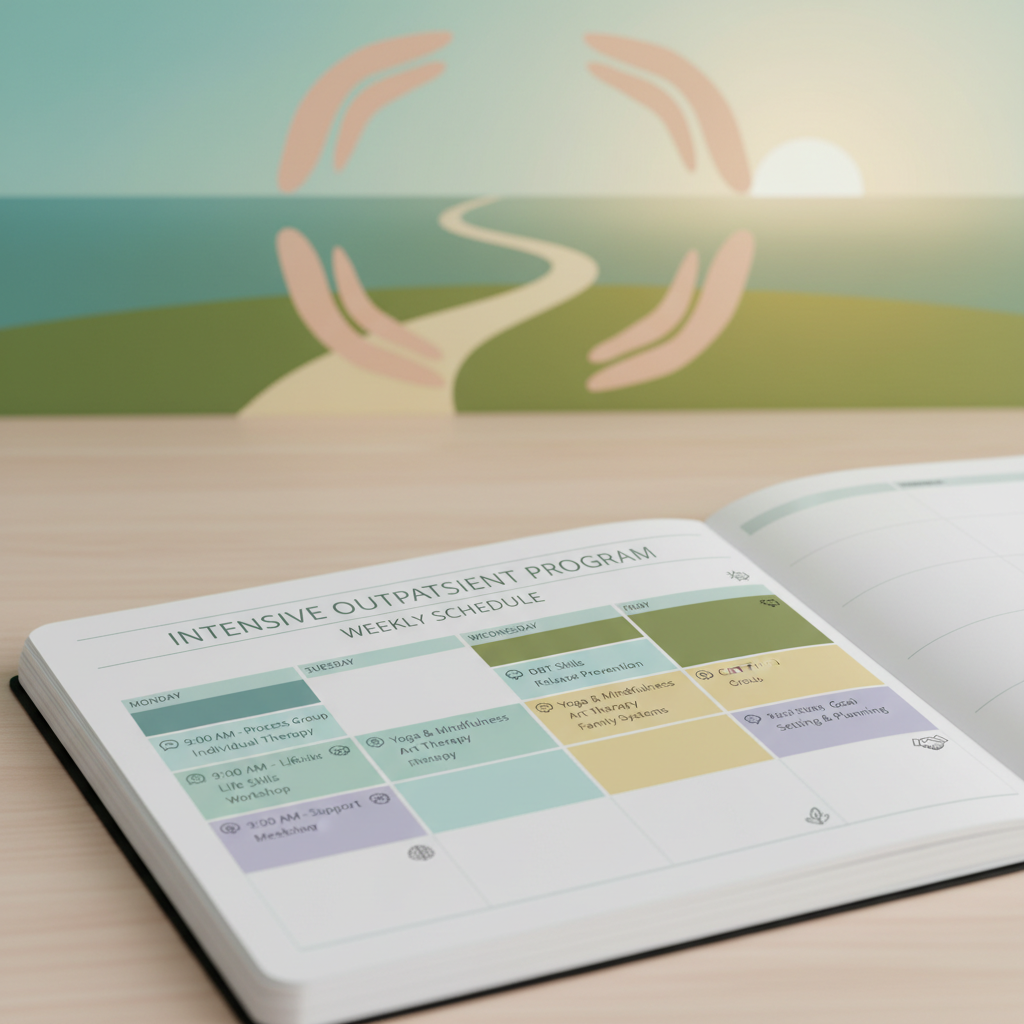
Structured outpatient programs provide a clear weekly rhythm. For example, an intensive or structured outpatient rehab program might schedule your groups and individual sessions on set days and times. This predictable framework:
- Reduces “decision fatigue” around whether or not to attend
- Helps you plan work and family responsibilities around treatment
- Reinforces recovery as a priority, not an afterthought
- Creates built-in accountability and support
NAMI notes that structured outpatient treatment offers more direction and support than traditional weekly therapy, which is especially important when symptoms are more intense or your relapse risk is higher [4].
Time in treatment and long-term outcomes
Length of engagement also matters. In a study of people with co-occurring substance use and mental health disorders, those who stayed in residential treatment longer used psychological services more and reported less heavy alcohol use six months later [3].
While this research focused on residential care, the principle applies to outpatient treatment as well. The more consistently you engage in services over time, the more opportunity you have to internalize coping skills, strengthen your support network, and experience meaningful behavior change.
A well designed outpatient recovery program for addiction will help you step down gradually instead of stopping abruptly, so you keep some level of support as your independence increases.
Core services you should expect
When you evaluate a behavioral health outpatient treatment program, it helps to know what services typically indicate quality care.
Addiction therapy and relapse prevention
You should receive targeted addiction counseling that addresses:
- Cravings and triggers in your daily environment
- High-risk situations at work, in relationships, or in social settings
- Thoughts and beliefs that drive you back to substance use
- A concrete relapse prevention plan with warning signs and action steps
These services are central to any effective addiction counseling outpatient program or substance abuse therapy outpatient program. The goal is not just to stop using, but to understand your pattern well enough that you can catch relapse warning signs early and respond differently.
Mental health treatment and medication support
Behavioral health outpatient treatment commonly includes:
- Psychiatric evaluation and ongoing medication management when indicated
- Therapy focused on mood regulation, anxiety reduction, and trauma recovery
- Skills training to handle stress, conflict, and intense emotions
Programs that treat conditions like anxiety, depression, PTSD, bipolar disorder, and ADHD alongside substance use tend to rely on evidence-based therapies such as CBT, DBT, exposure therapy, and careful medication management [1].
This integrated approach is especially important if you drink or use drugs in response to untreated mental health symptoms.
Holistic and skills-based support
Many structured programs round out clinical therapy with:
- Mindfulness, meditation, or yoga to reduce stress and increase body awareness
- Communication and boundary-setting skills for work and family life
- Education on sleep, nutrition, and physical health as part of recovery
NAMI highlights that some structured outpatient programs incorporate yoga and meditation alongside therapies such as CBT and group process work, which supports recovery from multiple angles [4].
Recovery is not only about what you stop doing. It is about building a new set of skills and supports so that the life you are building becomes easier to maintain than the life you are leaving behind.
Flexibility without losing accountability
One of the main reasons you might choose outpatient treatment is flexibility. An effective program protects that flexibility without losing the accountability that helps you stay on track.
Balancing treatment with work and family
Outpatient and intensive outpatient programs are designed so you can:
- Continue working, often with evening or early morning sessions
- Take care of children or aging parents
- Fulfill school or training commitments
- Stay connected to supportive partners, roommates, or friends
NAMI notes that a key benefit of structured outpatient care is the ability to receive intensive treatment several days per week while maintaining your usual living situation and returning home each night [4].
This design lets you immediately apply what you learn in therapy to real situations. You then bring those experiences back to your next session to problem-solve and adjust your plan.
Building independence, not dependence
Outpatient behavioral health treatment encourages you to be an active participant in your recovery. You practice:
- Setting up your own sober routines
- Managing triggers without constant supervision
- Reaching out for support when you need it
- Making decisions aligned with your long-term goals
Ascend Behavioral Health notes that outpatient care supports independence while still offering a structured environment and a supportive community [1]. Over time, the goal is for you to rely more on your own skills and community supports, while stepping down to less intensive services at a pace that feels safe.
How Resilience Recovery Center supports your outpatient journey
When you choose Resilience Recovery Center for your behavioral health outpatient treatment program, you gain a partner that understands both the clinical and practical sides of recovery. The focus is on flexible, structured care that meets you where you are.
Integrated care for drug and alcohol use
Whether you are seeking a drug rehab outpatient treatment or an outpatient alcohol rehab program, your care team addresses more than just the substance itself. Your treatment plan may combine:
- A drug addiction outpatient program with therapy aimed at cravings, withdrawal management, and triggers in your daily life
- An alcohol addiction outpatient treatment track that focuses on social drinking pressures, withdrawal safety planning, and relapse prevention for alcohol-specific risks
If you are dealing with both alcohol and drugs, a comprehensive drug and alcohol outpatient treatment approach ensures that every part of your substance use pattern is addressed.
Focus on co-occurring disorders and behavioral health
Resilience Recovery Center operates as a true behavioral health outpatient addiction program. This means:
- Your mental health symptoms are evaluated and treated alongside addiction
- You receive therapy that targets both emotional distress and substance use
- Medication management is integrated when appropriate, not treated as an afterthought
Research shows that programs with strong mental health components and specialized staff increase use of psychological services and improve mental health outcomes, even months after treatment [3]. This integrated model is central to how your care is structured.
Flexible formats to match your needs
Your life circumstances shape the type of outpatient care you choose. At Resilience Recovery Center, you can access:
- An outpatient addiction treatment center model if you need consistent therapy that fits around a full-time schedule
- An outpatient rehab for substance abuse structure with multiple weekly groups and support services
- A more intensive outpatient drug rehab program if you need a stronger container early in recovery
If alcohol is your primary concern, a dedicated alcohol recovery outpatient program or alcohol use disorder outpatient treatment can help you focus on the specific challenges and risks tied to drinking.
Therapy that extends beyond the clinic
Resilience Recovery Center emphasizes practical, skills-based therapy that you can use outside the building. Your sessions often focus on:
- Real scenarios from your day or week
- Practicing communication or boundary setting you plan to use
- Preparing for stressful events before they happen
- Debriefing setbacks without shame and adjusting your recovery plan
Through addiction therapy outpatient services, you are not just discussing concepts. You are rehearsing and refining how you will respond to the specific pressures in your life.
If you need more focused one-on-one help around substances, drug addiction outpatient counseling and other addiction recovery outpatient services give you space to take a deeper look at your history and patterns.
A continuum of care rather than a single step
Effective behavioral health outpatient treatment is rarely a single appointment or brief program. Resilience Recovery Center aims to provide a continuum of support that may include:
- Stepping up into more structured outpatient substance abuse treatment if your symptoms worsen
- Gradually reducing intensity as your stability improves
- Maintaining a long-term therapeutic relationship so you have a safe place to return when stress spikes
This continuity mirrors what research has shown about the benefits of longer engagement in treatment, especially for people with co-occurring disorders [3].
Deciding if outpatient treatment is right for you
Choosing a behavioral health outpatient treatment program is a personal decision. It can be a strong fit if you:
- Want professional support without leaving your home environment
- Need to keep working or caring for family while you recover
- Are motivated to attend sessions consistently and apply what you learn
- Feel safe living at home and can avoid immediate high-risk situations
If you are uncertain which level of care you need, you can talk with the team at Resilience Recovery Center about your current symptoms, safety, and responsibilities. From there, you can decide whether a traditional outpatient model, a structured intensive program, or a more specialized track such as a drug addiction outpatient program or alcohol addiction outpatient treatment is the right starting point.
An effective behavioral health outpatient treatment program allows you to keep moving forward in your life while steadily building a stronger foundation for long-term recovery. With the right combination of structure, flexibility, and ongoing support, you can work, care for your family, and still fully engage in the process of change.